
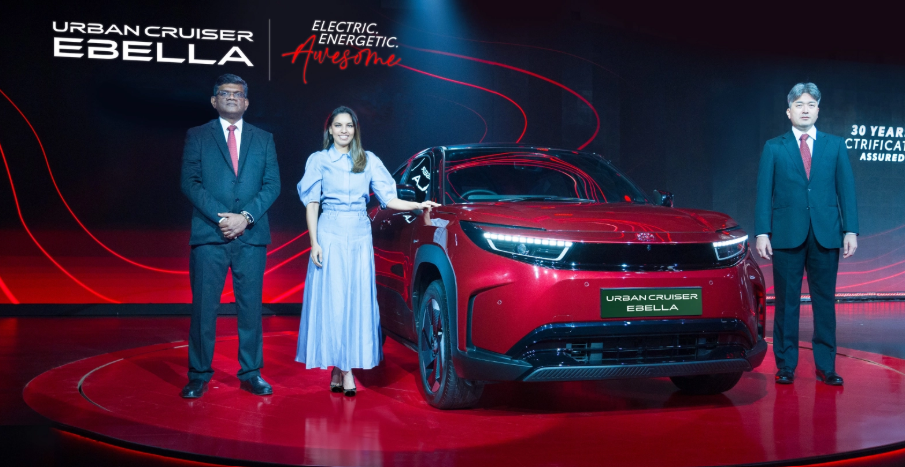
India’s electric vehicle revolution is accelerating faster than a Tata Nexon EV on open highway, and Toyota just threw its hat in the ring with the Urban Cruiser Ebella EV. Bookings kicked off nationwide on January 20, 2026, for a token ₹25,000 at any Toyota dealership—perfect timing as we hit 2026 with EV incentives buzzing and charging infra expanding. If you’re a city commuter tired of petrol pumps, a family planner eyeing zero-emission road trips, or a tech-savvy marketer scouting the next big trend (hello, e-commerce EV tie-ups), this midsize electric SUV demands your attention. Badge-engineered from Maruti’s e Vitara, it promises Toyota’s legendary reliability in a segment exploding with Hyundai Creta Electric, Mahindra BE 6, and VinFast VF 6 rivals.
Priced expectedly between ₹19-24.5 lakh ex-showroom (on-road Delhi around ₹21-27 lakh), the Ebella slots into the sweet spot for urban families and professionals. With three trims—E1 (49 kWh battery), E2/E3 (61 kWh)—it offers flexibility without overwhelming choices. Toyota’s play? Reliability over gimmicks, backed by an 8-year battery warranty, Battery-as-a-Service (BaaS) rentals, 60% buyback guarantee, and 500+ EV-ready service points. In a market where range anxiety still haunts 70% of buyers (per recent FICCI surveys), does the Ebella deliver? Let’s dive deep—design that turns heads, range for real-world hauls, features for daily joy, and why it might be your next garage star.
Striking Design: Compact Yet Commanding Presence for Indian Roads
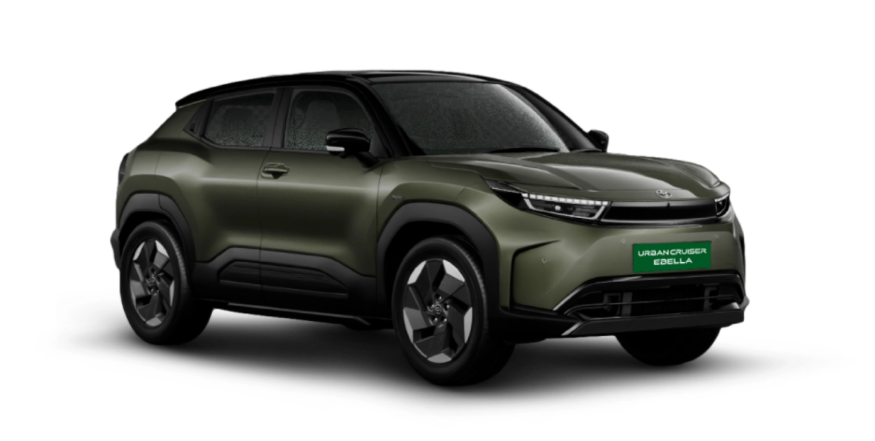
First impressions? The Ebella nails that “future-ready family hauler” vibe without screaming “concept car.” Measuring 4285mm long, 1800mm wide, and 1640-1635mm tall (wheelbase 2700mm), it’s compact enough for tight Kochi alleys or Mumbai parking wars, yet roomy like a Creta. Ground clearance at 180-188mm laughs at speed breakers and flooded streets—essential for Kerala’s monsoons or Rajasthan’s rural paths.
Up front, a closed-off grille with slim LED headlights and C-shaped DRLs gives a clean, aero-efficient face—think Urban Cruiser Hyryder’s evolution, but EV-pure. The 16-17-inch alloys (dual-tone on top trims) fill the wheel arches nicely, with plastic cladding adding rugged charm. Side profile shines: flush door handles, roof rails for extra bags, and a subtle character line from headlamps to taillamps. Rear? Connected LED taillamps with “EBELLA” lettering in bold—visible in traffic, safe for night drives. Colors? Eight options like Platinum White, Gaming Grey, and dual-tones for that Instagram flex.
Boot space? 306-400 liters expandable—swallows weekend groceries or golf bags, with 60:40 split seats for flexibility. Kerb weight around 1760kg keeps it nimble (0-100kmph in 8.7-9 seconds). For you, the digitally-savvy pro in Kanayannur, it’s practical: park easy, load gadgets, and arrive fresh. Human-centric win: Aerodynamic shaping (Cd ~0.28 estimated) boosts efficiency on NH highways, cutting charge stops.
Powertrain and Range: Anxiety-Free Drives with Real-World Punch
Forget hype—Ebella’s heart is LFP (Lithium Iron Phosphate) batteries, tough for India’s heat (safer, longer life than NMC). E1’s 49kWh pairs a 144hp (106kW) motor with 189Nm torque; E2/E3’s 61kWh ups to 174hp (128kW), same twist. FWD setup, single-speed auto—smooth as Toyota hybrids, no gear hunt in bumper-to-bumper.
Claimed ranges? E1: ~400km ARAI (real-world 300-350km city/highway mix); E3: 543km ARAI (expect 400-450km loaded). Top speed 150kmph—plenty for overtakes. In tests (early prototypes), Mumbai-Pune (~150km) on one charge? Easy, with 20% left. Charging: 45 mins 10-80% DC fast (150kW), 4-6 hours AC home wallbox (11kW). Home charging? ₹200-300 full (vs ₹1000 petrol equivalent).
For Indian realities: LFP handles 45°C without degradation; BaaS lets you rent battery (₹3-5/km), slashing upfront cost by 20-25% for low-mileage users. Torque hits instantly—fun for spirited drives, safe for family merges. Vs. rivals: Beats Creta Electric’s 390km, trails Mahindra BE 6’s 557km but with Toyota peace-of-mind. If your daily is 50-100km (office + errands), Ebella erases range worries.
Luxe Interior and Features: Comfort Meets Cutting-Edge Tech
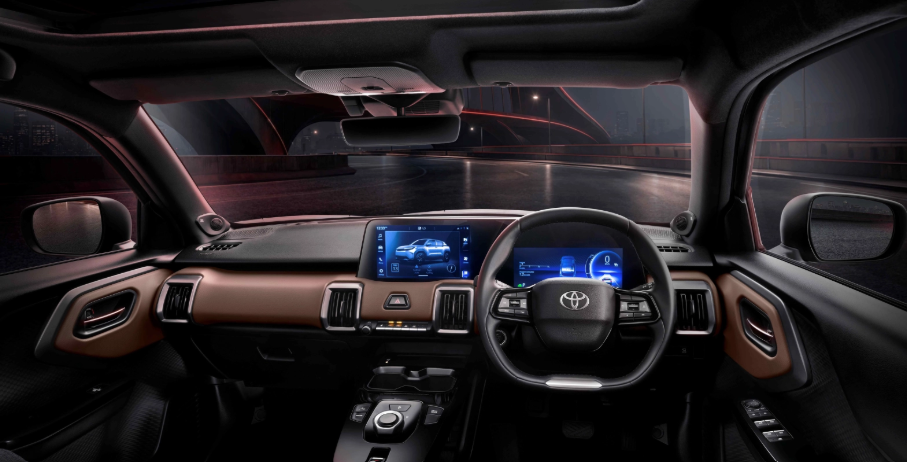
Step inside, and it’s a cozy cockpit for five—think Hyryder premium, EV-refined. Dual screens dominate: 10.1-inch digital cluster + 10.25-inch touchscreen (wireless AA/CP, OTA updates). JBL 9-speaker audio thumps bass for your podcasts or Spotify drives. Ventilated front seats (leatherette), panoramic sunroof flood light—beat summer sizzle.
Rear? Sliding/reclining benches (60:40), USB-C ports, AC vents—kids stretch on Chennai-Coimbatore runs. Ambient lighting, wireless charger, auto-dimming IRVM add polish. For wellness fans: Air purifier, PM2.5 monitor—crucial in Delhi smog.
Infotainment? Voice commands (“Hey Toyota, navigate to Lulu Mall”), AR navigation. Paddle regen for one-pedal fun. Boot frunk? Handy for cables. Human touch: Ergonomic seats reduce back strain (key for long commutes), heads-up display projects speed/turn-by-turn.
Safety First: Bulletproof Protection for Families
Toyota’s TNGA platform + EV battery shield = fortress. Seven airbags, ESC, ABS+EBD, TPMS, hill-hold, 360-cam, front/rear sensors. Level-2 ADAS steals show: Adaptive cruise (traffic jam assist), lane keep/centering, blind-spot monitor, auto emergency braking, rear cross-traffic alert. All-wheel disc brakes, AVAS pedestrian alert.
5-star expected (Global NCAP pending). For parents: Isofix anchors, child locks. In India? Tackles erratic bikers, potholes. Vs. Creta Electric (similar ADAS but fewer bags).
Rivals Roundup: Ebella vs Creta Electric, BE 6, e Vitara
| Feature | Toyota Ebella (E3) | Hyundai Creta Electric | Mahindra BE 6 | Maruti e Vitara |
|---|---|---|---|---|
| Price (ex-showroom) | ₹22-24.5L | ₹18-23L | ₹19-25L | ₹20-24L |
| Battery/Range (ARAI) | 61kWh/543km | 42-51kWh/390-450km | 59-79kWh/557-682km | 61kWh/543km |
| Power/Torque | 174hp/189Nm | 135-170hp/200Nm | 230hp/380Nm | 174hp/192Nm |
| ADAS Level | L2 | L2 | L2 | L2 |
| Warranty (Battery) | 8 years | 8 years/1.6L km | 8 years | 8 years |
| Service Network | 500+ EV pts | Strong | Growing | Vast Maruti |
Ebella edges on reliability/warranty; BE 6 wins range/power; Creta value; e Vitara twin-like but Toyota badge premium.
Ownership Realities: Costs, Charging, and Long-Term Wins
Upfront: ₹21-27L on-road Kerala (subsidies shave ₹1-2L). Running: ₹1-2/km (₹1500/month 1000km) vs ₹5-6 petrol. Service: ₹5-8k/year, low maintenance (no oil/filter).
Charging: Toyota partners expand to 10,000 points by 2027; home kits ₹50k. Resale? 80% after 3 years (Toyota magic). BaaS: EMI-like ₹20k/month, own body.
Pros: Silent drive, torque joy, family space. Cons: Smaller boot vs Curvv EV, no AWD.
Bookings, Launch, and Verdict: Your Move?
Bookings live—₹25k locks your slot; deliveries Feb 19, 2026. Test drives soon. For Kerala EV explorers: Range crushes hills, service in Kochi/Cochin.
Verdict: Ebella’s Toyota trust + EV smarts make it ideal for trend-watchers like you—reliable, feature-packed, future-proof. In India’s EV boom, it’s not just a car; it’s your stress-free mobility partner. Book now—before waitlists grow.
- Toyota Ebella EV official bookings
- Ebella vs Hyundai Creta Electric comparison
- Toyota EV charging network India
- Ebella LFP battery details
- Toyota BaaS battery subscription
- Best Air Coolers Under ₹10,000 on Amazon India (2026)
- Cold Showers, Fasting, Dopamine Detox: What Actually Works?
- Nike Sneakers at Crazy Prices on Amazon India March 2026 Deals You Cannot Miss
- Top 10 Trending Kitchen & Home Appliances on Amazon India
- Top 10 Trending Beauty Products on Amazon India, March 2026
About the Author