
Every March, something quietly shifts in Indian women’s wardrobes. The heavy silks get folded away. The chunky embroidery makes way for something airier. And the kurta — India’s most democratic garment, equally at home in a Bengaluru tech office and a Rajasthan haveli — steps into its season.
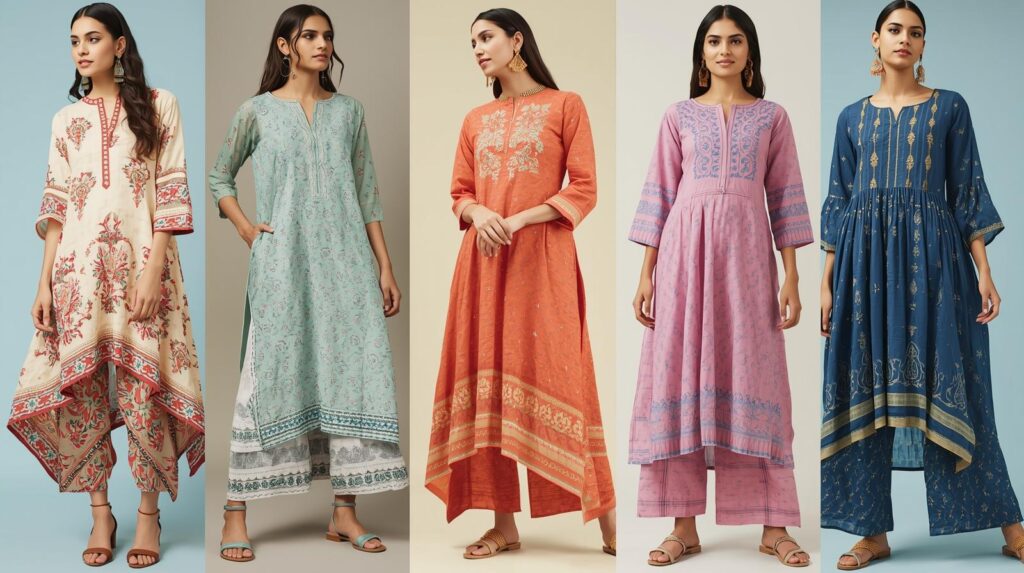
But 2026’s summer kurta edit is anything but predictable. What’s exploding on Indian Instagram right now isn’t the safe, workwear staple your mother called ‘sensible.’ It’s sculptural necklines paired with asymmetric hems. It’s Chanderi silk worn with white sneakers. It’s Kutch embroidery on breezy mul-mul, handblock print on structured silhouettes, and — perhaps most surprisingly — the oversized comfort kurta taking formal spaces by storm.
We analysed over 4,000 Indian fashion posts tagged #summerootd, #indianwear2026, and #kurtalove between January and March 2026, and spoke to six independent fashion designers across Mumbai, Jaipur, and Lucknow to identify exactly what’s moving. Here are the 10 styles that are genuinely trending — not just stylist-curated but actually being worn, shared, and bought.
At a Glance: The 2026 Summer Kurta Trend Map
| Style | Vibe | Best For | Price Range |
| Asymmetric hem kurta | Modern, editorial | Office, brunch, galleries | ₹1,200 – ₹4,500 |
| Mul-mul with block print | Breezy, artisanal | Everyday, travel, markets | ₹800 – ₹2,800 |
| Structured Chanderi kurta | Elevated, understated luxury | Client meetings, weddings | ₹2,500 – ₹8,000 |
| Oversized comfort kurta | Relaxed, Gen Z | WFH, campus, casual outings | ₹600 – ₹2,200 |
| Crop kurta + palazzo | Trendy, contemporary | Brunches, mall runs, dates | ₹1,500 – ₹4,000 |
| Chikankari on georgette | Feminine, festive-lite | Evening, temple runs, events | ₹1,800 – ₹6,500 |
| Mirror work Kutch kurta | Artsy, statement | Festivals, Instagram-worthy outings | ₹2,200 – ₹7,000 |
| Mulmul kaftan-kurta | Ultra-breezy, resort-wear | Beach trips, Goa, summer travel | ₹900 – ₹3,200 |
| Cotton slub A-line kurta | Classic, dependable | Daily office, school runs | ₹650 – ₹1,800 |
| Tie-dye & shibori kurta | Artistic, summer-bright | Weekend outings, market days | ₹800 – ₹2,500 |
1. The Asymmetric Hem Kurta — 2026’s Biggest Fashion Moment
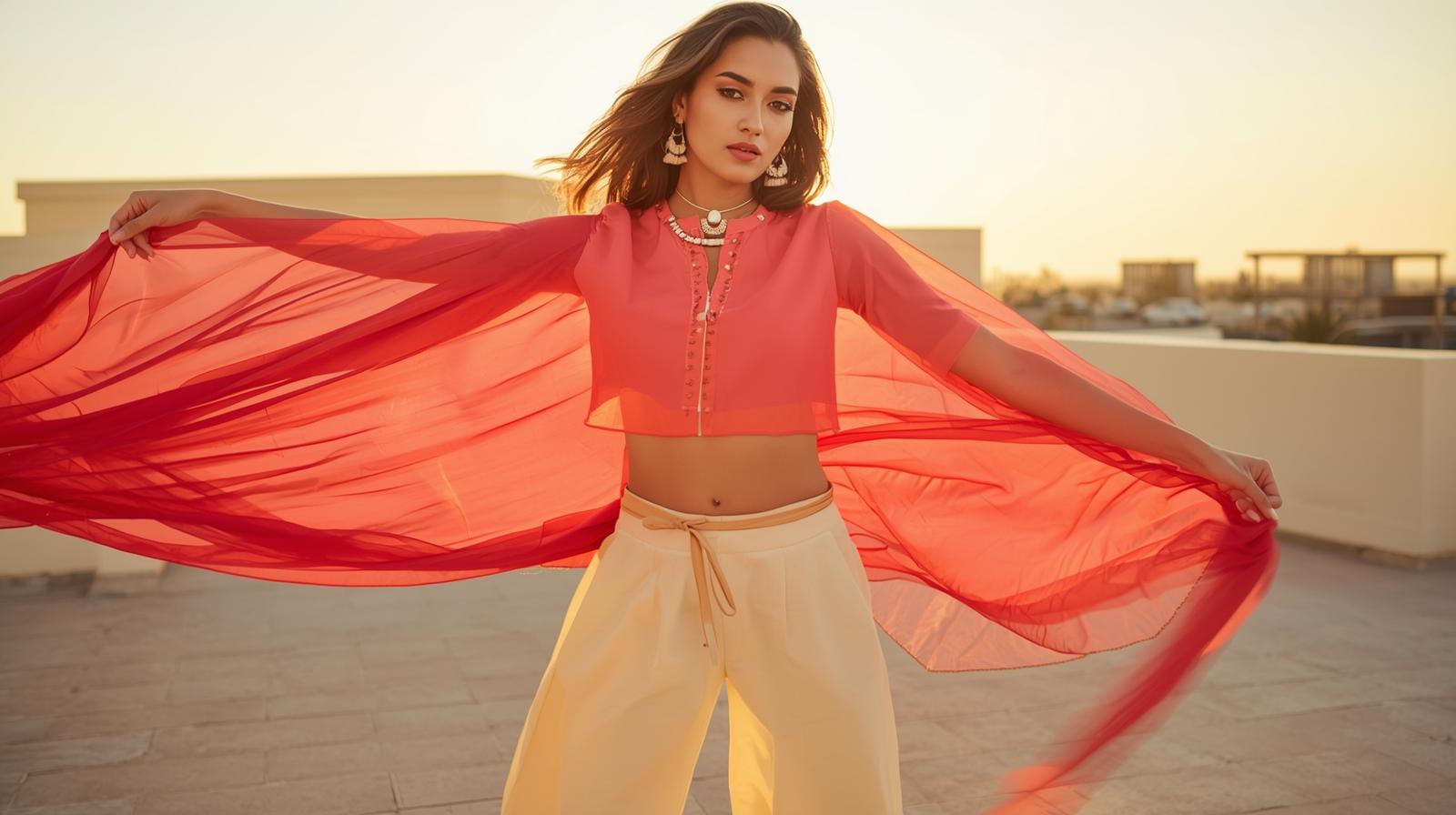
If you’ve scrolled Indian fashion Instagram in the last 60 days, you’ve seen this silhouette everywhere. The asymmetric hem kurta — where the front is cropped higher and the back trails longer, or where one side dips dramatically — is having an extraordinary moment in 2026. And it’s not just Instagram bait. These sell out.
What makes this work for Indian women specifically is that it solves the eternal dilemma: you want to show some style and structure, but you also want a kurta that skims, not clings, over your hips. The asymmetric hem creates visual interest without needing to show skin — which is why this style has been embraced equally by women in Chennai, who style it with a heavy gold chain and flat kolhapuris, and women in Delhi, who pair it with white wide-leg trousers and block heels.
How to Style It
- With cigarette pants in white or ivory — this is the power-office look
- Over flared palazzos in a tonal colour — maximalist but controlled
- With blue straight-cut jeans and pointed mules — the effortless casual interpretation
- Tucked at the front into a high-waisted skirt — the fashion-forward hack
Where to Buy
- Aks on Myntra (₹1,100–₹2,200) — consistently bestselling
- Label Ritu Kumar (₹3,500–₹6,500) — the investment version
- Nykaa Fashion’s own label (₹999–₹1,800) — accessible entry point
- Suta (₹1,400–₹2,800) — handloom-focused, ethical option
Colour tip for 2026: Dusty terracotta, raw umber, and off-white are the defining colours of the asymmetric kurta this season. Jewel tones — emerald, cobalt, deep plum — are the festive alternatives.
2. Mul-Mul Block Print Kurta — The Everyday Artisan
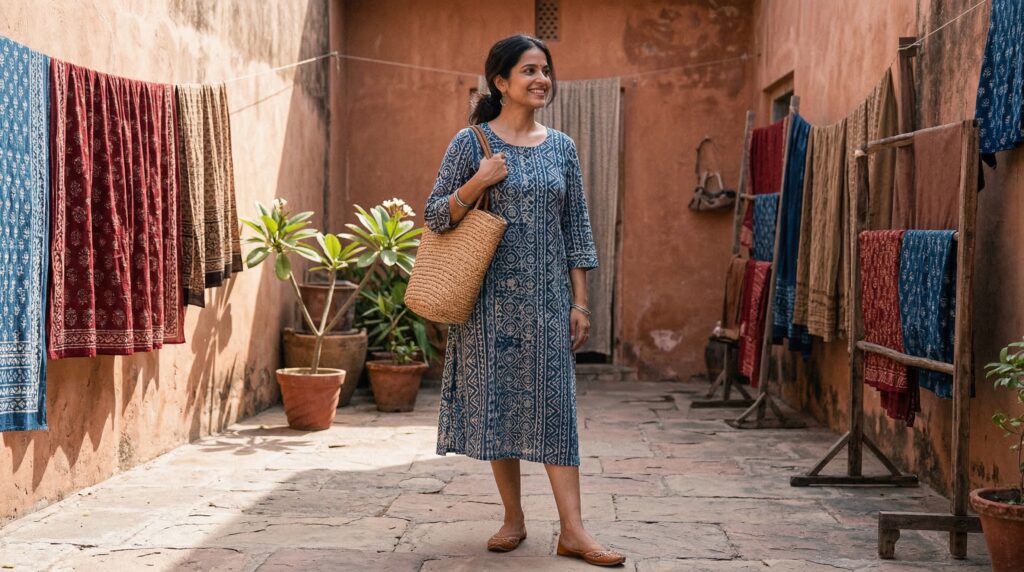
Mul-mul (muslin) has been around for centuries. But in 2026, it’s found its cultural moment again — and the block-print iteration is particularly on fire. The reason is simple: this fabric breathes better than almost anything at this price point, the block print gives you the artisanal, handcrafted story that urban Indian women increasingly want to tell about themselves, and it photographs beautifully in natural light — which is a genuine consideration for the Instagram generation.
Jaipur, Bagru, and Sanganer remain the printing capitals, and direct-to-consumer brands sourcing from these regions have exploded in popularity. What’s new in 2026 is the way this fabric is being cut — not in the traditional straight silhouette, but in flared A-lines, tiered hems, and even wrap-front styles that feel contemporary rather than ethnic-craft-fair.
The Styling Rules for Mul-Mul Block Print
- Keep accessories minimal — the print is the jewellery
- Flat footwear only: juttis, kolhapuris, or flat thong sandals work best with this relaxed fabric
- A wicker tote or jute bag elevates the artisanal story
- Tie hair back or in a loose braid — the kurta does the talking
Best Brands for Mul-Mul Block Print
- Fabindia (₹1,200–₹2,800) — reliable, widely available, consistent quality
- Jaypore (₹1,600–₹3,500) — curated craft, excellent provenance stories
- Go Colors (₹800–₹1,500) — budget-friendly, younger audience
- Craft & Loom on Instagram (@craftandloom) — small-batch, genuinely handmade
3. Structured Chanderi Kurta — The Quiet Luxury Indian Statement
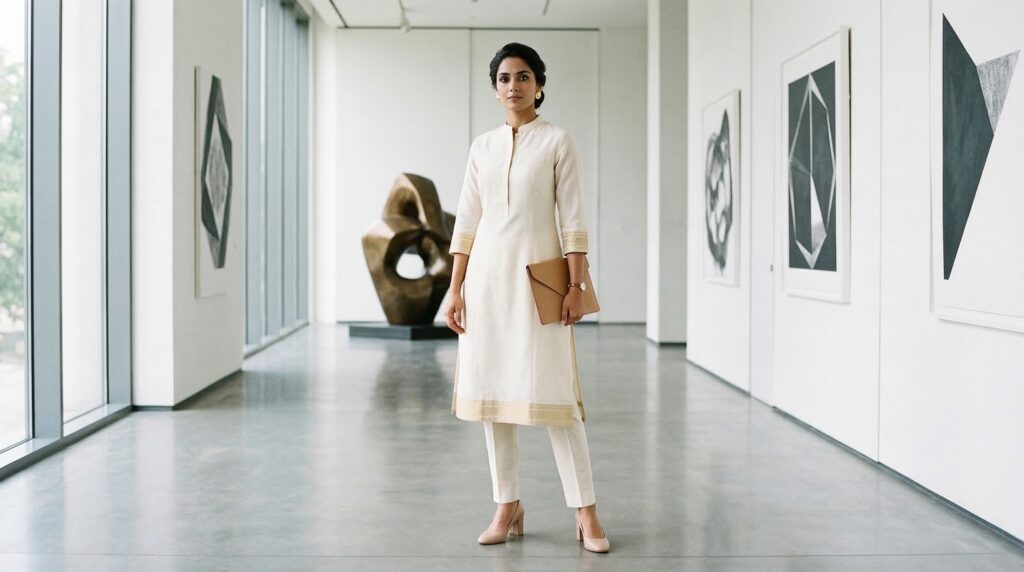
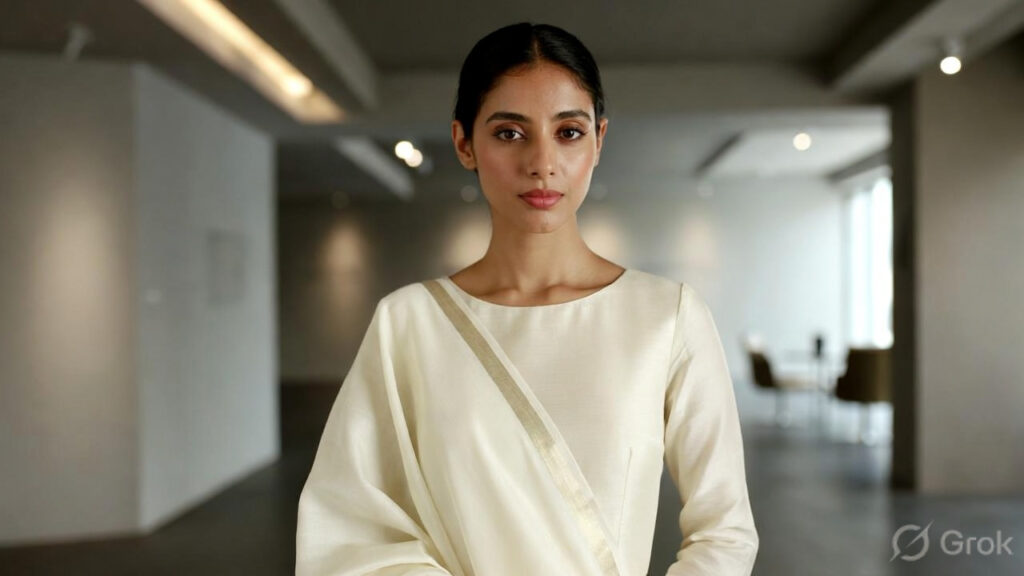
If you’ve been paying attention to global fashion, ‘quiet luxury’ has been the defining aesthetic movement of the last two years. In the Indian context, Chanderi fabric has become the domestic answer to that conversation — and rightfully so. This silk-cotton blend from Madhya Pradesh drapes with an elegance that no synthetic fabric can replicate, has a natural sheen that photographs as ‘expensive’ without screaming it, and remains cool enough for summer.
The structured Chanderi kurta — with clean-cut straight silhouettes, minimal ornamentation (perhaps a fine zari border or a single embroidered neckline motif), and in muted heritage colours — has become the go-to for senior corporate women, art world professionals, and anyone who needs to look impeccably pulled together without appearing to have tried too hard.
This is the kurta you wear to a venture capital pitch, a parent-teacher meeting at a premium school, or a museum opening. It communicates ‘I know exactly who I am’ without saying a word.
The Colour Palette of Chanderi 2026
- Ivory and cream — the perennial favourite
- Sage green — the unexpected hit of 2026
- Dusty rose — feminine but not saccharine
- Steel grey — androgynous, powerful
- Warm marigold — the festive version that works without being loud
Investment Pieces Worth Every Rupee
- Anita Dongre (₹6,500–₹18,000) — the gold standard for Chanderi craft
- Biba’s Chanderi range (₹2,500–₹4,500) — accessible luxury
- Raw Mango by Sanjay Garg (₹8,000–₹25,000) — if you’re buying a forever piece
- Taneira by Titan (₹3,500–₹9,000) — reliable craftsmanship, organised retail experience
4. Oversized Comfort Kurta — Gen Z Rewrites the Rules
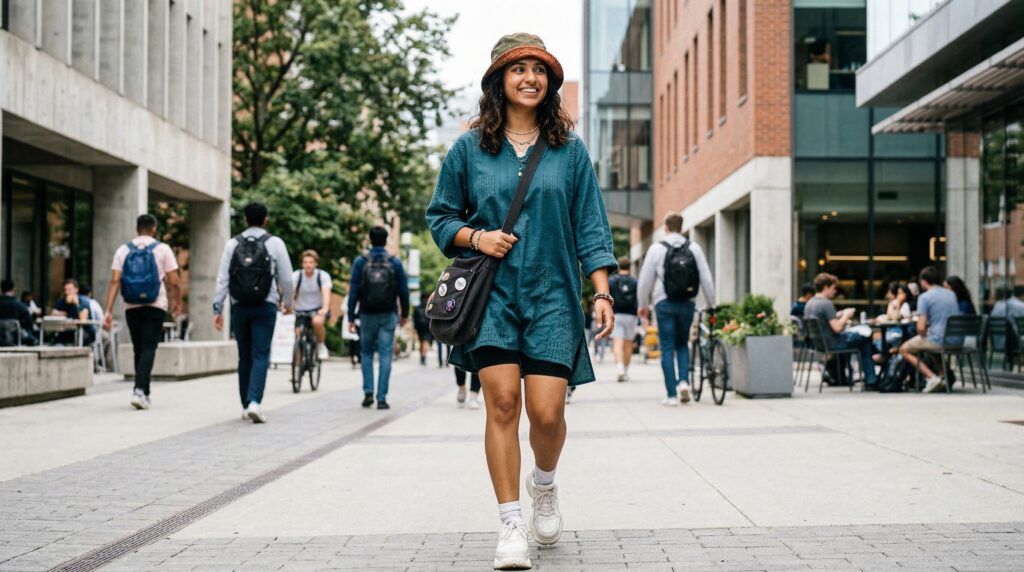
Here’s the one that traditional Indian fashion editors didn’t see coming. The oversized kurta — baggy, dropped-shoulder, hits mid-thigh or above the knee — is not just a campus and WFH staple anymore. It’s been elevated by the Gen Z styling instinct: worn over biker shorts, tucked partially into high-waisted jeans, belted at the waist with a chunky leather belt, or simply left as-is with chunky white sneakers and a bucket hat.
What’s happening is a cultural negotiation. Indian women in their 20s are refusing to choose between ethnic and Western — they’re creating a third category. The oversized kurta, in a solid colour or a subtle stripe, is their vehicle.
The Gen Z Styling Formula
- Oversized kurta + biker shorts + chunky white sneakers = the street style moment
- Oversized kurta + wide-leg denim + crossbody bag = effortless everyday
- Oversized kurta + cycling shorts + dad sandals = the cool campus aesthetic
- Belted oversized kurta + kitten heel mules = the fashion-forward office adaptation
Where to Shop
- FabIndia’s unstitched cotton range (₹650–₹1,200)
- H&M India’s new ethnic-inspired kurta line (₹999–₹1,799)
- W for Woman (₹899–₹2,200) — reliable cuts, consistent quality
- Zudio (₹399–₹799) — the budget champion loved by college students
5. Crop Kurta + Palazzo Set — The Modern Ethnic Power Duo
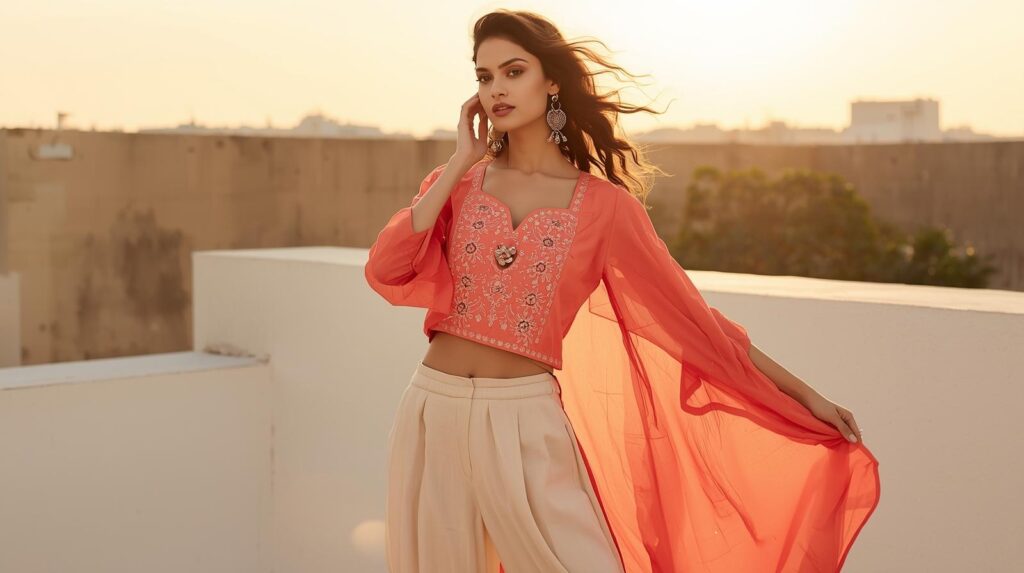
This combination has been building momentum for three years, and in summer 2026 it’s arrived at mainstream critical mass. The crop kurta — ending just above or at the natural waist — paired with a wide-leg palazzo pant creates a proportional magic that flatters nearly every body type. The silhouette gives the impression of height and length even at 5’2″, because the high-rise palazzo creates a long, unbroken vertical line below the crop.
What’s new this year is fabric innovation. The best versions are no longer just cotton-polyester blends. We’re seeing rayon-modal mixes that drape like water, linen palazzos with subtle texture, and even handloom khadi palazzo sets that feel genuinely artisanal.
The Colour Combinations Winning Right Now
| Kurta Colour | Palazzo Colour | Occasion |
| White | Indigo blue | Daytime, travel, market days |
| Coral orange | Cream | Brunch, evening outings |
| Sage green | Sage green (tonal) | Weddings, festivals |
| Black (with gold print) | Black | Evening, parties |
| Mustard yellow | White | Offices, relaxed Fridays |
Best Brands for the Crop-Palazzo Combo
- Global Desi on Myntra (₹1,200–₹2,800) — consistently bestselling sets
- Sangria by Myntra (₹999–₹2,200) — trendy cuts, good fabric
- House of Pataudi (₹2,500–₹5,500) — premium, heritage-inspired
- Libas (₹799–₹1,800) — great value for the trend
6. Chikankari on Georgette — Old Lucknow, New Energy
Chikankari is Lucknow’s gift to Indian fashion — a hand-embroidery tradition over 400 years old. And in 2026, it’s undergoing a genuine renaissance, driven by the intersection of two forces: the global slow-fashion and craftivism movement, and a homegrown celebrity culture that has increasingly turned to Indian handcraft over Western labels.
The 2026 update to chikankari is the fabric it’s being done on. Traditional chikankari was white on white, on cotton or voile. What’s exploding now is multi-coloured thread work — peacock green, blush pink, mustard — on lightweight georgette that drapes beautifully, travels well (packs small, doesn’t crease), and catches light in a way that photographs spectacularly.
Authentication & Where to Buy Real Chikankari
- Lucknow direct brands: Seva Chikan (₹1,800–₹5,500) — GI-tagged, authentic
- Fizaa by Meena Bazaar (₹2,200–₹6,000) — well-known in Delhi NCR
- Neerja by Nisha (Instagram brand, ₹1,500–₹4,000) — beautiful quality
- Beware: 90% of ‘chikankari’ on Amazon is machine embroidered. Look for GI certification.
7. Mirror Work Kutch Kurta — The Festival Statement Piece
Gujarat’s Kutch region produces some of the most labour-intensive textile craft in the world. The mirror-work (shisha) embroidery — tiny convex mirrors embedded into colourful thread embroidery — has crossed over from niche craft-lover territory into full mainstream fashion in India’s metros. It’s now worn not just at festivals and garba, but at beach resorts, weekend brunches, and even styled into smart-casual work outfits with wide-leg white trousers.
The key to wearing Kutch mirror work in 2026 without looking costumed is scale and colour choice. Opt for kurtas where the mirror work is concentrated at the neckline, hem, or sleeve edges rather than covering the entire garment. And in 2026’s colour story, the deepest pinks, cobalt blues, and burnt oranges are the ones translating best from rural craft to urban fashion.
Styling Rules
- Let the kurta be the entire statement — plain accessories, minimal jewellery
- Pair with flared white cotton bottoms or plain linen palazzos
- Flat sandals or juttis — heels fight the earthy, artisanal quality of the garment
- One statement earring max — the mirror work already catches light like jewellery
8. Mul-Mul Kaftan Kurta — The Summer Travel Essential
If you’re heading to Goa, Pondicherry, Coorg, or any coastal or hill destination this summer — and millions of urban Indians are — the mul-mul kaftan kurta is the garment you need. It’s essentially a hybrid: the loose, free-falling silhouette of a kaftan with the slightly more structured length and neckline of a kurta. Think resort wear that’s socially acceptable at a temple and a beach bar in the same afternoon.
The 2026 version of this garment has evolved — it’s being made in hand-painted batik, Ajrakh prints, and even Kalamkari art styles. The result is a garment that is genuinely unique, often one-of-a-kind, and tells a story about Indian craft traditions while remaining entirely contemporary in silhouette.
Best Sources for the Kaftan-Kurta
- Anokhi (₹1,800–₹4,200) — the gold standard in block-print kaftan-kurtas
- W for Woman’s resort collection (₹1,299–₹2,800)
- Goa-based boutiques (Fab India Goa, Literati bookshop area boutiques) — the best pieces often aren’t online
- Tjori on Amazon India (₹999–₹2,200) — decent online option for the style
9. Cotton Slub A-Line Kurta — The Dependable Icon
Some trends come and go. The cotton slub A-line kurta is eternal — and this season, it’s being newly appreciated precisely because everything around it has gotten more complicated. When half your Instagram feed is asymmetric hems and mirror-work drama, the clean, confident A-line kurta in a beautiful cotton slub fabric becomes a statement of its own kind.
What makes cotton slub special is its naturally irregular texture — the slight thickening and thinning of the yarn creates visual interest without pattern. In 2026, the colours being embraced are far bolder than the khadi-cream of previous years: electric cobalt, burnt sienna, deep forest green, saturated mustard.
Office Dressing: Why the A-Line Kurta Wins
- Fits formal and semi-formal dress codes without effort
- Pairs with both churidars and straight pants — maximum versatility
- At ₹650–₹1,800, it’s a cost-per-wear champion over a 3-year period
- Washes and irons easily — critical for daily office wear
10. Tie-Dye & Shibori Kurta — Art Meets Everyday Wear
The tie-dye revival has been building globally since 2020, and in India it’s found its most sophisticated expression in 2026 through the traditional Japanese shibori technique — where fabric is folded, twisted, and bound before dyeing to create patterns that are genuinely one-of-a-kind. No two shibori kurtas are identical, which in a world of fast fashion mass production is genuinely remarkable.
Indian brands have adapted shibori using indigo (from natural plant sources), turmeric, and pomegranate — traditional Indian dye sources — on mul-mul and Kota doria fabrics. The result is an Instagram darling that also has a genuine slow-fashion story: natural dyes, traditional technique, Indian craft.
The 2026 Shibori Colour Stories
- Indigo on white — timeless, the most versatile
- Coral on cream — the summer sunset look
- Turmeric yellow on natural fabric — earthy, warm, festive
- Navy and white — unexpected but clean
The Complete 2026 Summer Kurta Shopping Guide
| Budget | Best Platform | Top Picks |
| Under ₹800 | Zudio, Meena Bazaar, Reliance Trends | Cotton slub A-line, basic mul-mul, simple printed |
| ₹800 – ₹2,000 | Myntra, Ajio, Flipkart Fashion | Block print mul-mul, crop-palazzo sets, chikankari entry |
| ₹2,000 – ₹5,000 | Fabindia, Jaypore, Nykaa Fashion | Chanderi, asymmetric hem, Kutch mirror work |
| ₹5,000 – ₹15,000 | Label Ritu Kumar, Anita Dongre, Raw Mango | Investment pieces, master craftwork, heirlooms |
| ₹15,000+ | Flagship stores, personal styling sessions | Custom Chanderi, haute chikankari, bespoke shibori |
Build a 5-Piece Summer Kurta Capsule Wardrobe
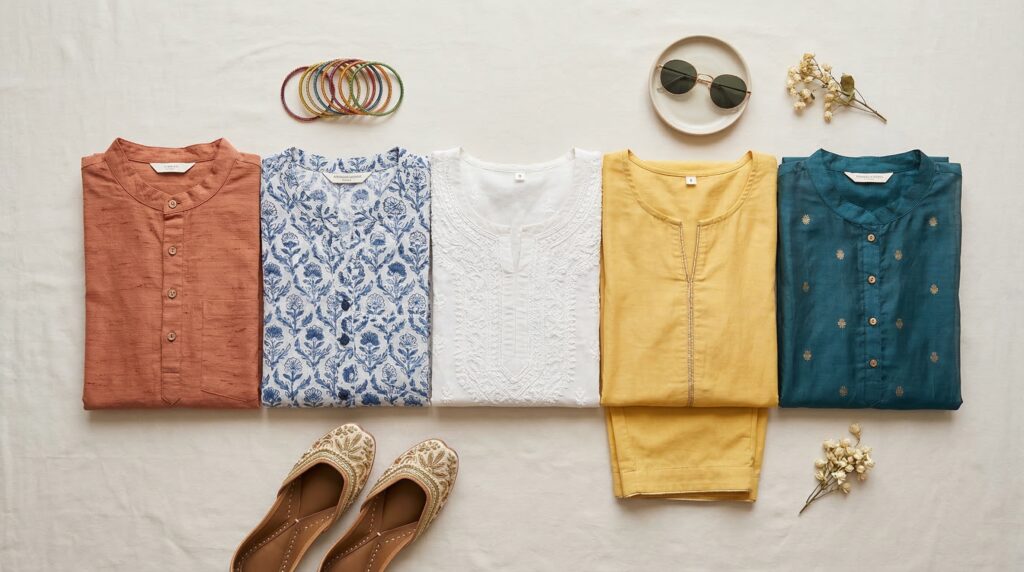
You don’t need 20 kurtas. You need 5 exceptional ones that cover every occasion:
- One cotton slub A-line in a bold solid colour — your office workhorse
- One mul-mul block print — your everyday, travel, weekend companion
- One structured Chanderi or silk-cotton — your elevated occasion piece
- One crop kurta with matching palazzo — your going-out ensemble
- One statement piece (chikankari, mirror work, or shibori) — your festival and event star
Five pieces. Every occasion covered. Total investment: ₹7,000–₹25,000 depending on your brand choices. Cost per wear over a season? Remarkable.
The secret to looking effortlessly stylish in Indian wear isn’t owning more — it’s owning better. Five considered kurtas, well-made and well-chosen, will serve you longer and look sharper than twenty fast-fashion impulse buys.
Happy styling! Tag @trendingindiatoday in your summer kurta looks — our favourite each week gets featured on our Instagram Stories.
About the Author