
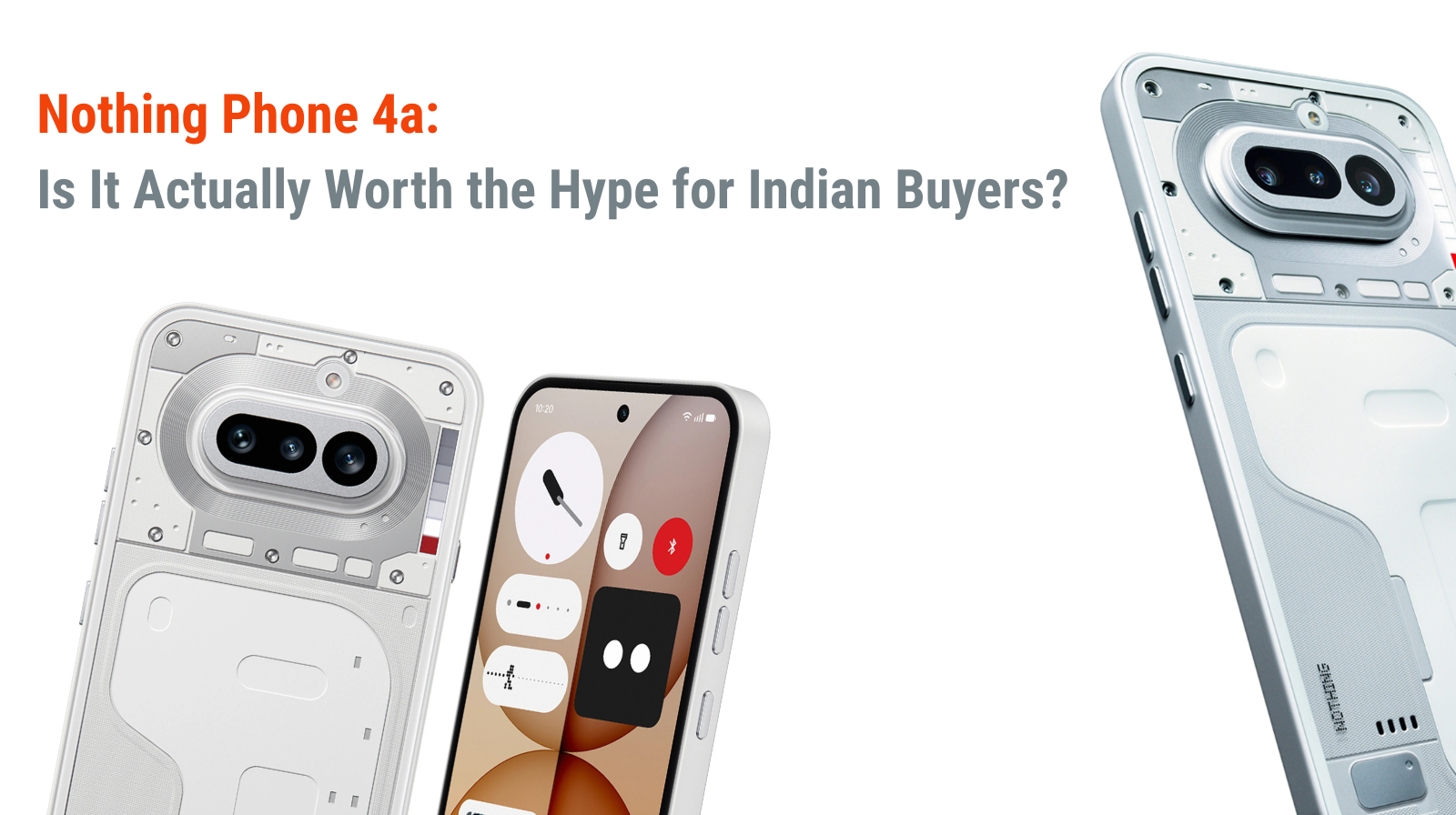
Nothing has always been good at making people pay attention. The transparent back. The LED lighting system. Carl Pei’s launch theatrics. This is a company that understands how to create hype. But hype and a good smartphone are not the same thing.
The Nothing Phone 4a launched in India on March 5, 2026, priced at ₹31,999 for the base variant. Within 24 hours of pre-orders opening, it became the most viewed device in the sub-₹50,000 category on 91mobiles and Smartprix. That’s the kind of attention Nothing commands.
But Indian buyers — especially in the fiercely competitive ₹30,000–₹40,000 segment — don’t buy on attention. They buy on camera performance at a Holi party. They buy on battery that survives a 14-hour work day. They buy on software that won’t slow down in 18 months. They buy on value that holds up against the Hyundai Creta of smartphones — the OnePlus 13R — and Samsung’s Galaxy A56.
We’ve gone through everything — real-world camera samples, benchmark data, software depth, and the specific Indian usage patterns that matter. Here’s our verdict.
Bottom line upfront: The Nothing Phone 4a is one of the most distinctive, well-designed phones in this segment. The 50MP periscope zoom at ₹31,999 is genuinely unprecedented. Nothing OS is a joy to use. But the Snapdragon 7s Gen 4 chip is mid-range through and through, and the lack of wireless charging at this price stings. For the right buyer, it’s excellent. We’ll tell you exactly who that buyer is.
At a Glance: Full Specs
| Spec | Details |
| Launch Price | ₹31,999 (8GB + 128GB) | ₹34,999 (8GB + 256GB) | ₹37,999 (12GB + 256GB) |
| Available On | Flipkart, Nothing India Store — on sale since March 13, 2026 |
| Display | 6.78-inch 1.5K LTPS AMOLED | 30–120Hz adaptive | 4,500 nits peak | Gorilla Glass 7i |
| Processor | Qualcomm Snapdragon 7s Gen 4 |
| RAM / Storage | 8GB LPDDR4X / 12GB | 128GB / 256GB UFS 3.1 (no expandable storage) |
| Rear Cameras | 50MP main (OIS) + 50MP periscope (3.5x optical zoom) + 8MP ultra-wide |
| Front Camera | 32MP |
| Battery | 5,400mAh (India variant — higher than 5,080mAh global model) |
| Charging | 50W wired | No wireless charging | 7.5W reverse wired charging |
| OS | Nothing OS 4.1 | Android 16 | 3 years OS updates | 6 years security patches |
| Glyph System | Glyph Bar — 63-LED strip replacing the older segmented Glyph Interface |
| Water Resistance | IP54 |
| 5G Bands | Sub-6GHz — full India 5G band support (Jio, Airtel, Vi) |
| Colours | Black, White, Blue, Pink |
| Weight | 190g |
| Dimensions | 164.3 × 77.5 × 8.3mm |
Design & Build: The Phone People Turn Around to Look At
Let’s start with what Nothing undeniably gets right. The Phone 4a is the best-looking mid-range Android in India at this price point. Full stop. There is nothing else at ₹31,999 — not the Samsung Galaxy A56, not the OnePlus 13R — that generates the same double-take when you place it on a cafe table.
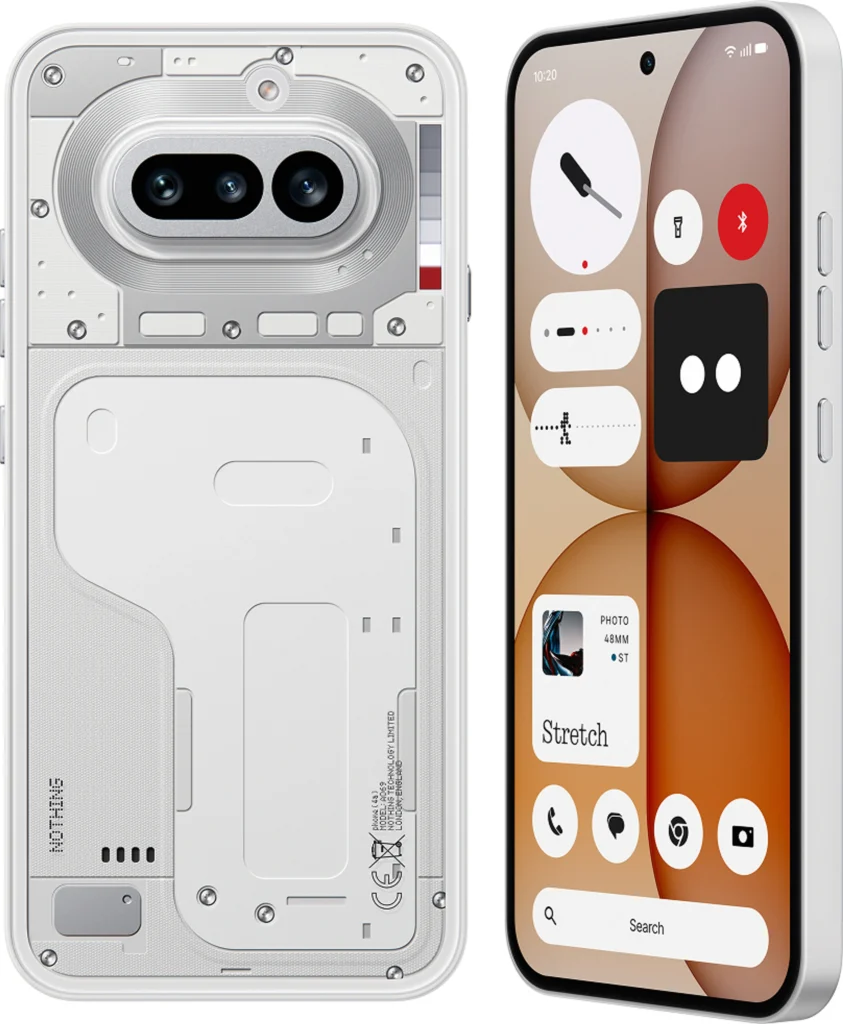
The transparent back has been refined — less industrial than the Phone 2, cleaner than the Phone 3a. The new Glyph Bar runs along the right edge of the rear panel: a strip of 63 LEDs in 7 addressable blocks that light up for calls, notifications, timers, and — most practically — as a recording indicator (the bottom block glows red when your camera is recording video). It’s not just aesthetics. It’s a genuinely functional notification system once you configure it.
The Pink variant deserves a special mention. Nothing’s first ever pink phone breaks the brand’s monochrome history, and it does so with remarkable restraint — a dusty, muted blush rather than bubble-gum pink. It looks premium. It will photograph spectacularly on Instagram. It was reportedly the first colour to run out of pre-order stock.
Build quality reality check: The IP54 rating is a step below what rivals offer — Samsung’s Galaxy A56 has IP67, meaning full water immersion. The Phone 4a will survive a rain shower and the occasional splash, but don’t drop it in a pool. At ₹31,999, this is an acceptable trade-off, but it’s worth knowing before you buy.
The Glyph Bar is the Phone 4a’s most conversation-starting feature. In our experience, every single time you use the phone in public, someone asks about it. At ₹31,999, that kind of presence is remarkable.
Display: 1.5K AMOLED That Punches Above Its Price
The 6.78-inch 1.5K AMOLED display is one of the Phone 4a’s strongest arguments. 4,500 nits of peak brightness means this screen is fully readable in direct Indian sunlight — standing at a bus stop at noon in Chennai or waiting outside a cricket stadium in Hyderabad. The adaptive 30–120Hz refresh rate keeps scrolling smooth while saving battery when the screen is displaying static content.
Colours are accurate rather than oversaturated — a deliberate Nothing design choice that suits documentary photography and OTT streaming (films look more cinematic on a calibrated display than on an artificially vivid one). JioHotstar, Netflix, and Prime Video content look excellent. IPL matches on this screen in a dark room are genuinely immersive.
Where it falls short: The display is 1.5K resolution, not Full HD+ minimum that budget conscious users might prefer. Also, at 800 nits typical brightness, outdoor visibility is good but not best-in-class — the iPhone 17’s display still sets the standard for outdoor legibility that no Android at this price can match.
For IPL 2026, binge-watching Panchayat Season 4, or daily Instagram scrolling, this display is more than adequate — it’s excellent.
Performance: Good Enough — But Let’s Be Honest
The Snapdragon 7s Gen 4 is a capable mid-range chip. Daily tasks — opening Zomato, switching between WhatsApp and Gmail, running Google Maps navigation while Spotify plays — all happen without a hiccup. For the vast majority of Indian phone users whose real-world demands are apps, calls, photography, and OTT, this chip is entirely sufficient.
Where the limitations show up is in demanding gaming. BGMI (Battlegrounds Mobile India) runs at medium settings with occasional frame drops at peak action. Nothing promises no stutters in their marketing — real-world testing shows it’s smooth at Medium but not consistently at Ultra High. If you’re a serious BGMI player or play Asphalt Legends Unite at maximum graphics regularly, this chip will frustrate you within six months.
| Performance Test | Nothing Phone 4a | OnePlus 13R (rival) | Samsung Galaxy A56 (rival) |
| Chipset | Snapdragon 7s Gen 4 | Snapdragon 8 Gen 3 | Exynos 1580 |
| AnTuTu Score (est.) | ~720,000 | ~2,200,000 | ~850,000 |
| BGMI (max settings) | Medium, drops at peak | Ultra HD, consistent | High, occasional drops |
| App launch speed | Fast | Very Fast | Fast |
| Multi-app switching | Good | Excellent | Good |
| Sustained performance | Good (no throttling) | Excellent | Good |
| RAM (base) | 8GB LPDDR4X | 12GB LPDDR5X | 8GB LPDDR4X |
The AnTuTu gap tells the story: the OnePlus 13R’s Snapdragon 8 Gen 3 is approximately 3× faster than the Phone 4a’s 7s Gen 4. For gaming-first users, this gap is significant. For everyday users, it’s irrelevant.
Cameras: The Phone 4a’s Strongest Argument
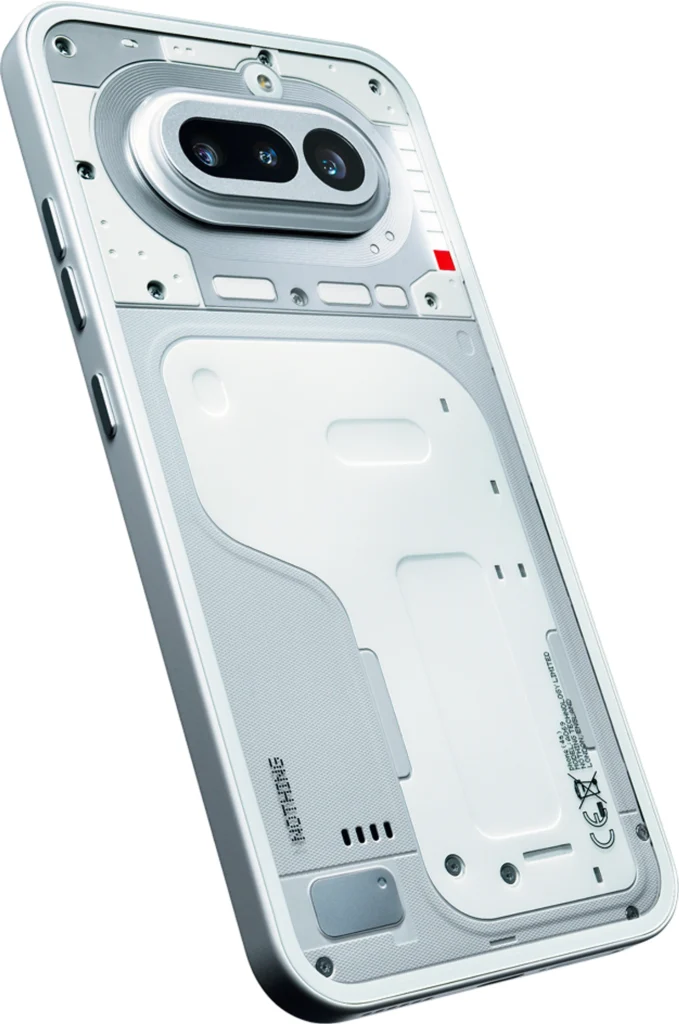
Here’s where the Phone 4a genuinely earns its ₹31,999 price tag. A 50MP periscope telephoto with 3.5x optical zoom at this price point is unprecedented in India. No phone under ₹35,000 offers a periscope zoom system — they all either skip telephoto entirely or offer a basic 2x optical at best.
Main Camera (50MP, OIS)
The primary 50MP shooter with OIS produces consistently sharp, well-exposed photos in good light. Colour science is true to life — Nothing’s processing philosophy leans natural rather than hyper-processed, which means photos don’t have that artificially sharpened, over-saturated look you get from some Xiaomi and Samsung devices. Outdoor portraits at Goa beaches, street food shots at Delhi’s Chandni Chowk, architecture photos at Jaipur forts — all excellent.
In low light — the real test for Indian party and wedding photography — performance is respectable but not class-leading. Night Mode works well when subjects are still; it struggles with movement, which is a challenge at dimly lit indoor events. Samsung’s Galaxy A56 edges ahead in low-light people photography specifically.
Periscope Telephoto (50MP, 3.5x optical)
This is the headline feature and it genuinely delivers in good light. 3.5x optical zoom means you can capture a cricket fielder’s expression from the stands, get a tight shot of street food being cooked from across a lane, or photograph a monument’s architectural detail without walking closer. Real-world testing confirms the 3.5x shots are sharp and usable. The 70x digital zoom is a party trick — it exists, it’s impressive to demo, but practically unusable.
Ultra-Wide (8MP)
This is the weakest link. 8MP ultra-wide in 2026 at ₹31,999 feels below par — the Samsung Galaxy A56 offers a 12MP ultra-wide that produces noticeably cleaner, wider shots. Landscape photography and group photos in tight spaces will reveal this gap. Not a dealbreaker, but a real limitation.
Selfie (32MP)
The 32MP front camera is one of the best in this segment. Indian skin tones render accurately, HDR in backlit conditions (standing near a bright window) handles the exposure balance well, and the algorithm doesn’t over-smooth faces into plastic. Reel creators will be satisfied.
| Camera Scenario | Phone 4a | Galaxy A56 | OnePlus 13R |
| Daylight main camera | Excellent ✅ | Excellent ✅ | Excellent ✅ |
| Low light / Night Mode | Good | Very Good ✅ | Good |
| 3.5x optical zoom | Excellent ✅ | N/A (no periscope) | 2x only (basic) |
| Ultra-wide quality | Average ❌ | Good ✅ | Good ✅ |
| Selfie / portrait | Very Good ✅ | Good | Average |
| 4K video quality | Good (30fps max) | Good (30fps) | Excellent ✅ (60fps) |
| Low light video | Average | Good ✅ | Good ✅ |
Camera verdict: The periscope telephoto is the Phone 4a’s showstopper and genuinely differentiates it from every rival at this price. For zoom photography, it’s unbeaten under ₹35,000. For low-light and video, rivals edge ahead.
Battery & Charging: The Indian-Spec Advantage
Here’s something worth noting: the Indian variant of the Phone 4a gets a 5,400mAh battery — 320mAh more than the global model’s 5,080mAh. This is a conscious India-specific decision by Nothing, acknowledging that Indian users run their phones harder and charge less frequently than European users. It’s a thoughtful call.
Real-world testing confirms 7 hours of screen-on time under heavy multitasking — WhatsApp, Reels, Maps, camera use through a day. For lighter users, 1.5 days per charge is achievable. That’s strong for this segment.
The gap: no wireless charging. At ₹31,999 in 2026, this is a genuine omission. The OnePlus 13R offers 50W wireless charging; the Samsung Galaxy A56 offers 25W wireless. Nothing has chosen to skip it to keep costs down. For users who use a wireless pad on their desk or bedside table, this will be a daily inconvenience.
| Battery Test | Result |
| Screen-on time (heavy use) | 7 hours consistently |
| Full charge time (50W) | ~55 minutes (0–100%) |
| Wireless charging | ❌ Not supported |
| Reverse wired charging | ✅ 7.5W (for earbuds) |
| Overnight drain (idle) | ~2–3% |
| Expected daily use | 1 day (heavy) / 1.5 days (moderate) |
Nothing OS 4.1: The Reason Design People Buy This Phone
Nothing OS 4.1 based on Android 16 is the best mid-range Android software experience in India today. That’s a strong claim, but it holds up. The interface is clean, fast, and coherent in a way that Samsung’s OneUI — loaded with Samsung features, Samsung apps, Samsung AI, Samsung everything — simply isn’t at any price point.
The font, icon design, and widget system are distinctive without being garish. There is no bloatware — no pre-installed games, no carrier apps, no unwanted tools you’ll never use. Opening the Phone 4a out of the box is a rare experience of ‘this phone has been thought through’ rather than ‘this phone has been monetised.’
Update commitment: 3 years of Android OS updates and 6 years of security patches. This means you’re covered through Android 16, 17, 18, and 19. For a ₹31,999 phone, this lifespan is excellent — though it still trails Samsung’s 6-year OS update promise on the Galaxy A56.
AI features: Nothing’s AI integration is restrained and practical — an AI-powered Essential Space that organises important information, a smarter Glyph system that interacts with AI summaries, and clean integration with Google’s Gemini. There are no half-baked AI gimmicks that exist to fill a spec sheet.
Editor’s take: If you care about how your phone feels to use daily — not just the spec sheet — Nothing OS is worth ₹5,000 over a competing phone with comparable hardware but a cluttered UI.
The Glyph Bar: Gimmick or Genuinely Useful?
Fair question, and one that deserves an honest answer. The old Glyph Interface divided opinion — impressive at a tech event, easily ignored in daily life. The new Glyph Bar is more disciplined and more useful.
- Recording indicator (red block glows during video recording) — genuinely prevents accidental capture of private moments
- Charging indicator — glowing level shows battery status without turning on the screen at night
- Timer indicator — visual countdown without checking the screen during cooking or exercise
- Contact-specific Glyph patterns — you can assign specific light patterns to contacts so you know who’s calling without looking at the screen face
- Flip to Glyph — places the phone face down and Glyph handles all notifications silently, eliminating the need for DND in meetings
- Not visible in direct sunlight — the LEDs are bright but washed out outdoors
- Requires deliberate configuration to get value — out of the box it’s largely aesthetic
- Not a selling point for users who prefer simple, utilitarian smartphones
Verdict on Glyph: If you invest 20 minutes setting it up, it becomes a genuinely useful notification layer. If you don’t, it’s a design flourish. Either way, it doesn’t hurt the phone.
Nothing Phone 4a vs Rivals: The Sub-₹40K Battle
| Feature | Nothing Phone 4a (₹31,999) | Samsung Galaxy A56 (₹38,999) | OnePlus 13R (₹39,999) |
| Chipset | Snapdragon 7s Gen 4 | Exynos 1580 | Snapdragon 8 Gen 3 ✅ |
| Display | 6.78″ AMOLED 120Hz 1.5K ✅ | 6.7″ AMOLED 120Hz | 6.78″ AMOLED 120Hz |
| Peak Brightness | 4,500 nits ✅ | 1,200 nits | 4,500 nits ✅ |
| Rear Cameras | 50+50+8MP (periscope) ✅ | 50+12+5MP | 50+50+8MP |
| Optical Zoom | 3.5x periscope ✅ | None (digital only) | 2x telephoto |
| Selfie Camera | 32MP ✅ | 50MP ✅ | 16MP |
| Battery | 5,400mAh ✅ | 5,000mAh | 6,000mAh ✅ |
| Charging (wired) | 50W | 45W | 80W ✅ |
| Wireless Charging | ❌ No | 25W ✅ | 50W ✅ |
| Water Resistance | IP54 | IP67 ✅ | IP65 |
| OS Updates | 3 years OS + 6 sec. | 6 years OS + sec. ✅ | 4 years OS + 5 sec. |
| Software | Nothing OS (cleanest) | OneUI (feature-rich) | OxygenOS (balanced) |
| Design | Transparent — unique ✅ | Premium but generic | Premium but generic |
| Price Advantage | ₹7,000 cheaper ✅ | — | — |
The Summary Verdicts
✅ Phone 4a wins: periscope zoom, clean software, price, display brightness, selfie camera
✅ Galaxy A56 wins: IP67 water resistance, ultra-wide quality, wireless charging, 6-year OS updates, selfie
✅ OnePlus 13R wins: raw performance (3× faster chip), 4K 60fps video, 80W charging, battery capacity
Value equation: The Phone 4a is ₹7,000 cheaper than its rivals. At that gap, the missing wireless charging and Snapdragon 7s Gen 4 are easier to accept. If your budget is strictly ₹31,999–₹35,000, nothing in the segment touches it.
Who Should Buy the Nothing Phone 4a?
Buy It If You Are…
- A photographer who values optical zoom — 3.5x periscope at ₹31,999 has no competition
- Someone who values software aesthetics — Nothing OS is the cleanest mid-range Android available
- A design-conscious buyer who wants a phone that stands out in a crowd of black rectangles
- A Reel creator or content sharer who values the 32MP selfie and the periscope zoom for detail shots
- A budget buyer who can’t or won’t stretch to ₹39,999 for the OnePlus 13R
- Someone who values longevity — 6 years of security patches is excellent for a ₹32K phone
Think Twice If You Are…
- A heavy BGMI or CoD Mobile gamer — the Snapdragon 7s Gen 4 will hit its ceiling
- Someone who relies on wireless charging daily — it’s simply not here
- Prone to dropping your phone near water — IP54 is not IP67
- A video creator who needs 4K 60fps — the Phone 4a maxes out at 4K 30fps
- Someone who values long OS update cycles — Samsung’s 6-year promise beats Nothing’s 3
Our recommendation: ₹34,999 for the 8GB + 256GB variant is the right buy. The extra storage at ₹3,000 more is worth it — 128GB fills up faster than you expect once you start using the periscope zoom at 50MP.
Full Price List & Where to Buy
| Variant | Price | Best For | Platform |
| 8GB + 128GB | ₹31,999 | Budget-first buyer | Flipkart, Nothing Store |
| 8GB + 256GB | ₹34,999 | Most buyers — sweet spot | Flipkart, Nothing Store |
| 12GB + 256GB | ₹37,999 | Power users, multitaskers | Flipkart, Nothing Store |
Bank offers (at launch): ₹1,000 instant bank discount + ₹6,000 exchange bonus available on Flipkart. With exchange, the effective 8GB + 128GB price drops to ~₹24,999 for existing smartphone users.
The Nothing Phone 4a has become the most viewed device in the sub-₹50,000 category on 91mobiles and Smartprix since launch — confirming that Indian consumers are genuinely considering it, not just window shopping.
Final Verdict: Is It Worth the Hype?
The short answer: mostly yes — with important caveats.
The Nothing Phone 4a doesn’t win on raw performance. It doesn’t win on gaming. It doesn’t win on video recording. It doesn’t even win on water resistance. What it wins on is the combination of features you’ll actually use every day: a display that’s bright and accurate, a camera system with a genuine zoom you’ll reach for constantly, a software experience that feels designed rather than assembled, and a design that makes everyone around you curious.
At ₹31,999, it sits ₹7,000–₹8,000 below its primary rivals in the segment. That’s a meaningful gap. And for that gap, the only things you’re genuinely sacrificing are raw chipset performance, wireless charging, and 4K 60fps video. For most Indian buyers in 2026, those aren’t daily use cases.
The hype is mostly earned. The phone is mostly excellent. The caveat is knowing exactly what you’re optimising for.
TrendingIndiaToday Rating: 8.2 / 10 Best in segment for: Zoom camera · Software design · Value pricing · Unique aesthetics Buy at: ₹34,999 (8GB + 256GB) on Flipkart
Prices are as of March 19, 2026. Exchange offers and bank discounts are subject to availability and card eligibility. Verify current pricing on Flipkart or Nothing India’s official website.
About the Author