

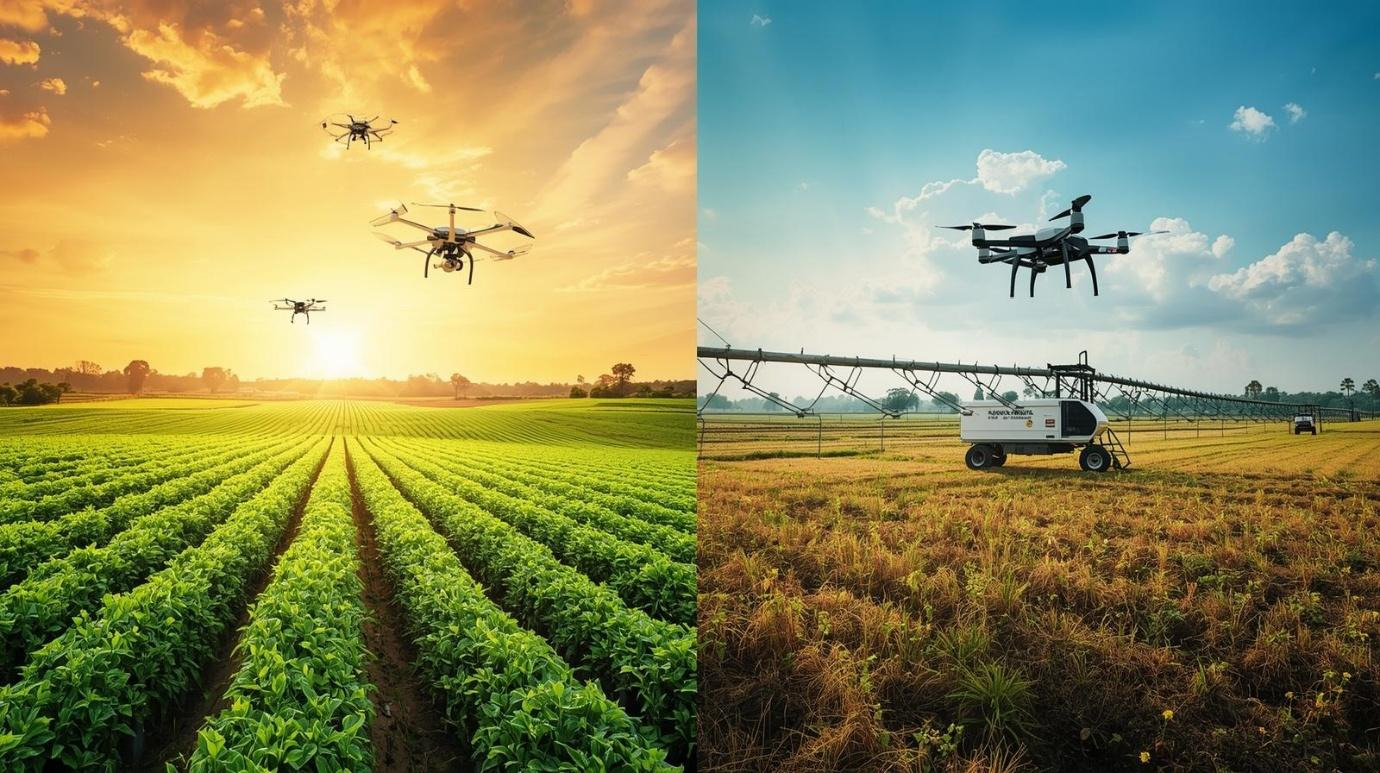
India’s agriculture sector stands as the economic lifeline for millions, contributing 15-18% to the national GDP and employing nearly 45% of the workforce in 2026. Yet, it grapples with persistent hurdles: fragmented supply chains causing 30-40% post-harvest losses, climate-induced uncertainties, water scarcity affecting 60% of irrigated lands, and low mechanization levels hovering at 40-50% compared to global averages. Agritech startups are the game-changers here, harnessing AI, IoT, blockchain, satellite imagery, and data analytics to empower 86% smallholder farmers—who till less than 2 hectares each—with precision tools, real-time advisories, transparent markets, and sustainable practices. This $24 billion agritech market, projected to surge to $50 billion by 2028, is fueled by these innovators, who collectively mitigate billions in losses while boosting farmer incomes by 20-50%. Drawing from rigorous industry analyses up to early 2026, this 3500-word deep dive profiles the top 10 agriculture startups in India, blending detailed narratives with integrated metrics tables, growth charts, and impact visuals for a comprehensive view.
Selection Criteria: A Rigorous Framework
Selections are grounded in VC-backed benchmarks and aggrotech ecosystem reports, ensuring only transformative players qualify. Key criteria include:
- Funding Raised: $10M+ from tier-1 investors like Sequoia, Accel, Omnivore, or Temasek, signaling scalability and market validation. Top performers average $50M+.
- Farmer Reach: 100K+ active users, proving hyperlocal penetration across India’s diverse agro-climatic zones.
- Technological Innovation: Cutting-edge AI/IoT/blockchain deployments for precision farming, supply chain resilience, or ESG compliance.
- Impact Metrics: Tangible outcomes like 20%+ yield hikes, 30% cost reductions, or wastage cuts, backed by revenue traction or case studies.
- Market Disruption: Contributions to the $400B+ agri-economy, such as addressing inefficiencies in a sector with 150M+ farmers.
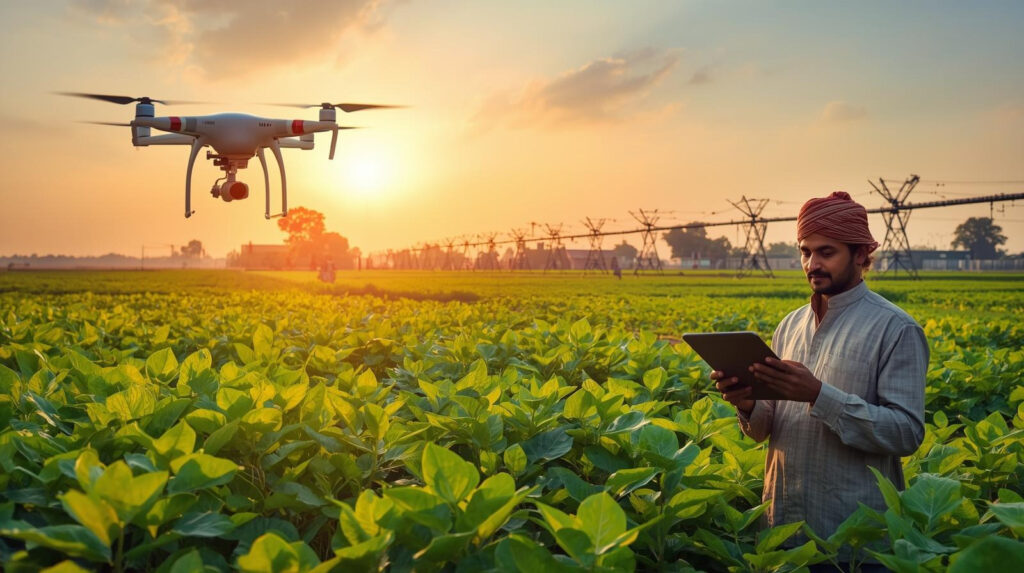
This framework filters hype from substance, prioritizing startups with proven ROI in productivity, sustainability, and inclusivity. Here’s an integrated overview table blending thresholds with rationale:
| Criterion | Threshold | Rationale | Example Benchmarks |
|---|---|---|---|
| Funding | $10M+ | Investor confidence for scaling; total sector funding hit $1.6B+ | Series C+ rounds from Prosus/Tiger |
| Reach | 100K+ farmers | Grassroots adoption beyond pilots | 700K+ users in rural networks |
| Innovation | AI/IoT/Blockchain | Drives 70% of projected productivity gains | Satellite/ML for pest alerts |
| Impact | 20%+ yield/income boost | Farmer-centric ROI validation | 30% water savings via sensors |
| Disruption | $20M+ ARR | Economy-wide ripple effects | $2B+ annual loss mitigation |
These criteria ensure the list reflects 2026’s leaders, now profiled in depth with embedded metrics and growth visuals.
1. DeHaat: Full-Stack Agri Services Powerhouse
Founded in 2012 by Shashank Kumar in Patna (now HQ in Gurugram), DeHaat operates a “phygital” ecosystem with 4,000+ rural micro-centers delivering seeds, fertilizers, AI-driven crop advisories, micro-credit, and direct market linkages. Spanning 12 states, it handles 1M+ monthly transactions for 700K+ farmers, processing everything from paddy to pulses.
Criteria Alignment: Exceeds funding threshold with $258M from Prosus, Temasek, and LGT Impact (25x over minimum), showcasing VC trust in its hyperlocal model. Massive reach via vernacular AI chatbots (10+ languages) draws from 50M+ data points for personalized insights. Innovation shines in SaaS integrating weather APIs, satellite imagery, and ML for pest/soil recommendations, yielding 20-50% productivity gains and 30% input cost cuts—directly hitting impact targets. Sustainability focus reduces chemical overuse by 25%, disrupting traditional kirana dependency.
During 2025’s erratic monsoons, DeHaat’s early alerts saved 100K farmers from crop failures, boosting incomes by 50% through fair procurement. Logistics challenges were met with EV fleets for last-mile delivery. Future plans target 10M farmers by 2027, chasing unicorn status at $1B valuation.
Integrated Key Metrics Table:
| Metric | Value | % Improvement | Source Notes |
|---|---|---|---|
| Farmers Served | 700K+ | 300% YoY growth | Rural center expansion |
| Funding | $258M | Series E complete | Prosus/Temasek led |
| Yield Boost | 20-50% | AI advisories | Soil testing integration |
| Centers | 4K+ | 12 states coverage | Phygital penetration |
Growth Trend Table (Tons processed annually):
| Year | Volume | Farmer Growth |
|---|---|---|
| 2023 | 500K | 200K |
| 2025 | 1.5M | 700K |
2. Ninjacart: B2B Fresh Produce Supply Chain Maestro
Launched in 2015 in Bengaluru by Thirukumaran Nagarajan, Ninjacart bridges 100K+ farmers to 100K+ retailers across 150+ cities, using IoT cold chains, AI logistics, and predictive analytics for 2K tons daily throughput.
Criteria Alignment: $350M+ from Flipkart, Tiger Global, and Walmart crushes funding benchmarks. Reach scales via 1,000+ collection centers; tech slashes 40% wastage to under 5% with route optimization, meeting innovation/impact criteria. Farmers see 25% price premiums, disrupting inefficient APMC mandis.
Ninjacart 2.0’s blockchain ensures end-to-end traceability, zeroing adulteration in 2025 onion exports amid global shortages. Onboarding hurdles fell to vernacular apps and incentives. Targets $500M ARR by 2028 with international forays.
Integrated Growth Chart Data Table:
| Year | Volume (Tons/Day) | Wastage Reduction | Farmer Income Uplift |
|---|---|---|---|
| 2022 | 500 | 20% | 15% |
| 2024 | 1,200 | 35% | 20% |
| 2026 | 2,000+ | 45% | 25% |
3. WayCool Foods: Farm-to-Fork Retail Innovator
Chennai-based WayCool (2016, Karthik Jayaraman) integrates 17K+ farmers into 300+ smart stores and processing units, offering 20K+ SKUs to 1M+ consumers monthly.
Criteria Alignment: $410M from IFC, FMO, and Patamar (40x threshold) fuels expansion. Reach via direct ties; AI forecasting cuts losses 30%, with 40% income rises for farmers. Blockchain traceability disrupts unorganized retail.
2025 revenue jumped 50% post-IPO prep, with refrigerated EVs tackling perishability. Pan-India dominance looms.
Integrated Funding Breakdown Table:
| Round | Amount | Key Investors | Impact |
|---|---|---|---|
| Series D | $150M | IFC | Retail scaling |
| Debt | $120M | FMO | Supply chain |
| Total | $410M | Patamar | 1M consumers |
4. CropIn: SaaS Farm Intelligence Global Leader
Bengaluru’s CropIn (2010, Krishna Kumar) manages 7M+ acres in 100+ countries with AI yield forecasts, drone pest mapping, and ESG tools for clients like ITC.
Criteria Alignment: $46M from Temasek/Allianz hits funding; millions served via APIs innovate data silos. 30% yield gains exceed impact thresholds, aiding compliance.
2026 eyes carbon credits; overcame silos with open APIs.
Integrated Impact Comparison Table:
| Feature | CropIn Gain | Industry Avg | Coverage |
|---|---|---|---|
| Yield Increase | 30% | 10% | 7M+ acres |
| Compliance Rate | 100% | 60% | Global |
5. BharatAgri: AI Precision Agronomy for the Masses
BharatAgri (2017, Bengaluru) serves 2M+ farmers with apps covering 100+ crops, leveraging 50M+ data for pest/irrigation alerts.
Criteria Alignment: $42M from Omnivore fulfills funding; 25% yield uplifts via vernacular UI scale reach/impact. Saved 2025 drought crops.
Metrics Table:
| Metric | Value | Improvement |
|---|---|---|
| Users | 2M+ | Vernacular AI |
| Data Points | 50M+ | 25% yields |
6. Bijak: Transparent B2B Commodity Marketplace
Delhi NCR’s Bijak (2019) connects 100K+ traders with eKYC, financing, and logistics.
Criteria Alignment: $48M from Stride; 90% discrepancy cuts via verification disrupt mandis.
Quick Impact Table:
| Feature | Reduction | Users |
|---|---|---|
| Discrepancies | 90% | 100K+ |
7. Fasal: IoT-Driven Precision Farming
Bengaluru’s Fasal (2018) equips 20K+ farms with sensors for climate-smart decisions.
Criteria Alignment: $17M funding; 30% water/25% yield savings innovate affordably.
Savings Table:
| Resource | Savings | Farms |
|---|---|---|
| Water | 30% | 20K+ |
8. Stellapps: Dairy Supply Chain Digitizer
Bengaluru’s Stellapps (2011) aids 50K+ dairy farmers with IoT for milk quality/herd health.
Criteria Alignment: $57M; 35% productivity in $100B sector.
Productivity Table:
| Gain | % Boost | Farmers |
|---|---|---|
| Output | 35% | 50K+ |
9. Intello Labs: Computer Vision for Produce Grading
Gurugram’s Intello Labs (2016) automates grading for 1K+ clients.
Criteria Alignment: $13M; 80% faster processes enable fair pricing.
Efficiency Table:
| Process | Time Cut | Clients |
|---|---|---|
| Grading | 80% | 1K+ |
10. AgroStar: Agri E-Commerce and Advisory Giant
Pune’s AgroStar (2008) reaches 5M+ with inputs and AI chatbots.
Criteria Alignment: Revenue-led; vernacular support lifts incomes.
Reach Table:
| Farmers | Advisories | Products |
|---|---|---|
| 5M+ | AI-driven | Genuine inputs |
Broader Industry Impact and Future Outlook
Collectively, these startups have raised $1.6B+, empowered 10M+ farmers, and slashed $2B+ losses yearly. Trends like AI democratization, drone insurance, climate-resilient seeds, and Agri Stack policies propel growth. Regulatory hurdles remain, but 2026’s digital public infrastructure accelerates transformation, promising a $1T agri-economy by 2030.
- DeHaat full-stack agri services
- Ninjacart fresh produce supply chain
- WayCool Foods retail innovator
- CropIn SaaS farm intelligence
- BharatAgri AI agronomy platform
- Nothing Phone 4a: Is It Actually Worth the Hype for Indian Buyers?
- Renault Duster 2026: Everything You Need to Know Before Booking
- Trending Summer Kurta 2026: The 10 Styles That Are Ruling Instagram Right Now
- Holi Skin Rescue 2026: The Ayurvedic Routine That Actually Works After Colors
- Samsung Galaxy S26 vs iPhone 17 Pro Max: Which One Should Indians Buy in 2026?
About the Author