

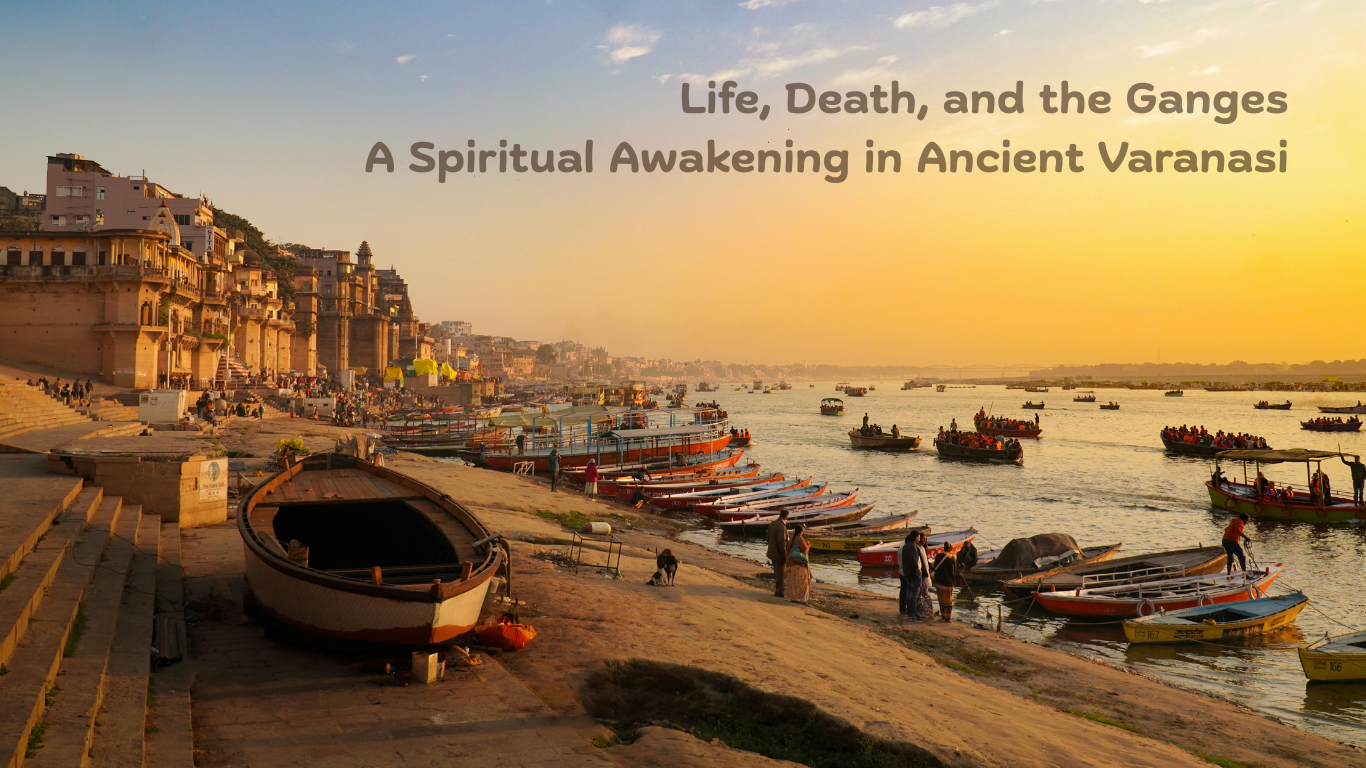
Varanasi, often called Kashi or the City of Light, pulses with an unmatched spiritual intensity where the Ganges River cradles both birth and death in its eternal flow. This ancient metropolis offers a raw awakening far beyond serene retreats, immersing visitors in Hinduism’s profound truths. Modeled after in-depth travel narratives, this extended exploration delves deeply into its rituals, history, and transformative power.
Sacred Geography and Ghats
Varanasi’s geography revolves around its 84 sacred ghats—stone steps descending to the Ganges—each with unique lore and purpose, stretching over 7 kilometers along the river’s western bank. These aren’t mere embankments; they’re portals to the divine where daily life unfolds as ritual. At Assi Ghat, students from nearby Banaras Hindu University gather for sunrise yoga and Ganges dips, symbolizing renewal as the river’s first rays hit the water. Manikarnika Ghat, one of the holiest, marks where Shiva’s wife Sati’s earring fell, creating a perpetual well of power that draws cremation pyres nonstop.
The river itself, revered as Ganga Maa (Mother Ganges), descends from the heavens via Shiva’s matted locks in mythology, purifying all who touch it. Pilgrims perform 108 dips during Kumbh Mela extensions, believing each wash erases lifetimes of karma. Dashashwamedh Ghat buzzes with horse sacrifice legends from Brahma’s era, now hosting vibrant markets and boatmen offering rides at dawn. Unlike elevated Himalayan escapes, Varanasi’s flat, chaotic riverside fosters communal immersion—families bathing beside sadhus, water buffaloes, and laundry washers—highlighting life’s messy sanctity. Environmental efforts like Namami Gange have improved water quality slightly, though foam from detergents persists, adding gritty realism to the spiritual quest.
Boating here reveals hidden vignettes: women filling brass pots for home puja, children diving for coins, priests chanting Vedas from boats. The ghats’ architecture blends Mughal arches, colonial remnants, and ancient mandapas (pavilions), with Viceroy’s Dashashwamedh showcasing intricate carvings. Monsoon swells make steps treacherous, heightening the adventure, while winter fog cloaks pyres in ethereal mystery. This dynamic landscape teaches impermanence—ghats erode, rebuild, endure—like the soul’s journey.
Eternal Cycle of Life and Death
Nowhere embodies Hinduism’s life-death continuum like Varanasi’s burning ghats, where fire and water merge in moksha’s promise. Manikarnika and Harishchandra Ghats operate 24/7, cremating 200-300 bodies daily, their flames visible kilometers away. Bodies arrive wrapped in gold-threaded shrouds (white for children, saffron for ascetics), paraded through streets with chants of “Ram Naam Satya” (God’s name is truth). Wood—sandalwood for the wealthy, mango for commoners—piles into 6-foot pyres costing ₹5,000-30,000, lit by the chief mourner circling five times counterclockwise.
Rituals demand precision: five essential woods (sandal, sisu, patchi, mango, ghee-soaked) ensure complete combustion; the skull cracks on the third head-bath release, signaling soul freedom. Untouchables (Dom community) monopolize Manikarnika, selling “eternal fire” from a temple pit. Harishchandra, named for a truthful king sold into servitude here, handles electric crematoria for eco-conscious families, blending tradition with modernity. Children and saints (bitter gourd-colored from yoga) skip pyres, deemed pure; corpses float unburnt for holy innocents.
Witnessing this confronts Western mortality taboos—smoke carries sandalwood fragrance amid flesh char, sadhus meditate beside stacks, dogs scavenge ashes. It’s not morbid; pyres symbolize ego’s burn, Ganges’ ashes grant salvation. Dying here (or airlifted) ensures no rebirth—hospitals cater to the aged faithful. Aghoris, tantric extremists, eat from skulls here, embodying non-duality. This cycle—birth at ghats, death nearby—mirrors Varanasi’s mantra: live fully, die liberated.
Ancient Historical Roots
Varanasi’s antiquity spans 5,000 years, predating written history as Vedic Anupurna (inundated city). Excavations at Rajghat reveal pottery from 2000 BCE, painted grey ware linking to Mahabharata-era settlements. Shiva claimed it as his eternal abode, making Kashi “city of nectar” where gods meditate. Buddha preached his first sermon at Sarnath, 5km north, drawing Ashoka’s stupa in 3rd century BCE; Jains trace 23rd Tirthankara’s nirvana here.
Through eras: Mauryan walls, Gupta golden age with iron pillar precursors, medieval Rajput forts. Muslim invasions razed temples—1194 by Qutb-ud-din, Aurangzeb’s 1669 mosque over Kashi Vishwanath—yet resilience shone. Ahilyabai Holkar rebuilt in 1780; British Raj added railways, sparking 1857 revolt seeds. Independence integrated it into Uttar Pradesh, with 2019 Kashi Corridor reviving glory.
Mark Twain called it “older than change,” unchanged in essence: labyrinthine alleys (galis) hide havelis, wells with shivalingas. Puranas prophesy its survival till Kali Yuga’s end, when Shiva-Vishnu dance destroys it. This layered history—Vedic fire altars under modern concrete—anchors spiritual seekers in timelessness.
Iconic Spiritual Rituals
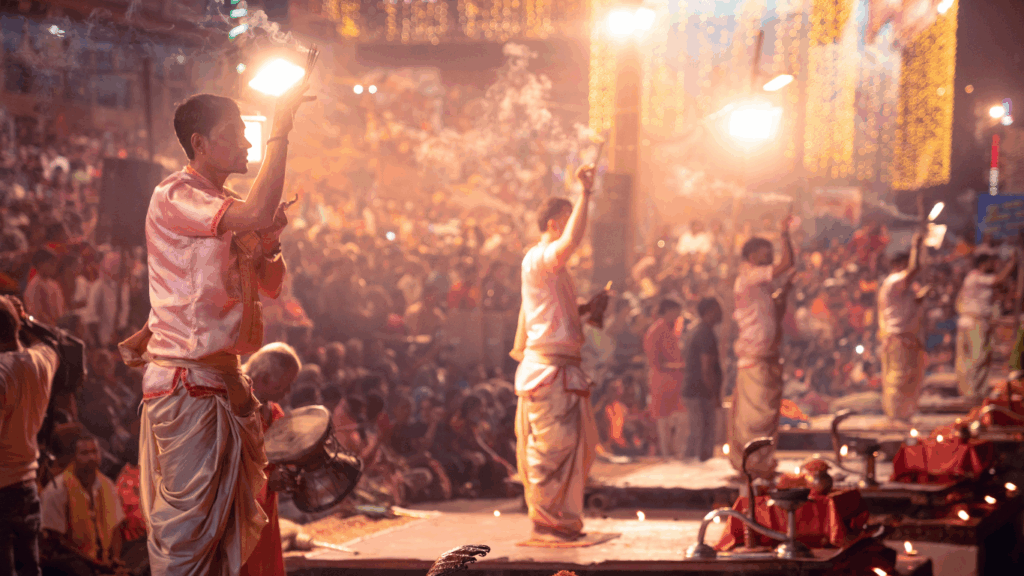
Dawn ignites Varanasi’s rituals. Subah-e-Banaras sees 100,000 bathe at sunrise, tulsi-mala priests offering argya (water oblations) to Surya. Midday: Kashi Vishwanath’s darshan queues snake for hours, bells clanging for Jyotirlinga glimpses. Evening peaks at Ganga Aarti, Dashashwamedh’s spectacle since 1990s revival—seven priests synchronize brass lamps, camphor flames, tulsi rotations amid “Om Jai Gange” bhajans, conches, and fireworks. Boats pack 500 viewers; reflections dance like a thousand diyas.
Dev Deepawali (November full moon) amplifies: 1 million lamps float, fireworks light ghats. Maha Shivratri hosts all-night vigils, bhang-lassi sadhus trance-dance. Panchkoshi Parikrama (88km circuit) circumambulates Shiva’s abode over 5 days. Silk weavers invoke Lakshmi pre-loom; boatmen’s Ganga Vandana predates launches. These aren’t performances—participate via aarti plates (₹50 donation)—fusing observer into ritual flow, dissolving self.
Key Temples and Ashrams
Kashi Vishwanath Temple dominates, its 14-foot gold spire gleaming post-2021 corridor (₹1,000 crore revamp widened paths, added 400+ toilets). 100-ton mandir houses self-manifest Jyotirlinga; priests trace lineage to Adi Shankara. Nearby Annapurna Temple feeds 10,000 daily via langar.
Sankat Mochan Hanuman (16th century, Tulsidas-founded) vibrates Tuesday queues; reciters belt 700-verse Chalisa. New Vishwanath (Kaashi temple) offers modern AC darshan. Durga Temple’s swayambhu idol in red-sindoor pond draws shakti upasakas. Nepali Temple’s pagoda mimics Kathmandu. Tulsi Manas (1970s) carves Ramcharitmanas on walls, Tulsidas’ hut nearby.
Ashrams beckon deeper: Kabir Math echoes bhakti poetry; Panchaganga hosts Ganga-Yamuna confluence lore. Baba Kinaram Aghor Peeth reveals tantra (closed to casuals); Namo Ghat’s Osho-inspired center teaches dynamic meditation. Sarnath’s Dhamek Stupa (Gupta-era) and Thai-Japanese temples add Buddhist serenity. These sanctuaries layer Shaivism, Vaishnavism, tantra—pick per pull.
Culinary and Cultural Immersion
Varanasi’s street food fuels spirituality—banarasi paan (betel quid, ₹10) post-aarti, malaiyo (winter froth foam) in winter. Kachori-sabzi at Kashi Chat Bhandar (₹50/plate) with fiery mirchi chutney; lassi at Blue Lassi’s rooftop (₹60, fruit-infused). Thandai at Deena Chat (₹40) spikes with bhang legally on Shivratri.
Silk sari weaving in Ramnagar villages showcases Banarasi brocades (₹5,000-5 lakhs), GI-tagged. Classical music at Bharat Kala Bhavan museum (BHU) features ragas born here. Dhrupad singers train under gurus; evening ragas at Assi echo over Ganges. Festivals like Rangabhari Ekadashi paint streets Holi-colors pre-Holi. This sensory tapestry—spices, silk, song—grounds ethereal quests.
Modern Tourism Boom and Infrastructure
2025 shattered records: 72.6 million visitors (UP Tourism), up 22% from 2024, via Prayagraj airport expansions, Varanasi’s Lal Bahadur Shastri handling 5 million annually. Kashi Vishwanath Corridor (inaugurated 2021) funnels 1 lakh daily, with e-rickshaws (₹50/ghat hop), RO water stations, cloakrooms.
Ropeway to Sarnath (2025 launch) cuts travel 30 minutes. Cleanliness drives added 1,000 dustbins, Ghat2Ghat cruises (₹500). Luxury rises: Taj Ganges’ suites overlook ghats (₹25,000/night); BrijRama Palace offers heritage stays. Budget: ghatside hostels ₹800, boats ₹1,500 sunrise private.
Challenges persist: touts, overcrowding, pollution (AQI 250+ winters). Apps like iVaranasi guide audio tours; UP Tourism helplines curb scams. 2026 promises Panchkoshi cruise boats, boosting accessibility for elders seeking moksha.
Practical Travel Guide for 2026
Fly into Varanasi (directs from Delhi 1.5hrs, ₹3,000). Trains: Shatabdi from Lucknow (4hrs). Stay: riverside for immersion (Ganges View ₹4,000), old city for vibe (₹2,000). Itinerary Day 1: Dawn boat (5-8AM), Kashi darshan, aarti. Day 2: Sarnath, Ramnagar fort, evening pyre watch (respectful distance). Day 3: Parikrama snippets, BHU museum, silk shopping.
Essentials: modest clothes (cover shoulders/knees), no leather at temples, cash for boats (UPI growing). Monsoon (Jul-Sep) lush but slippery; winter (Nov-Feb) ideal (10-25°C). Health: cholera shots, bottled water; avoid swimming post-monsoon. Costs: ₹5,000/day mid-range. Visa: e-Visa for most. Ethical tips: tip Dom workers ₹100, no burning ghat photos (₹500 fine possible).
Transformative Visitor Experiences
First-timers describe “soul shock”—pyre flames at 4AM amid aarti bells shatter illusions of control. A Japanese exec found career clarity meditating at Assi; an American divorcee embraced non-attachment post-Manikarnika vigil. Sadhu interactions impart Vedanta gems: “You are not body; witness.” Ganges dips spark euphoria, tears unbidden.
Repeaters chase deeper—40-day austerities, guru diksha. Unlike structured yoga, Varanasi’s anarchy accelerates growth: chaos mirrors mind, rituals reprogram it. Post-trip, many adopt minimalist lives, daily Ganges visualizations. Mark Twain noted its “grossest contradictions”—buffaloes in holy water, opulence beside poverty—catalyzing awakening. Carry home: small Ganges vial, etched brass diya, altered gaze on death.
Contrasts with Other Spiritual Hubs
Varanasi eclipses Rishikesh’s yoga haven—where Ganges rages Himalayan-fresh amid ashrams—by embracing death’s wisdom absent in wellness classes. Rishikesh heals bodies (rafts, treks); Varanasi transmutes souls (pyres, moksha). Both draw millions, but Kashi’s urban density (1.4 million pop) forces confrontation over escape. Pair them: fly Rishikesh-Varanasi (₹4,000), blending purification with liberation.
Enduring Legacy and Future
As 2026 unfolds, Varanasi evolves—AI puja apps, drone aartis—yet core endures: Shiva’s third eye on every ghat. Climate threats loom (Ganges levels drop), but faith sustains. For seekers, it’s not tourism; it’s pilgrimage. Visit not to see, but dissolve—emerge reborn in the Ganges’ embrace.
- Varanasi ghats boat tour guide
- Kashi Vishwanath Temple Corridor
- Ganga Aarti Dashashwamedh timing
- Manikarnika Ghat rituals explained
- Sarnath Dhamek Stupa history
- Nothing Phone 4a: Is It Actually Worth the Hype for Indian Buyers?
- Renault Duster 2026: Everything You Need to Know Before Booking
- Trending Summer Kurta 2026: The 10 Styles That Are Ruling Instagram Right Now
- Holi Skin Rescue 2026: The Ayurvedic Routine That Actually Works After Colors
- Samsung Galaxy S26 vs iPhone 17 Pro Max: Which One Should Indians Buy in 2026?
About the Author