
5,000 years of wisdom, now in your phone
“Your grandmother took your pulse with her fingers and told you your digestion was weak. Now an algorithm is doing the same thing — and it’s right 90% of the time.”
Ayurveda’s extraordinary moment in 2026
Before we get to the AI, let’s understand why Ayurveda itself is experiencing a renaissance that makes the technology investment make sense.
The post-pandemic wellness shift
• COVID-19 accelerated Indian consumer interest in immunity-boosting, preventive, and natural healthcare by a measurable degree — Ayurvedic products saw demand spikes that have not retreated
• Urban Indian millennials and Gen Z, previously dismissive of “traditional” medicine, have reframed Ayurveda as “functional,” “holistic,” and “evidence-informed” — a significant cultural shift
• 7.5 crore Indians now seek Ayurveda care annually — and this figure is rising each year
Government tailwinds — the AYUSH push
• Ministry of AYUSH budget for FY2025–26 rose 14.2% to ₹3,993 crore — a signal of serious policy commitment
• The “Heal in India” initiative: a USD 2.2 billion (₹20,000 crore) allocation positioning Ayurveda, yoga, and naturopathy as exportable services within India’s service economy
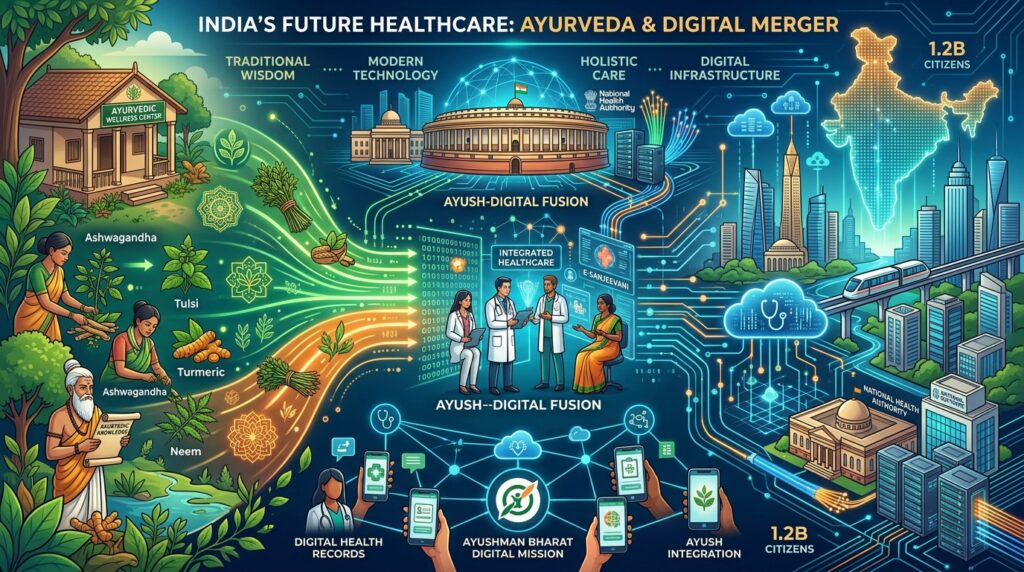
• National AYUSH Grid (NAG) and Ayushman Bharat Digital Mission: India’s push to digitise Ayurveda records and standardise practitioner data
• 610 Ayurvedic startups currently operating; 21 have secured funding; 12 have reached Series A or later
Why AI enters the picture now
• As demand scales, the traditional one-to-one, time-intensive Ayurveda consultation model cannot keep up — there aren’t enough qualified practitioners
• AI offers the possibility of scaling Ayurveda’s personalisation engine without diluting its core philosophy of individual-specific care
• India’s mobile-first population makes app-delivered Ayurveda both practical and commercially viable
Ayurveda’s scaling problem — and why AI is uniquely suited to solve it
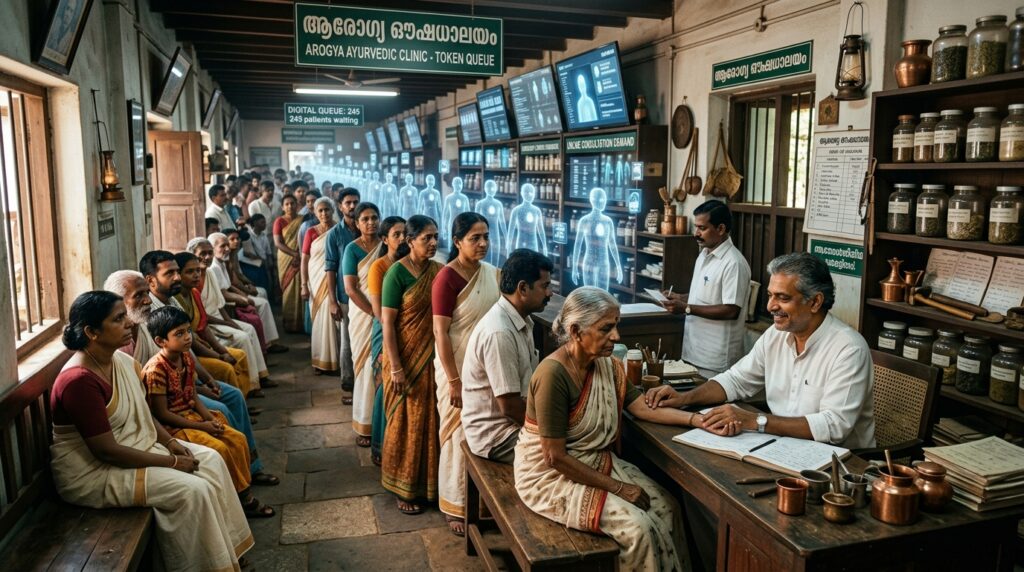
Ayurveda’s greatest strength is also its greatest barrier: it is irreducibly personal. That’s hard to scale. Until now.
What makes Ayurveda hard to scale
• Traditional Ayurvedic diagnosis requires extensive practitioner training, time-intensive patient assessment, and deeply experiential pattern-matching — skills that take years to develop and cannot simply be downloaded
• Prakriti (body constitution) determination involves analysis of physical appearance, tongue, eyes, skin, urine, speech, and pulse — a multi-modal assessment that varies significantly between practitioners
• India has 3,859 Ayurveda hospitals and 37,385 dispensaries, but most are concentrated in urban and semi-urban centres — rural access remains deeply limited
• Paper-based operations, unstructured records, and non-standardised documentation make continuity of care and follow-up difficult at most Ayurveda clinics
Where AI specifically helps
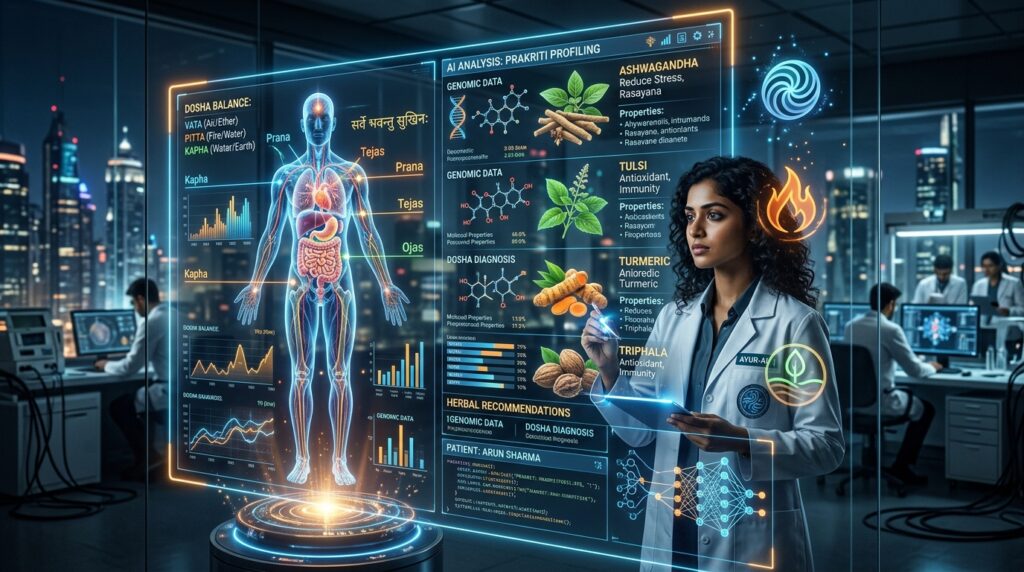
• Pattern recognition across large datasets: AI can analyse thousands of Ayurvedic case histories to identify correlations between prakriti types and treatment outcomes that individual practitioners may never encounter in a career
• Standardisation without rigidity: AI can encode Ayurvedic diagnostic logic consistently, reducing the inter-practitioner variability that currently limits trust in Ayurvedic diagnosis
• Remote accessibility: AI-powered teleconsultation and app-based tools bring Ayurvedic assessment to rural areas, international diaspora, and anyone who cannot physically visit a clinic
• Continuous monitoring: Unlike a once-a-month consultation, AI-powered wearables can track dosha indicators in real time, enabling a dynamic picture of health that Ayurveda has always theoretically promised but practically struggled to deliver
AI and dosha analysis — how machines are learning Vata, Pitta, Kapha
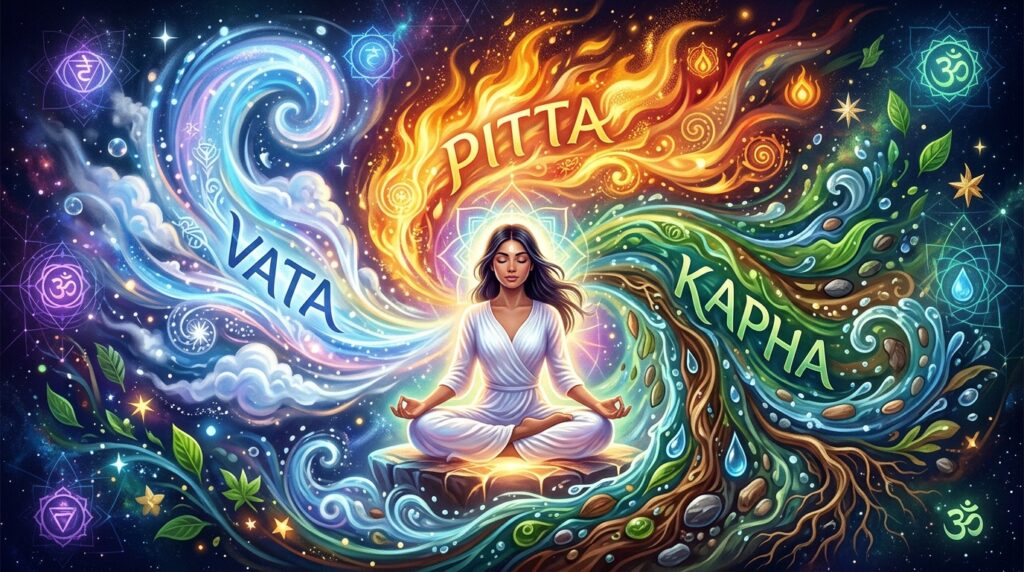
The three-dosha system is Ayurveda’s foundational model of individual constitution. Teaching an AI to understand it requires feeding it thousands of years of accumulated knowledge — and then some.
What prakriti analysis involves
• Prakriti = your fundamental constitutional type, determined by the balance of Vata (air/space), Pitta (fire/water), and Kapha (water/earth) at birth — it shapes physical appearance, digestion, temperament, and disease susceptibility
• Vikruti = your current state of dosha balance or imbalance — what changes with lifestyle, diet, season, stress
• Traditional assessment involves detailed questionnaires, physical examination, and pulse diagnosis — a process taking 45–90 minutes with a skilled practitioner
How AI is approaching dosha classification
• Questionnaire-based ML: Machine learning models trained on standardised Ayurvedic questionnaires and validated against expert practitioner assessments — the simplest and most widely deployed approach, used in most consumer apps today
• Image-based analysis: Computer vision models analysing facial features, skin tone, eye characteristics, and tongue appearance — inputs traditionally used in Ayurvedic darshana (visual examination)
• Biometric data fusion: Combining HRV (heart rate variability), skin conductance, body temperature, and voice pattern analysis to build a multi-parameter dosha profile
• Genomics + Ayurveda (Ayurgenomics): An emerging field — correlating genetic markers with prakriti types to validate Ayurvedic constitutional theory with molecular data
What personalisation actually looks like
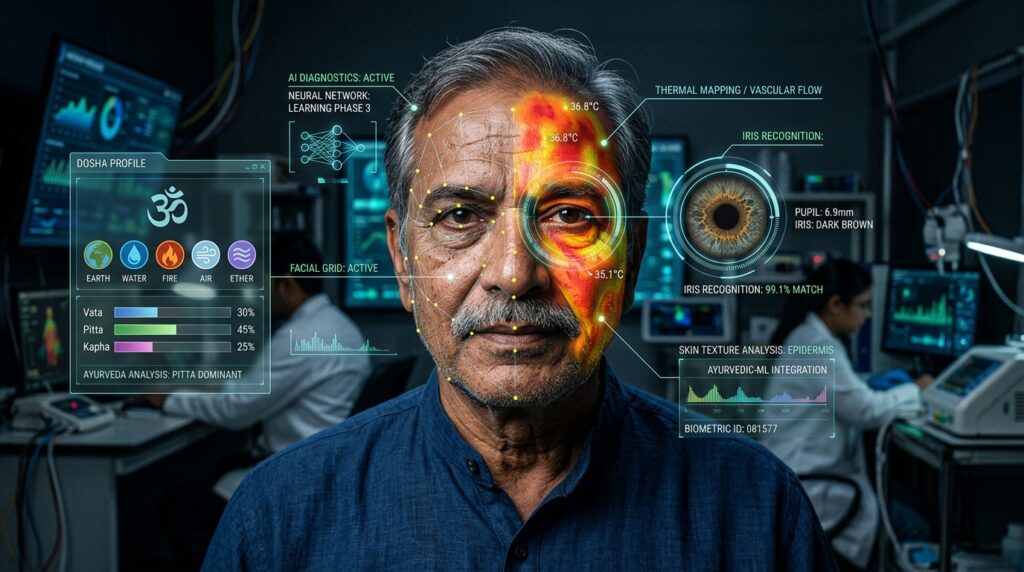
• Once dosha type is determined: AI generates personalised diet plans (e.g., a Vata-pacifying diet emphasises warm, oily, grounding foods; a Pitta-pacifying diet focuses on cooling, non-spicy foods)
• Seasonal recommendations: Ayurveda’s Ritucharya (seasonal regimen) is converted into specific, timely food and lifestyle guidance pushed to the user each season
• Herbal recommendations: AI cross-references the user’s dosha imbalance with a database of Ayurvedic herbs and formulations to suggest appropriate supplements
• Daily routine (Dinacharya) guidance: Personalised wake times, exercise types, and evening practices based on constitutional type
Digital Nadi Pariksha — the most ambitious AI-Ayurveda project
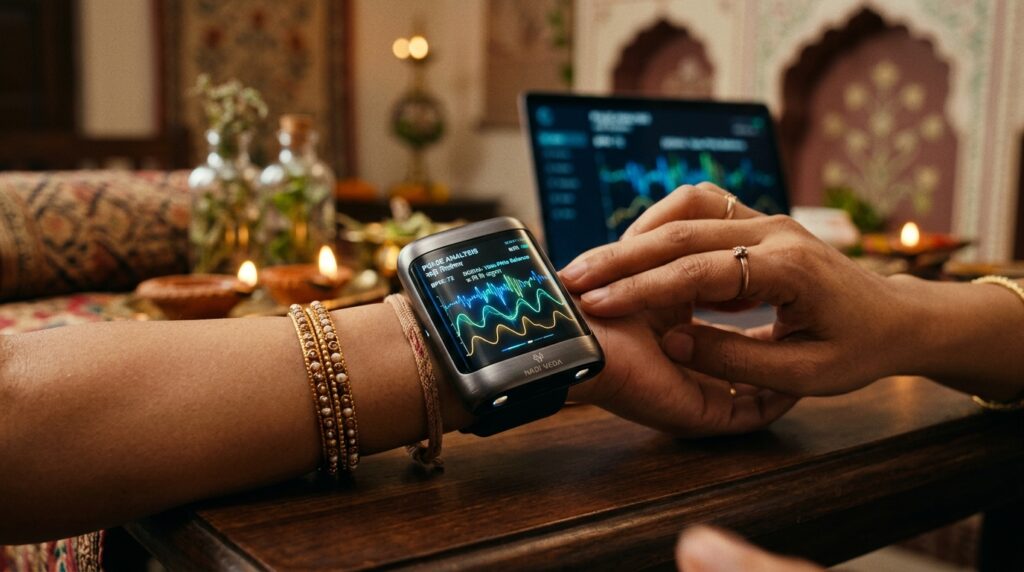
Nadi Pariksha (pulse diagnosis) is Ayurveda’s most powerful — and most demanding — diagnostic tool. AI is now attempting to replicate what takes a practitioner a decade to learn.
What Nadi Pariksha actually assesses
• A skilled Vaidya (Ayurvedic physician) places three fingers on the radial artery at the wrist, feeling seven distinct parameters: vega (rate), gati (movement), bala (force), kathinya (vessel wall consistency), tala (rhythm), akurti (tension/volume), and tapamana (temperature)
• These pulse characteristics map to Vata, Pitta, and Kapha imbalances — and experienced practitioners claim to detect not just current health status but predispositions to disease
• The “animal analogy”: Vata pulse moves like a snake (sinuous, irregular), Pitta like a frog (jumping, active), Kapha like a swan (slow, graceful) — an intuitive diagnostic language that has been used for millennia
Nadi Tarangini — India’s digital nadi device
• Pune-based startup Nadi Tarangini has developed an AI-powered, sensor-based pulse diagnostic device — one of the most significant Indian innovations in Ayurveda technology
• The device uses ultra-sensitive pressure sensors (photoplethysmography/PPG) to capture detailed pulse waveforms, then applies AI/ML algorithms to analyse 22 Ayurvedic parameters including Tridosha balance, stress levels, digestive health, and Agni (metabolic fire)
• Reports are generated in 8+ Indian languages including Hindi, Tamil, Telugu, and Marathi — a key accessibility feature for non-English users
• Now integrates with telemedicine: patients can receive a digital Nadi Pariksha remotely, with results sent directly to their Ayurvedic practitioner for consultation
The science behind digital pulse diagnosis
• Pulse Wave Velocity (PWV) — a measurable parameter that correlates with Tridosha indicators — has emerged as a scientifically significant marker linking Ayurvedic and modern cardiovascular assessment
• ML models for Nadi Pariksha have achieved: SVM-based models 70–85% accuracy; CNN models 88–94% accuracy in dosha classification from pulse waveforms
• IoT-enabled wearable PPG bands (82% accuracy with Random Forest classifier) are opening the door to continuous, real-time Nadi monitoring outside the clinic
• The key challenge: capturing the full multi-dimensional quality of pulse interpretation that experienced Vaidyas describe — not just the quantitative parameters but the experiential, holistic pattern recognition
The apps and tools Indians are using right now
This is where the theory meets the phone screen. Here are the actual AI-powered Ayurveda tools available to Indian users in 2026:
AyuRythm (Bengaluru-based)
• Uses an advanced AI algorithm to identify dosha balance with personalised insights and recommendations for daily life
• Provides real-time dietary and wellness advice, personalised home remedies, diet plans, and exercises
• Library of 1,500+ herbal remedies for common ailments
• Certified by Ayurvedic health experts; covers yoga, meditation, and pranayama alongside dietary guidance
• Available on Android; developed in Karnataka — important for South Indian market and language accessibility
Ayurveda AI (international, available India)
• 9-question dosha quiz → reveals Vata, Pitta, or Kapha type → generates personalised dosha-balancing recipes
• Focus on food as medicine — diet recommendations rooted in classical Ayurvedic texts but presented in simple, modern format
• Dosha-specific colour themes for immersive UX; free plan offers 3 recipes/week; premium offers unlimited
PraKul AI Tools (for practitioners and students)
• Platform offering multiple GPT-based tools specifically for Ayurveda professionals: BAMS students, PG scholars, practitioners, and teachers
• Includes: YogaAI (personalised yoga routines based on dosha, condition, and season), MedGuru (integrating Ayurvedic and modern medical knowledge), Ayurveda Entrepreneurship GPT
• Draws from classical Ayurvedic texts including Charaka Samhita, Sushruta Samhita, and Ashtanga Hridayam — digitised and made queryable via AI
• A significant development for the education sector: making Ayurvedic textual knowledge searchable and accessible to practitioners in rural India
AI-powered clinic management (EasyClinic, similar platforms)
• Moving beyond consumer apps: AI is entering the back-end of Ayurveda clinics themselves
• Functions: patient record digitisation, dosha classification from structured intake forms, Panchakarma scheduling optimisation, herbal inventory management, predictive follow-up scheduling
• Integration with National AYUSH Grid for standardised digital records — important for insurance coverage and government health data
• The potential: a clinic in Thiruvananthapuram using AI-powered management can serve 40–50% more patients per day without reducing personalisation quality
India’s Ayurveda startup ecosystem — where the investment is going
The most interesting innovation isn’t happening in ancient Kerala clinics or government research institutes. It’s happening in Bengaluru, Pune, and Mumbai startups that are building the infrastructure of digital Ayurveda.
The startup landscape in numbers
• 610 Ayurvedic medicine startups currently operating globally; India leads with 435 companies, the US has 55, and Australia 7
• 21 companies have secured funding; 12 have reached Series A or later — still nascent, but growing
• What distinguishes 2026’s startups from traditional Ayurveda companies: they are not simply repackaging ancient formulas — they are scientifically validating, digitally distributing, and AI-personalising them
The product + technology players
• Kapiva: One of India’s most prominent Ayurveda startups — uses AI for personalised supplement recommendations; the Kapiva Academy of Ayurveda creates research-based formulations combining classical texts with scientific validation. Products in juices, gummies, capsules, and ready-to-consume formats that remove the traditional barriers to Ayurvedic access
• The Ayurveda Experience: Comprehensive digital ecosystem — content, products, courses, and consultations — positioning itself as a destination for holistic Ayurvedic wellness across the urban Indian market
• Nadi Tarangini: The most technically ambitious — hardware + AI for clinical pulse diagnosis. Represents what can happen when deep Ayurvedic knowledge meets serious engineering
The AI-research dimension
• Academic institutions in Kerala and other Ayurveda-strong states are adopting AI-driven research platforms to analyse Ayurvedic texts, identify herb-disease correlations, and validate treatment protocols
• An AI-powered medicinal plant identifier — using deep learning for plant identification and interactive AI for remedy recommendations — was published as a research paper in February 2026, demonstrating the breadth of the field
• CCRAS (Central Council for Research in Ayurveda Sciences) launched SIDDHI 2.0 to strengthen research-driven innovation in Ayurveda pharma — a government-backed AI research initiative
Government backing and the policy framework shaping digital Ayurveda
India’s government is not a passive observer of this transformation — it is actively building the infrastructure that makes digital Ayurveda possible.
Key government initiatives
• National AYUSH Grid (NAG): Digitising Ayurveda practitioner registries and standardising clinical records across India — the foundation on which AI tools will need to operate at scale
• Ayushman Bharat Digital Mission: India’s national digital health ecosystem, increasingly incorporating AYUSH records — meaning Ayurvedic consultations and treatments could eventually be part of a patient’s complete digital health profile
• “Heal in India” initiative: Positions Ayurveda as an exportable service with USD 2.2 billion allocation — creating commercial incentives for the entire Ayurveda + technology stack
• e-Ayush Visa: 2.3 lakh entries in H1 2025 (15% YoY increase) — wellness tourists coming to India for authentic Ayurveda, and digital tools are increasingly part of their preparation and follow-up
• IRDAI insurance coverage expansion: AYUSH treatments now covered when medically necessary at recognised AYUSH facilities — creating a financial incentive for standardised, documentable Ayurvedic care that AI can enable
What still needs to happen
• Quality standardisation across AI-powered Ayurveda tools remains inconsistent — some apps make unvalidated claims
• Data privacy frameworks for sensitive health and biometric data used in dosha analysis need strengthening
• A unified certification framework for AI-Ayurveda tools — so consumers can trust which apps are genuinely evidence-based versus wellness entertainment
• Training for existing Ayurvedic practitioners in using AI tools without abandoning their core diagnostic skills
What AI cannot do — and why the Vaidya still matters
This blog would be dishonest if it only showed the upside. Here is the honest, balanced view of where AI-Ayurveda tools have real limitations.
The “art” of Ayurveda that AI hasn’t captured
• Experienced Vaidyas describe aspects of Nadi Pariksha that go beyond measurable parameters — an intuitive, integrated reading of the person that includes their emotional state, life context, and subtle physical signs that sensors haven’t been built to capture
• Ayurveda is fundamentally relational — the therapeutic relationship between patient and practitioner has documented health effects independent of the treatment itself. An app cannot replicate this
• Pilot studies dominate current AI-Ayurveda research: most published work involves small samples, limited external validation, and few prospective clinical trials — the evidence base is promising but not yet robust
Practical risks for Indian consumers to know
• Oversimplification: Dosha typing is presented as a fixed binary in many apps (e.g., “You are Vata”), when in reality prakriti is a spectrum and vikruti changes constantly — a nuance that AI models often flatten
• Unvalidated claims: Some Ayurveda apps in India make therapeutic claims for specific diseases without adequate clinical evidence. The FSSAI and Ministry of AYUSH are working on regulation, but it remains inconsistent
• Data privacy: Apps collecting detailed biometric, lifestyle, and health data in the name of dosha analysis need clear data privacy policies — users should check these carefully
• Self-treatment risk: Herbal supplements recommended by AI, if taken without practitioner oversight, can interact with medications or be contraindicated in certain health conditions
The right framing: AI as enhancement, not replacement
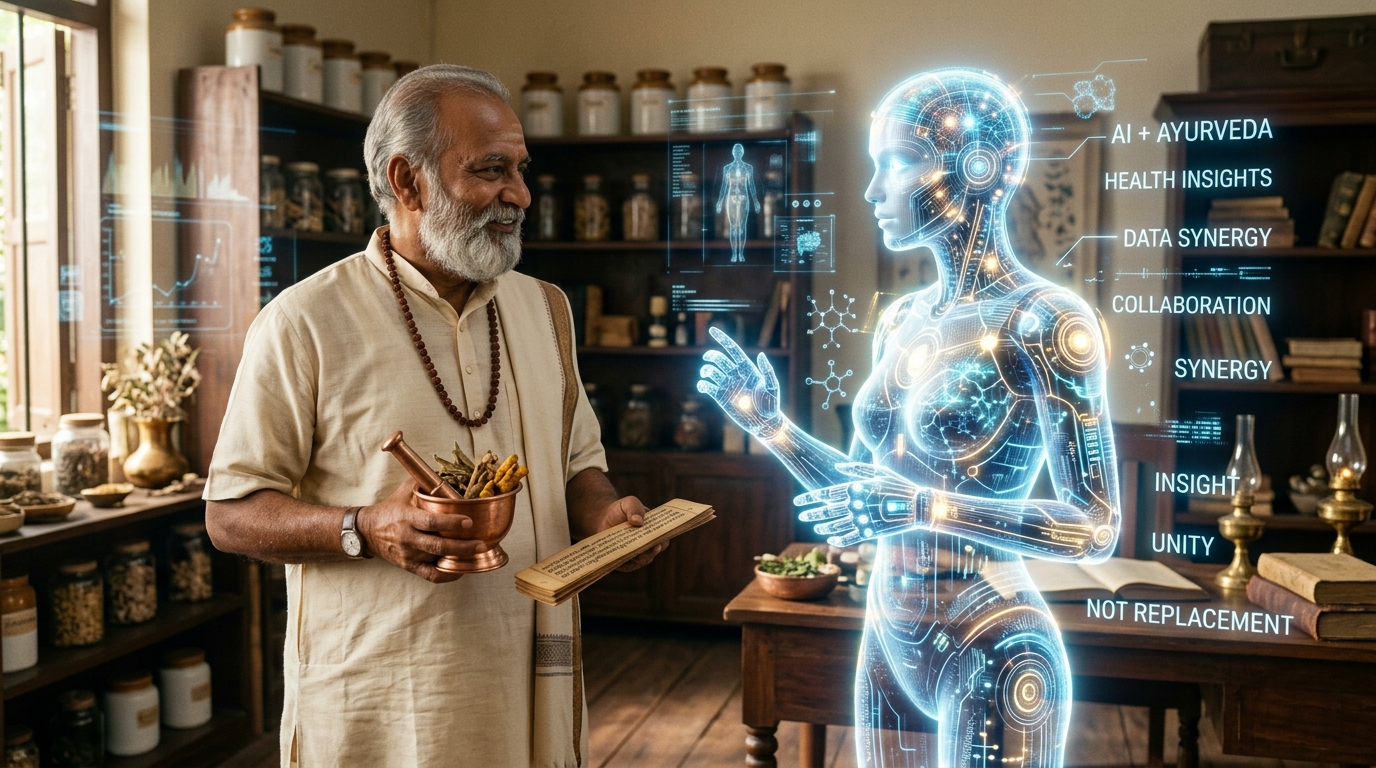
• The best AI-Ayurveda tools explicitly position themselves as “practitioner-assist” — helping clinicians serve more patients, not replacing the consultation
• Nadi Tarangini’s model is instructive: the device generates a report for the doctor to interpret, not a self-diagnosis for the patient to act on alone
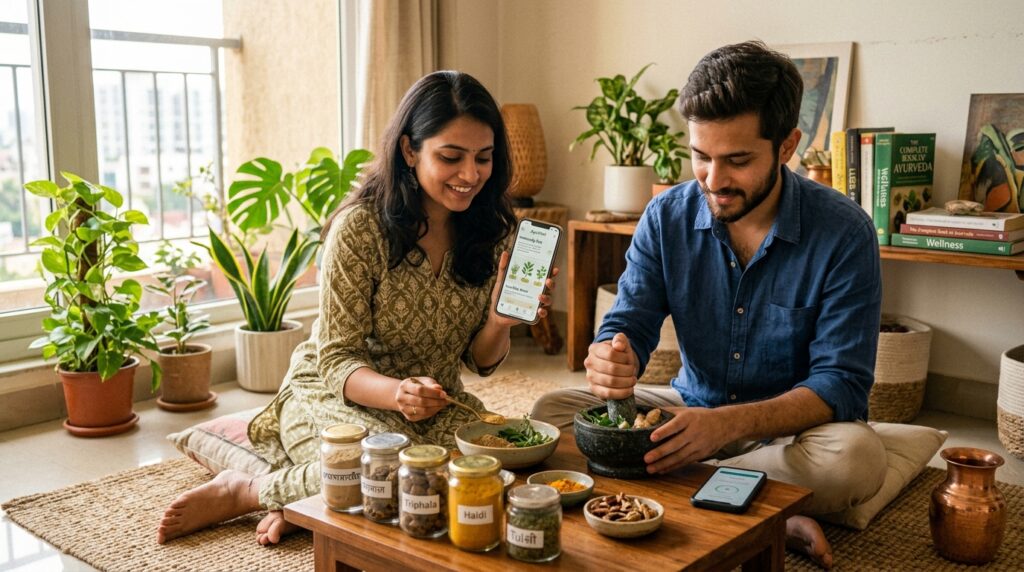
• For consumers, the ideal use case: AI app for daily wellness guidance and dosha awareness → telehealth Ayurveda consultation for specific concerns → in-person visit for serious issues
The ancient wisdom system that was always meant to scale
Closing argument: Ayurveda’s core philosophy — personalised, preventive, holistic — is not just compatible with AI. It anticipated it.
About the Author