

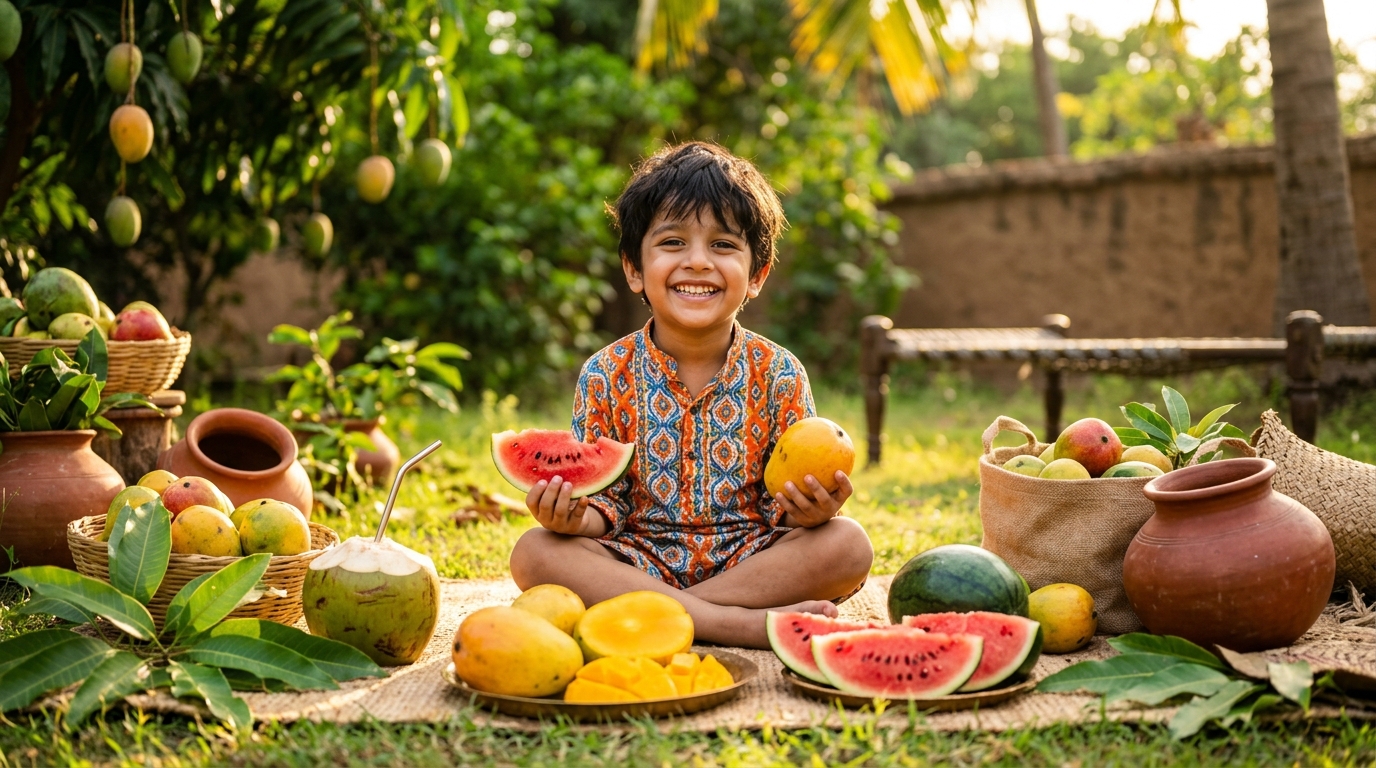
2026’s heatwave is brutal. The supermarket shelves aren’t the answer. Your kitchen already has everything your child needs.
⚠️ IMD Alert: Summer 2026 temperatures will be above normal across most of India. Children are among the most vulnerable groups — nutrition is your first line of defence.
Every Indian summer brings the same trio of worries: the heat, the sick days, and the never-ending battle to get vegetables into a child who would rather have a mango ice cream. Summer 2026 adds a new layer — the India Meteorological Department has forecast above-normal temperatures across most states, with an increased number of heatwave days between March and May. Children’s immune systems are still developing, their bodies lose water faster than adults, and their energy levels can crash fast in the heat. The good news? The answer isn’t a pharmacy shelf. It’s your kitchen — and a few smart choices made consistently through the season.
70% of a child’s immune system lives in the gut — food is medicine
38°C+ Delhi already hitting in March 2026 — earliest heatwave in years
7.2% Annual growth in India’s children’s nutrition market through 2035
☀️Why summer is harder on kids’ immunity
Children struggle with summer heat for physiological reasons — their bodies produce more heat relative to their size, sweat less efficiently than adults, and dehydrate faster. When a child is dehydrated, their immune function drops significantly. The hot months also bring a surge in food-borne illness (food spoils faster), viral infections circulating in summer schools and day camps, and heat-related exhaustion that weakens the body’s defences.
The three biggest summer health risks for Indian children in 2026 are dehydration and electrolyte loss through sweating, food poisoning from improperly stored food in the heat, and viral respiratory and gastrointestinal infections that spread in crowded summer settings. All three are significantly reduced by consistent, immune-supportive eating — and everything on this list addresses at least one of them.
🌿 Grandma’s principle is still right: The best immunity supplement is a balanced thali. Complex vitamin pills cannot replicate the synergistic effect of whole foods eaten consistently over weeks. Start with food first — always.
🍽️The 9 immunity foods every Indian child needs this summer
Amla (Indian Gooseberry) — the Vitamin C king
20x more Vitamin C than an orange · Natural antioxidant powerhouse
Vitamin CAntioxidantDigestion
One amla contains more Vitamin C than multiple oranges — and Vitamin C is the immune system’s first line of defence, stimulating white blood cell production and supporting the skin barrier against infections. Amla also improves iron absorption, which is critical for children who eat predominantly vegetarian diets. During summer, it helps detoxify the liver and support digestion.
The challenge: Amla is very sour and most children resist eating it raw. The trick is to disguise it cleverly.
🧪 Kid-friendly amla idea
- Mix 1 tsp amla powder with honey and a pinch of rock salt. Roll into small balls. Kids love the sweet-tangy combo.
- Add to mango smoothies — the mango completely masks the flavour while keeping all the benefits.
- Amla candy (murabba) from the local market: a treat that’s actually good for them.
Haldi (Turmeric) — the anti-inflammatory spice every child needs
Curcumin · Anti-inflammatory · Antimicrobial · Fever-fighting
Anti-inflammatoryAntimicrobialGut health
Already in every Indian kitchen, turmeric’s active compound curcumin is one of the most studied natural immune boosters in the world. It’s anti-inflammatory, antioxidant, and antimicrobial — a triple threat against the infections that pick off children during season changes. In summer specifically, it helps reduce the inflammation triggered by heat and sun exposure.
The non-negotiable: Always pair turmeric with black pepper (even a tiny pinch). Piperine in black pepper increases curcumin absorption by up to 2,000%. Without it, most of the benefit is lost.
🧪 Haldi doodh (golden milk) — summer night ritual
- Warm 1 cup milk (or oat milk). Add ½ tsp turmeric, a tiny pinch of black pepper, ½ tsp honey.
- Optional: a drop of ghee (improves absorption of fat-soluble curcumin further).
- Serve warm before bed. Becomes a calming summer night ritual children look forward to.
Dahi (Curd) — the gut-strengthening summer staple
Probiotics · Lactobacillus · Cooling effect · Gut-immunity link
ProbioticCoolingGut health
Seventy percent of the immune system lives in the gut — and nothing maintains the gut microbiome in Indian children as effectively as daily homemade curd. Research shows that children who consume probiotic-rich dahi regularly have fewer respiratory infections, shorter illness duration, and better antibody production. In summer, curd also cools the body from inside, reduces heat-triggered acidity, and soothes digestion.
Homemade dahi made fresh every morning is significantly more potent than commercial varieties, which are often pasteurised (killing the live cultures). Use full-fat milk and set it at room temperature with a small spoon of the previous day’s curd as starter.
🧪 Serving ideas kids will actually eat
- Dahi with rice + a pinch of cumin = curd rice. South India’s ultimate comfort-immunity meal.
- Blend with a handful of fruits for a smoothie — a hidden probiotic delivery system.
- Raita with grated cucumber, mint, and jeera: refreshing, hydrating, immune-boosting.
Seasonal fruits — nature’s summer immunity kit
Vitamin C · Lycopene · Beta-carotene · Hydration
Vitamin CHydrationAntioxidants
India’s summer fruit calendar is perfectly calibrated for the season’s health demands. Mangoes provide beta-carotene and Vitamin C. Watermelon is 92% water — nature’s oral rehydration solution with added lycopene and potassium. Guava delivers more Vitamin C per gram than any citrus fruit. Papaya contains digestive enzymes and immune-boosting Vitamin A. Eat what’s in season, buy what’s local, and eat it whole rather than juiced whenever possible.
Summer fruit priority list for Indian kids: Mango → Watermelon → Guava → Papaya → Sweet Lime (Mosambi) → Lychee → Jamun (Black Plum — exceptionally high in antioxidants and iron).
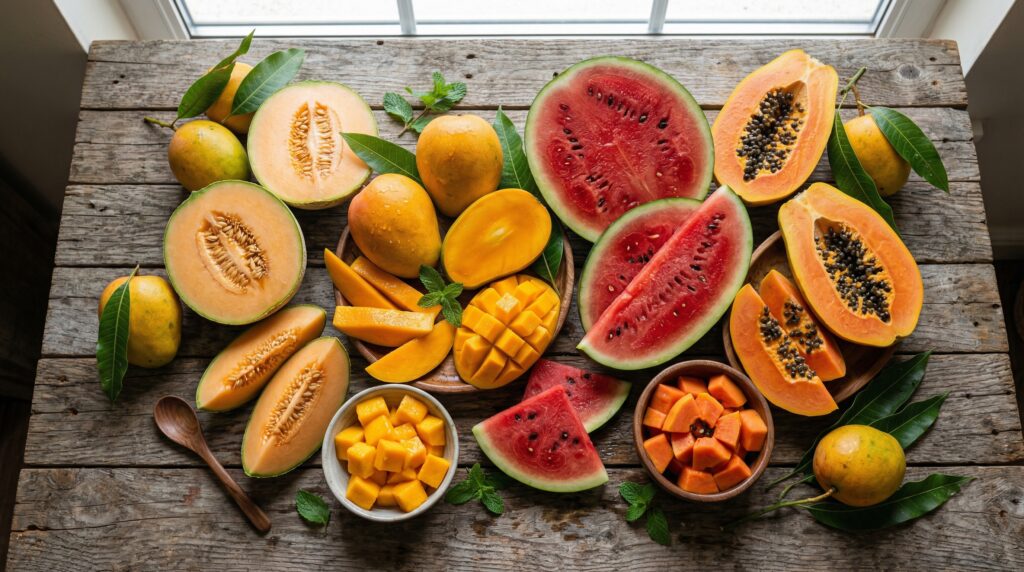
🧪 Rainbow fruit plate trick
- Cut 4–5 seasonal fruits into small pieces in different colours. Call it a “rainbow plate.”
- Sprinkle with chaat masala or rock salt — transforms the flavour and kids go wild for it.
- Freeze mango or watermelon into popsicles — a summer treat that’s actually healthy.
Moringa (Drumstick leaves) — the miracle immunity tree
Vitamins A, C, D + iron + calcium + essential amino acids
IronVitamin AAnti-inflammatory
Moringa is having its mainstream moment in 2026 — and deservedly so. The drumstick tree (sahjan) that has been a staple of South Indian cooking for centuries is now confirmed by research to be one of the most nutrient-dense plants available. For children specifically, moringa provides iron (critical for preventing anaemia and maintaining energy in the heat), Vitamin A (for respiratory immunity), calcium, and all nine essential amino acids.
Fresh drumstick pods added to dal or sambar, moringa leaves stirred into khichdi, or moringa powder mixed into roti atta — these are effective and invisible additions that most children won’t even detect.
Nuts & Seeds — Vitamin E, zinc, and omega-3 in every handful
Almonds · Walnuts · Pumpkin seeds · Flaxseeds · Sunflower seeds
Vitamin EZincOmega-3
Zinc is one of the most important minerals for immune function — and deficiency is surprisingly common in Indian children who eat predominantly grain-and-pulse diets. Almonds provide Vitamin E (an antioxidant that protects cell membranes), while walnuts deliver ALA omega-3 fatty acids that reduce inflammation. Pumpkin seeds are one of the best plant sources of zinc. A small handful daily makes a meaningful difference.
Summer serving tip: Soak almonds overnight and serve peeled in the morning. The soaking removes phytic acid, making nutrients much more bioavailable. For picky eaters: blend nuts into chutneys, stir into kheer, or dust roasted makhana (another excellent immune-supporting snack) with a nut powder.
Dal & Legumes — the protein and prebiotic backbone
Moong · Masoor · Toor · Chana · Resistant starch · Prebiotic fibre
ProteinPrebioticIron
The simplest and most impactful immunity hack for Indian children is serving dal daily. Lentils provide the amino acids needed to build immune cells, iron to prevent the energy-draining anaemia common in children, and prebiotic fibre that feeds the gut bacteria responsible for 70% of immune function. For summer specifically, moong dal (green gram) is particularly beneficial — it’s light, easy to digest in the heat, and provides excellent cooling alongside its nutritional power.
Light moong dal khichdi — rice, moong dal, a pinch of jeera, and ghee — is arguably the best sick-day and hot-day meal in Indian cooking. Easy to eat, easy to digest, immunity-building, and hydrating.
Ginger & Garlic — the antimicrobial duo in every tadka
Allicin (garlic) · Gingerols (ginger) · Antiviral · Antibacterial
AntiviralAntibacterialDigestion
Every time you make a tadka with ginger and garlic, you’re delivering allicin (garlic’s antimicrobial compound) and gingerols (ginger’s antiviral and digestive agents) into your child’s food. Garlic is particularly powerful against the bacteria that cause food poisoning — which is far more common in summer when food spoils rapidly. Ginger prevents nausea, improves digestion, and soothes the heat-related acidity children often experience in summer.
These are already in your daily cooking — the key is to use them fresh (not powdered) and to not overcook them. Add garlic at the beginning and ginger in the last few minutes of cooking to preserve maximum benefit.
Desi Ghee — the fat-soluble vitamin carrier Ayurveda always knew
Vitamins A, D, E, K · Butyric acid · Gut lining support
Vitamin DGut healthAyurvedic
Ghee has been misunderstood and maligned by the low-fat generation — but its rehabilitation is now complete. Desi cow ghee (especially A2 ghee) is rich in fat-soluble vitamins A, D, E, and K — all essential for immune function. Butyric acid in ghee directly nourishes the gut lining, supporting the intestinal barrier that prevents pathogens from entering the bloodstream. In summer, a small amount of ghee also improves the absorption of fat-soluble nutrients from vegetables and dal.
The daily dose: 1–2 teaspoons per day for school-age children in dal, khichdi, or on roti. More is not necessarily better — moderation is the Ayurvedic principle.
🥤Summer immunity drinks your kids will actually want
Hydration is as important as nutrition in summer — and these traditional Indian drinks deliver both simultaneously. Each one has been used for generations specifically for summer health and heat management:
Coconut Water (Nariyal Pani)
Nature’s oral rehydration solution. Packed with potassium, magnesium, and sodium — exact electrolytes lost through sweat. Always prefer fresh over packaged.
#1 Heat Hydrator
Aam Panna (Raw Mango Drink)
Boiled raw mango with jaggery, roasted cumin, mint, and black salt. Prevents heatstroke, restores lost electrolytes, rich in Vitamin C. The original energy drink.
Anti-Heatstroke
Watermelon Juice with Mint
92% water content + lycopene antioxidant + natural sugar for energy. Blend with a squeeze of lime and fresh mint. Popsicle version is even more popular with kids.
Deep Hydration
Chaas (Spiced Buttermilk)
Probiotic powerhouse that cools the body. Season with roasted jeera, ginger, and fresh coriander. Excellent after lunch to aid digestion and restore gut bacteria.
Probiotic Cooler
Nimbu Pani with Sabja Seeds
Classic lemonade elevated with basil seeds (sabja/chia). The seeds absorb 30x their weight in water, extending hydration. Add rock salt and mint for electrolytes.
Sustained Hydration
Sharbat-e-Gulab (Rose Cooler)
Rose petals, sabja seeds, cold water, a touch of honey. Used in Ayurveda for centuries to cool Pitta (internal heat). Children love the pink colour and mild floral sweetness.
Internal Cooling
📅A full day summer immunity meal plan for Indian kids
| Time | Meal | Immunity stars |
|---|---|---|
| 7 AM | Soaked almonds (5–6) + 1 glass warm haldi doodh | Vitamin E, curcumin, Vitamin D |
| 8:30 AM | Ragi/moong dal dosa with coconut chutney + glass of fresh nimbu pani | Iron, calcium, probiotics, Vitamin C |
| 11 AM | Rainbow fruit plate: mango + watermelon + guava + black plum (jamun) | Beta-carotene, lycopene, Vitamin C, antioxidants |
| 1 PM | Moong dal khichdi + drumstick sambar + small katori dahi + 1 tsp ghee | Protein, iron, probiotics, fat-soluble vitamins |
| 3 PM | Aam panna or coconut water + roasted makhana with moringa powder | Electrolytes, iron, Vitamin A |
| 6 PM | Toor dal + palak sabzi + 2 rotis with ghee + fresh ginger in tadka | Protein, Vitamin K, antimicrobials, gut lining support |
| 8:30 PM | Warm haldi doodh with black pepper and honey | Curcumin, anti-inflammatory action overnight |
👶Age-by-age quick guide
Not all foods suit all ages. Here’s what to prioritise by age group:
Toddlers (1–3 years)
Gentle, easy to digest, introduce slowly
- Soft moong dal khichdi with ghee
- Mashed ripe mango or papaya
- Diluted coconut water
- Dahi with banana mashed in
- Haldi in milk (small pinch)
- Soft-cooked drumstick in dal
School Age (4–10 years)
Full range, focus on picky-eater hacks
- All seasonal fruits + rainbow plates
- Dahi + chaas daily
- Amla honey balls as snack
- Aam panna after outdoor play
- Makhana + nuts for school tiffin
- Garlic-ginger tadka in all dals
Pre-teens (11–14 years)
Higher protein, stronger taste, involve them
- Sprouted moong chaat (they can make it)
- Moringa smoothies or protein shakes
- Nuts as after-school snack
- Full daily dahi serving
- Sports electrolytes: coconut water + pinch salt
- Explain why: they respond to reason
😅When they refuse everything: picky eater hacks
1 Hide, don’t fight
Blend moringa into dosa batter or smoothies. Stir amla powder into mango juice. Add grated carrot and palak to paratha dough. Immunity-boosting without a single argument.
2 Make it a treat, not a medicine
Watermelon popsicles. Mango kulfi. Rainbow fruit skewers. Aam panna served in a tall glass with a straw. When food looks fun, resistance drops dramatically.
3 Involve them in making it
Children eat what they make. Let them mash the bananas into dahi. Let them choose which fruits go on the rainbow plate. Give them agency and watch the plate get cleaned.
4 Limit the competition first
The most effective immunity move is removing packaged chips, sugary drinks, and ultra-processed snacks from the house. Immunity foods only work if they’re not constantly competing with junk food engineered to be irresistible.
5 Consistency beats perfection
One week of perfect eating doesn’t build immunity. Three months of mostly consistent good choices does. Don’t stress about the odd ice cream bar. Stress about the pattern.
Your kitchen is the best pharmacy for your child this summer
The amla in your fridge, the turmeric in your masala dabba, the dal cooking on the stove, the coconut water vendor outside your building — these are not humble everyday things. They are a centuries-refined, scientifically validated system of keeping children healthy through India’s most demanding season.
You don’t need expensive immunity supplements, fortified cereal bars, or probiotic sachets. You need dahi every day, fruit every afternoon, dal every meal, and a glass of aam panna after outdoor play. That’s the plan. Simple, affordable, and backed by both grandmothers and gastroenterologists.
Start this week with one change: Add a seasonal fruit to every afternoon snack. That single habit, maintained through May and June, will make a measurable difference in how often your child gets sick this summer. The rest follows naturally.
This blog is for general informational and nutritional guidance. For children with allergies, chronic conditions, or frequent illness despite a healthy diet, please consult a paediatrician or registered dietitian for personalised advice.
About the Author