

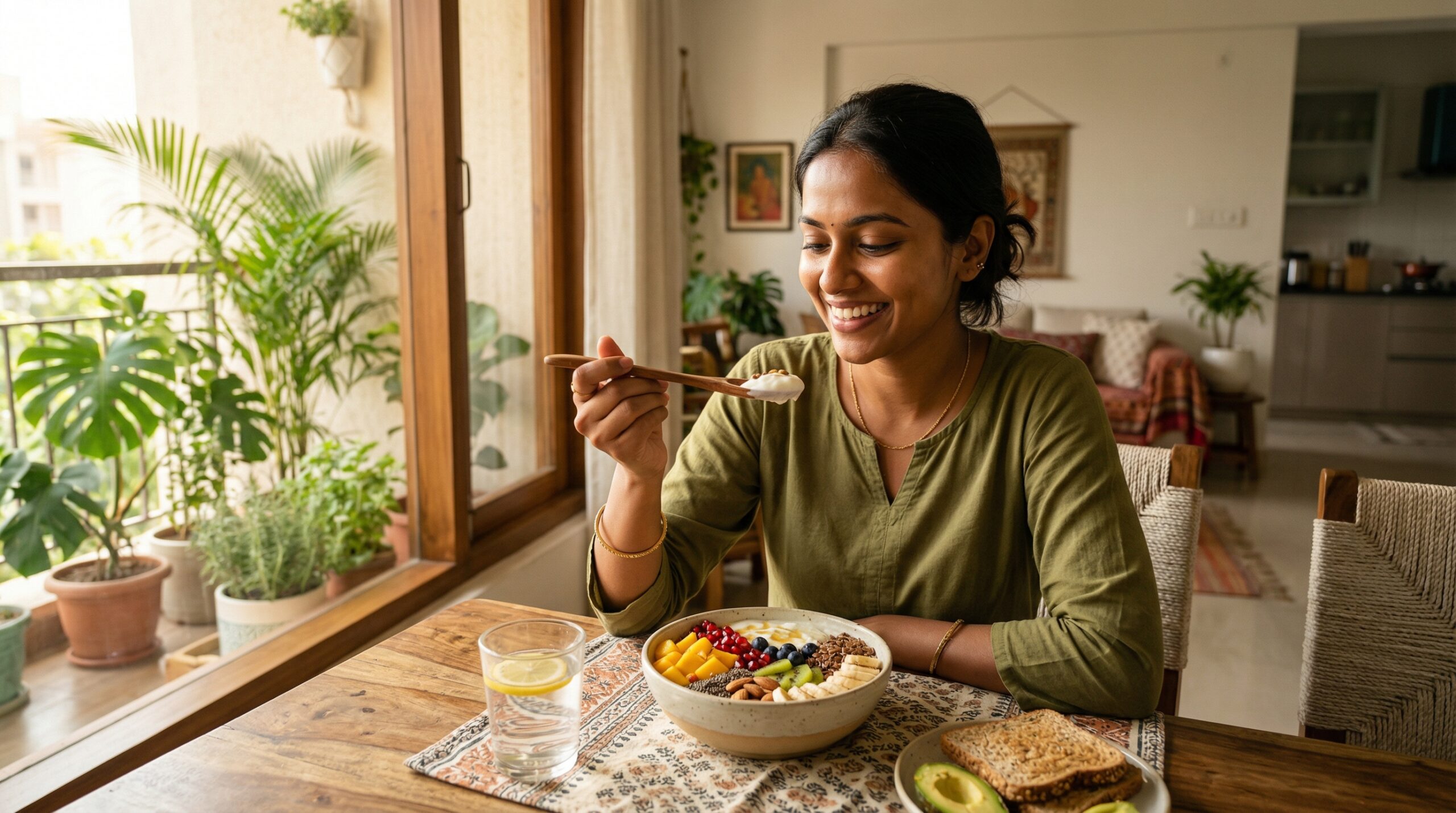
Your grandmother’s kitchen had the answers all along. Science just took a few centuries to catch up.
Published 29 March 2026 · 10 min read · Health & Nutrition
In 2026, gut health is no longer a niche wellness topic reserved for Instagram nutritionists and expensive supplements. It is now the central pillar of how health-conscious Indians are eating — and the science is compelling. The gut microbiome, home to trillions of bacteria, influences everything from immunity and metabolism to mood, skin clarity, and mental sharpness. What’s remarkable about India’s gut-health revolution is this: we have always had the answers. Curd, kanji, idli, chaas, homemade pickles — India’s culinary tradition is one of the world’s richest repositories of probiotic and prebiotic foods. Now, a new generation is rediscovering them — while also embracing newer arrivals like kombucha and kefir.
50%+ Annual growth rate of India’s probiotic dahi & kefir market — the fastest-growing food segment
₹800 Cr Current size of India’s fermented gut-health beverage market, expanding rapidly from 2026
16%CAGR of India’s kombucha market projected through 2034 — one of Asia’s fastest climbs
Why gut health matters more than ever in 2026
Modern Indian life — long work hours, ultra-processed convenience food, antibiotics overuse, and chronic stress — is quietly dismantling the gut microbiome that our grandparents maintained effortlessly through traditional eating. Bloating, acidity, fatigue, skin breakouts, anxiety: many of these everyday complaints trace back to gut imbalance.
Recent research has established what Ayurveda has long implied: the gut is the body’s “second brain.” A balanced microbiome strengthens immunity, improves how efficiently you absorb nutrients, modulates blood sugar, and even regulates mood through the gut-brain axis. In 2026, nutritionists, gastroenterologists, and wellness coaches across India are giving the same advice — fix the gut first, and everything else follows.
The market signal: India’s fermented food and beverage market is witnessing a resurgence of traditional foods like kanji, gundruk, and idli batter, now being marketed as premium health offerings. Companies from iD Fresh Foods to Tata Consumer Products have launched probiotic-enriched variants of everyday staples in 2024–25 — a clear sign that gut health has entered the mainstream.
The 9 gut health foods trending in India right now
01 🥛Dahi (Curd) — India’s original probiotic
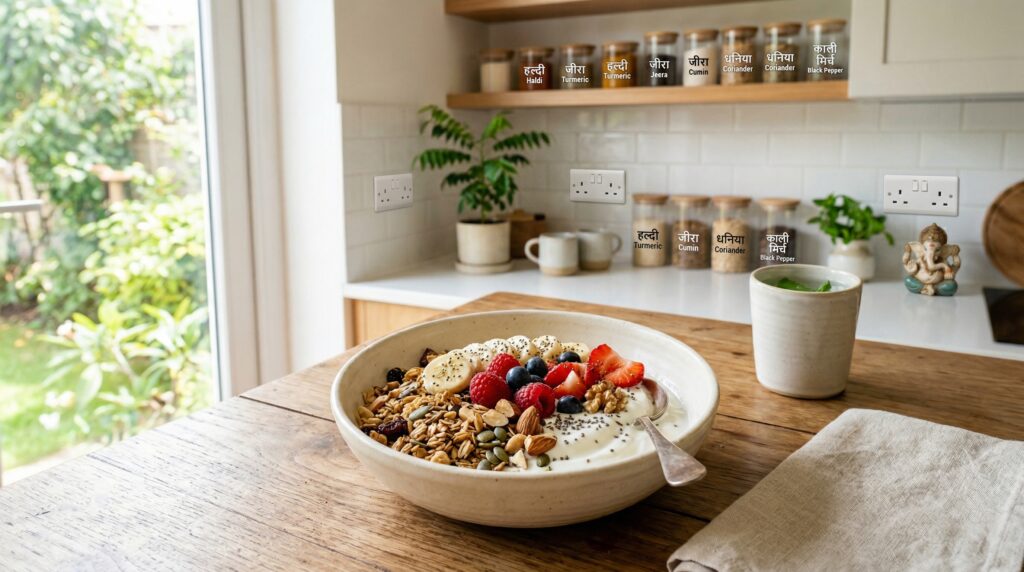
Lactobacillus bulgaricus · Streptococcus thermophilus · Lactobacillus acidophilus
ProbioticAncient stapleNow fortified
Homemade dahi remains the cornerstone of the Indian gut-health diet — and rightfully so. Made by fermenting full-fat or toned milk overnight with live cultures, it contains billions of Lactobacillus bacteria that support digestion, ease acidity, and maintain microbial diversity. The key distinction in 2026: homemade dahi is significantly more potent than commercial varieties, which are often pasteurised after fermentation, killing the very live cultures that make it valuable.
A new trend is the rise of “probiotic dahi” from brands like Yakult, Epigamia, and Mother Dairy, which are fortified with specific strains and are growing at 50%+ CAGR in urban India — a sign that consumers want their curd to work harder.
🔬 The science
Regular consumption of curd can maintain microbial diversity, improve nutrient absorption, and contribute to digestive wellness. Lactobacillus acidophilus in particular helps break down lactose and reduces symptoms of bloating and gut irritation.
☀️With lunch daily
🌙Curd rice at dinner
🧊As raita with spicy meals
⚠️Homemade > packaged
02🥤Chaas (Buttermilk) — the post-meal probiotic ritual
Lactobacillus casei · Lactococcus lactis · Leuconostoc mesenteroides
ProbioticAncient staple
“Bas ek glass chaas le lo” — no Indian thali is truly complete without it. Buttermilk is more than a refreshing after-meal drink: seasoned with roasted jeera, fresh ginger, and curry leaves, it becomes a digestive powerhouse. The live cultures in chaas help cool the body, aid the breakdown of heavy meals, and introduce diverse bacterial strains to the gut.
Chaas is particularly valuable in summer — which is exactly why it has been a seasonal staple for centuries. In 2026, health nutritionists recommend starting the day with a glass of spiced chaas rather than coffee as a gut-priming morning ritual, particularly for those experiencing acid reflux or bloating.
🌅Morning gut primer
🍽️Post-lunch digestion aid
🌿Seasoned with jeera + ginger
03 🟣Kanji — India’s own kombucha, and better
Black carrot · Beetroot · Mustard seeds · Natural lactic fermentation
ProbioticAncient stapleViral in 2026
If you haven’t heard of kanji yet, you will in 2026. This vibrant, deep-magenta fermented drink — made from black carrots or beetroot, mustard seeds, and salted water left to ferment in sunlight for 3–4 days — is experiencing a serious revival. Nutritionists are calling it “India’s kombucha,” and the comparison is apt: it delivers probiotics, antioxidants, and digestive benefits without the price tag or the imported SCOBY.
What makes kanji particularly compelling is its vegetable base. Unlike dairy-based probiotics, it is entirely vegan, lactose-free, and made from whole vegetables. The betalains in beetroot provide potent anti-inflammatory and antioxidant properties. It’s low in calories, naturally sugar-free, and the fermentation process adds gut-strengthening Lactobacillus plantarum and Leuconostoc species.
🔬 Why it works
Kanji is a lactic-acid fermented drink, meaning the naturally present bacteria convert the vegetable sugars into lactic acid — the same process that makes yogurt and pickles beneficial. Studies show regular kanji consumption improves digestion, reduces bloating, and provides antioxidant support for gut and metabolic health.
☀️Before meals (activates enzymes)
🏠Easy to ferment at home
🌱100% vegan
💰₹30–50 to make 2 litres
04 🫓Idli, Dosa & Dhokla — fermented breakfast superfoods
Fermented rice-urad dal · Gram flour batter · Short-chain fatty acid producers
ProbioticHigh fibreAncient staple
South India’s most beloved breakfasts are also some of the world’s most gut-friendly foods — and the secret is the batter. The overnight fermentation of rice and urad dal (for idli/dosa) or gram flour (for dhokla) does several things simultaneously: it pre-digests the complex carbohydrates making the food easier on the gut, increases B-vitamin content, introduces live cultures, and produces short-chain fatty acids (SCFAs) like butyrate that directly nourish the colon lining and reduce inflammation.
In 2026, the trend is towards enhanced fermented batters — brands like iD Fresh Foods launched ragi millet, protein, and multigrain batter variants in 2025, bringing functional nutrition into the classic format. If you are making batter at home, a 12–16 hour ferment at room temperature produces the best probiotic benefit.
🌅Daily breakfast
👶Ideal for children & seniors
💪Try ragi/millet variants
⏰12–16 hr ferment = best results
05🍵Kombucha — the urban gut-health drink that’s now mainstream
SCOBY fermented tea · Organic acids · Diverse bacterial strains
ProbioticUrban trend₹462 Cr market by 2034
Kombucha has moved firmly from niche health store to mainstream retail in India. Brands like Bombucha, Happy Booch, Atmosphere Kombucha, and Raw Pressery have brought it to Swiggy Instamart, Blinkit, and supermarket shelves. Even Tata’s Tetley launched a kombucha variant in 2024 — a definitive signal that the product has arrived.
Made by fermenting sweetened black or green tea with a SCOBY (symbiotic culture of bacteria and yeast), kombucha delivers organic acids, antioxidants, and live bacterial cultures. Indian brands are smartly localising flavours — turmeric-ginger, tulsi, kokum, and masala chai kombucha are all selling well. The India kombucha market, valued at ₹1,000 crore in 2025, is projected to grow at 16% CAGR through 2034.
Important caveat: Not all kombucha is equal. Pasteurised varieties (common in shelf-stable formats) lose their live cultures entirely. Always look for “raw” or “unpasteurised” and check for refrigeration — a genuine probiotic kombucha needs cold chain storage.
🕐200ml before or with meals
❄️Refrigerated = live cultures
🇮🇳Choose Indian brands
💡Raw/unpasteurised only
06🍶Kefir — the “super curd” with 30+ bacterial strains
Kefir grains · Broad-spectrum probiotic · Gaining in Indian metros
ProbioticGrowing fastMo’s Kefir & others
Kefir is essentially turbo-charged curd. While regular dahi contains 2–3 bacterial strains, kefir (made by fermenting milk with kefir grains — a symbiotic cluster of bacteria and yeast) contains 30+ strains, making it one of the most microbiome-diverse foods available. The result is a thick, tangy, slightly effervescent drink that is better tolerated by those with mild lactose intolerance than regular milk, because the fermentation process breaks down most of the lactose.
In India, kefir is making inroads via urban health brands like Mo’s Kefir, Atmosphere Kombucha (which also makes kefir), and artisanal producers in Bengaluru, Mumbai, and Delhi. It remains premium — ₹150–300 for 200ml — but for those dealing with serious gut issues, post-antibiotic recovery, or chronic inflammation, it is one of the most effective foods available.
🔬 Why it beats curd
Kefir’s diverse microbial profile (30+ strains vs 2–3 in curd) means broader gut microbiome support. Research links regular kefir consumption to improved digestion, strengthened immunity, and reduced abdominal inflammation — benefits that single-strain yogurt cannot match.
🌅Morning on empty stomach
💊Essential post-antibiotic
🏠Make at home with kefir grains
07🫙Homemade Achaar (Pickles) — the probiotic your thali already has
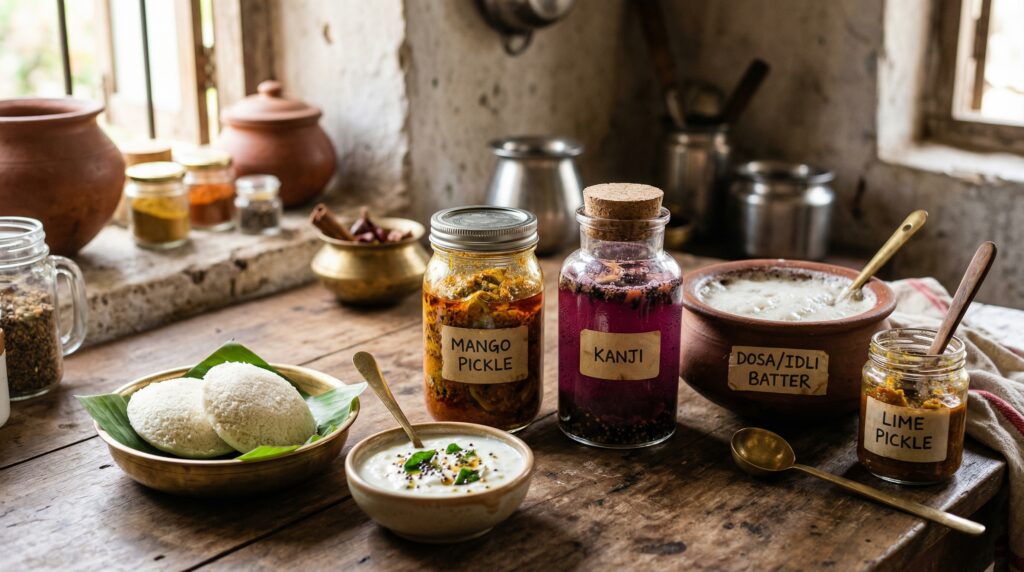
Sun-fermented · Leuconostoc mesenteroides · Lactobacillus plantarum
ProbioticAncient staple
The small katori of achaar at the corner of your thali is doing more than adding flavour — it is delivering Leuconostoc mesenteroides and Lactobacillus plantarum, bacteria that enhance gut microbiome balance and boost microbial diversity. The crucial distinction, widely emphasised by nutritionists in 2026: this only applies to traditionally sun-fermented, oil-brined pickles made at home or by small artisans. Commercial vinegar-based pickles are not fermented — they are merely acidified and contain no live cultures.
The revival of home achaar-making is a real and growing trend in urban India, with countless Instagram reels, YouTube tutorials, and even subscription services dedicated to artisanal, traditionally fermented mango, lemon, amla, garlic, and mixed vegetable pickles.
🍽️Small portion with every meal
🏠Homemade > commercial
❌Avoid vinegar-based brands
08🍛Dal, Rajma & Chana — the prebiotic backbone of Indian eating
Resistant starch · High soluble fibre · Feeds Bifidobacteria & Lactobacilli
PrebioticEveryday staple
While most gut health discussions focus on probiotics (introducing good bacteria), prebiotics are equally essential — they are the food that feeds those bacteria. And India’s dal-chawal, the most consumed meal in the country, is one of the world’s great prebiotic dishes. Lentils, chickpeas, rajma, and moong dal are loaded with resistant starch and soluble fibre that selectively feed beneficial bacteria like Bifidobacteria and Lactobacilli — promoting the production of butyrate, a short-chain fatty acid that heals the gut lining.
In 2026, nutritionists are recommending upgrading from refined to whole legumes (e.g., whole masoor over split), combining them with a small portion of fermented curd, and avoiding overcooking, which reduces the resistant starch content.
🍽️Daily with rice or roti
💡Cook and cool = more resistant starch
🥗Sprouted = even better
09🟡Turmeric & Ginger — the anti-inflammatory gut guardians
Curcumin · Gingerols · Gut lining protection · Digestive enzyme activation
Anti-inflammatoryAyurvedic backboneGlobal superfood
Haldi and adrak were in Indian cooking long before “gut health” became a hashtag. Turmeric’s active compound curcumin has a well-documented anti-inflammatory effect on the gut lining, reducing permeability (the “leaky gut” phenomenon), soothing irritated mucosa, and supporting the liver’s role in digestion. Ginger, meanwhile, activates digestive enzymes, reduces nausea, and accelerates gastric emptying — preventing that bloated, sluggish feeling after a heavy meal.
In 2026, both are trending in newer formats beyond cooking: turmeric-ginger sparkling water, haldi doodh (golden milk) lattes, turmeric-citrus drinks, and ginger-lemongrass kombuchas are all seeing high demand in Indian cafes and D2C wellness brands.
🌙Haldi doodh at bedtime
🍳In every tadka and curry
🫖Ginger tea post-meal
⚫Black pepper boosts curcumin 2000%
Desi vs. global: how Indian gut foods compare
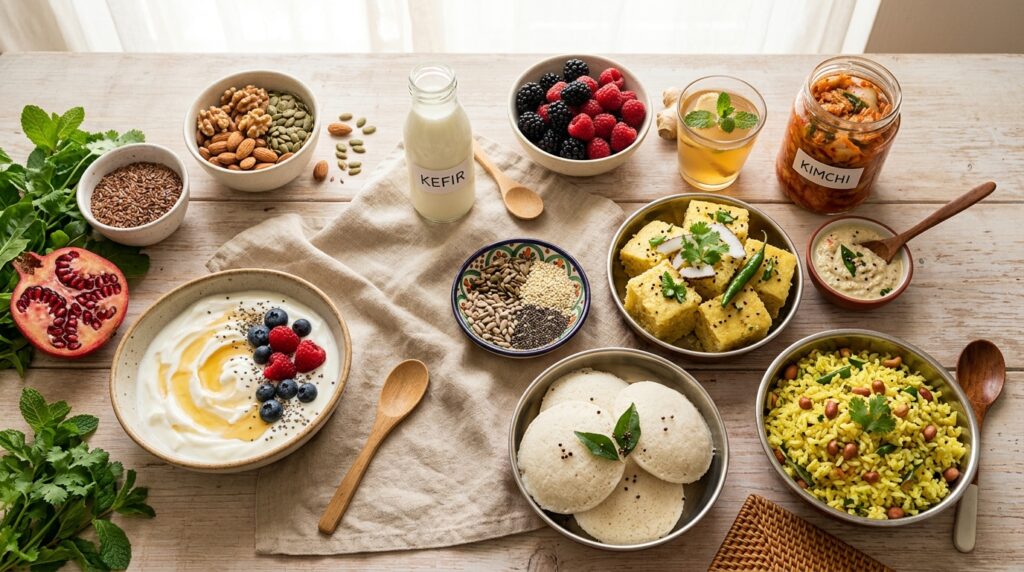
Before you spend ₹300 on a bottle of imported kombucha, consider what your own kitchen already offers:
| Food | Type | Probiotic strains | Cost per serving | Verdict |
|---|---|---|---|---|
| Homemade dahi | Probiotic | 3–5 strains | ₹5–10 | ★ Best value |
| Homemade kanji | Probiotic | 4–8 strains | ₹15–20 | ★ Vegan winner |
| Chaas (buttermilk) | Probiotic | 3–6 strains | ₹8–12 | Excellent daily drink |
| Idli/Dosa batter | Probiotic + Prebiotic | 5–10 strains | ₹15–25 | ★ Best gut meal |
| Kefir (Indian brands) | Probiotic | 30+ strains | ₹150–200 | Best for gut recovery |
| Kombucha (Indian brands) | Probiotic | Variable | ₹100–250 | Good, buy refrigerated |
| Imported probiotic pills | Supplement | 1–3 strains | ₹40–80/capsule | Useful post-antibiotics only |
A one-day Indian gut health meal plan
You do not need to overhaul your diet. Simply incorporating gut-friendly choices at each meal is enough to see meaningful improvement in 4–6 weeks:
🌅 Morning (6–8 AM)
Gut-wake routine
Warm water with fresh ginger + a glass of spiced chaas or 200ml kanji on an empty stomach. Activates digestive enzymes before the first meal.
☀️ Breakfast (8–9 AM)
Fermented breakfast
2–3 soft idli with sambar and coconut chutney, or a bowl of dhokla. The fermented batter delivers probiotics + SCFAs before your day begins.
🕐 Mid-morning (11 AM)
Prebiotic snack
A small bowl of sprouted moong chaat, or roasted makhana with turmeric. Feeds beneficial bacteria and keeps blood sugar stable.
🍽️ Lunch (1–2 PM)
The perfect gut thali
Dal (whole masoor or toor), sabzi, brown rice or roti, and a katori of homemade dahi. Add a teaspoon of achaar. This is gut health at its most delicious.
🌿 Post-lunch (3 PM)
Probiotic drink
A glass of chilled chaas (cumin + ginger + fresh coriander) or 200ml Indian-brand kombucha if you’re feeling urban. Both support afternoon digestion.
🌙 Bedtime (9–10 PM)
Gut repair ritual
A warm glass of haldi doodh (turmeric milk with a pinch of black pepper and ghee). Curcumin’s anti-inflammatory action supports gut lining repair overnight.
Gut health myths busted for Indian readers
❌ Myth
Yogurt is enough for gut health — one serving a day fixes everything.
✓ Fact
Yogurt has limited strains. Gut health requires dietary diversity — a mix of fermented foods, fibre-rich vegetables, legumes, and reduced processed food intake.
❌ Myth
Probiotic supplements are better than fermented food.
✓ Fact
Food-based probiotics deliver live cultures alongside fibre, vitamins, and bioactive compounds that work synergistically. Supplements are useful post-antibiotics but cannot replace dietary fermentation.
❌ Myth
Imported kombucha and kefir are superior to Indian fermented foods.
✓ Fact
Homemade kanji, traditionally fermented achaar, and fresh dahi often contain more diverse and numerous live cultures than expensive imported products — at a fraction of the cost.
❌ Myth
Gut health only affects digestion.
✓ Fact
The gut microbiome influences immunity, skin health, mental clarity, mood (via the gut-brain axis), hormonal balance, and metabolic function. Gut health is whole-body health.
Your grandmother was right all along
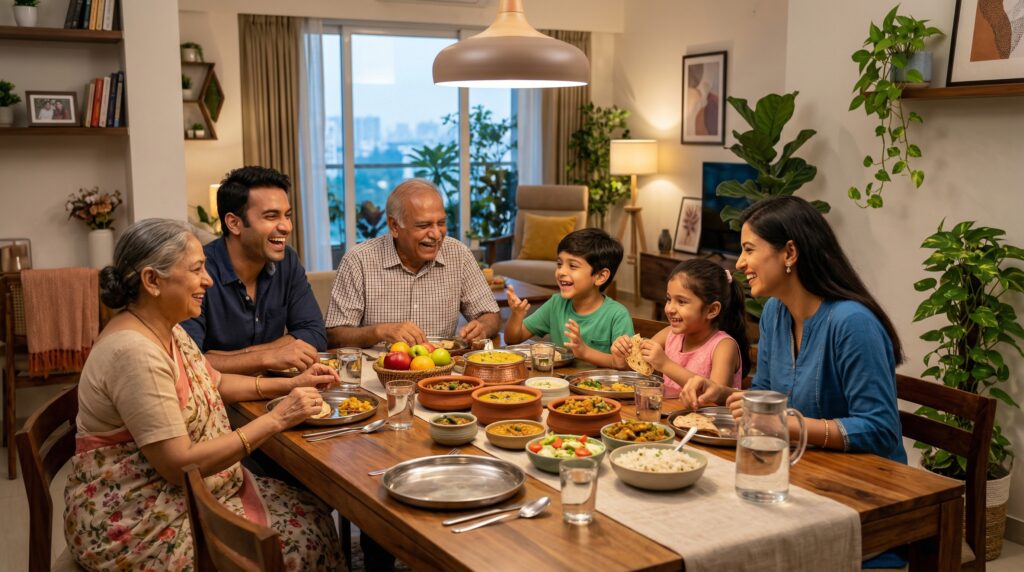
India does not need to import gut health. The wisdom was always here — in the morning chaas, the idli batter left to ferment overnight, the barni of kanji sitting in the winter sun, the katori of achaar at every meal. What 2026 brings is the science to understand why these traditions work, and a growing market of Indian brands making them more convenient for urban, busy lives.
Start small. Add one fermented food per meal. Make a jar of kanji this weekend. Swap your packaged snack for a bowl of sprouted moong. Upgrade your morning from processed cereal to two idlis with sambar. The gut responds to consistency over intensity — within four to six weeks of eating this way, most people report tangible improvements in energy, digestion, skin clarity, and mood.
The best gut health supplement India has ever produced is the one your grandmother stirred up in a clay pot and left on the windowsill. It just never needed a label.
This blog is for informational purposes. If you have specific gut health conditions like IBS, Crohn’s disease, or chronic digestive disorders, consult a registered dietitian or gastroenterologist before making significant dietary changes.
About the Author