

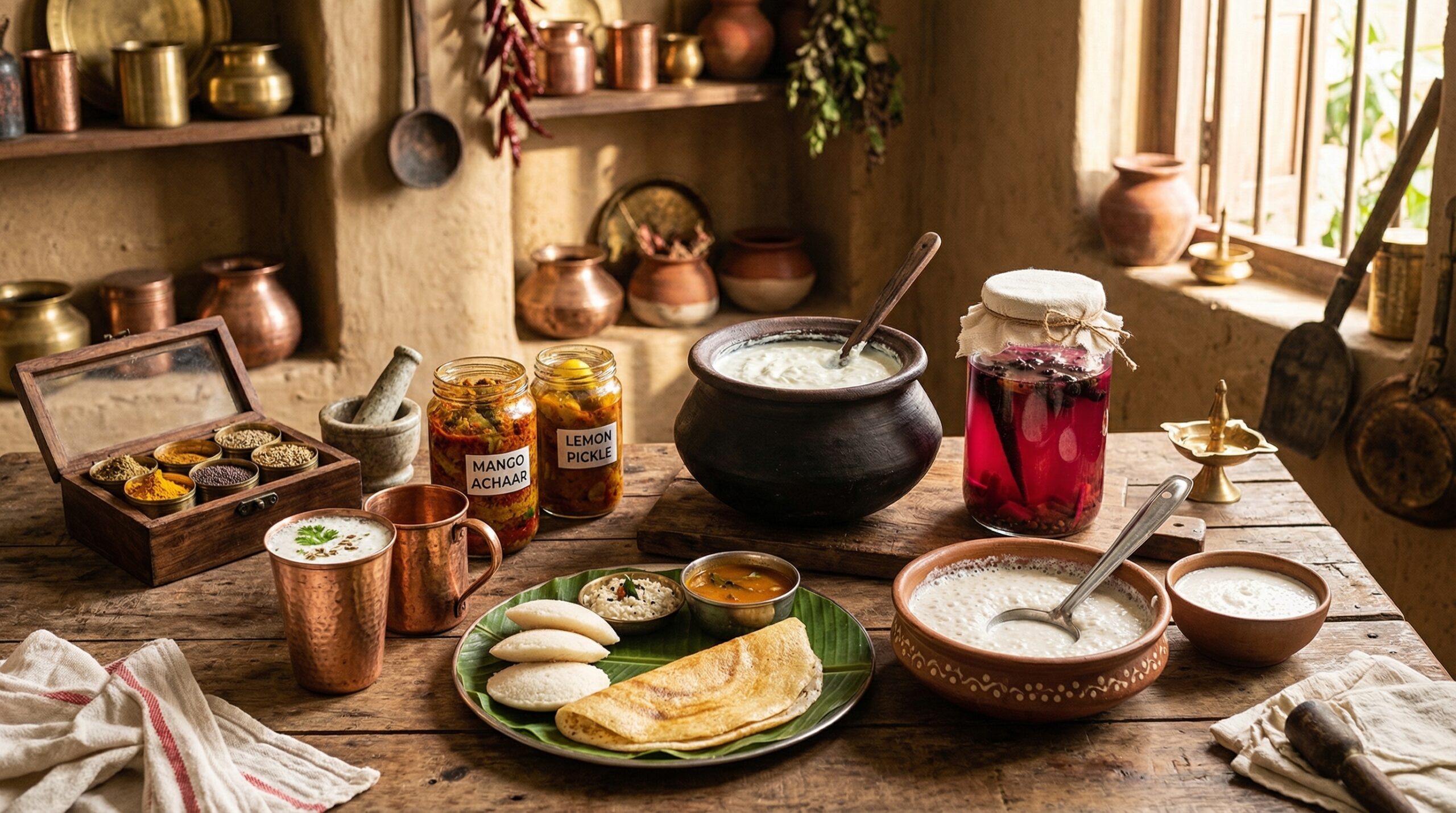
Here’s something that would surprise most people at a pharmacy browsing probiotic supplements: India has been eating some of the world’s most potent probiotic foods for over 3,000 years. Long before ‘gut microbiome’ became a wellness buzzword, Ayurvedic texts were prescribing fermented milk for digestive disorders, recommending kanji for cleansing, and warning against eating dahi at night. The science was intuitive. The practice was cultural.
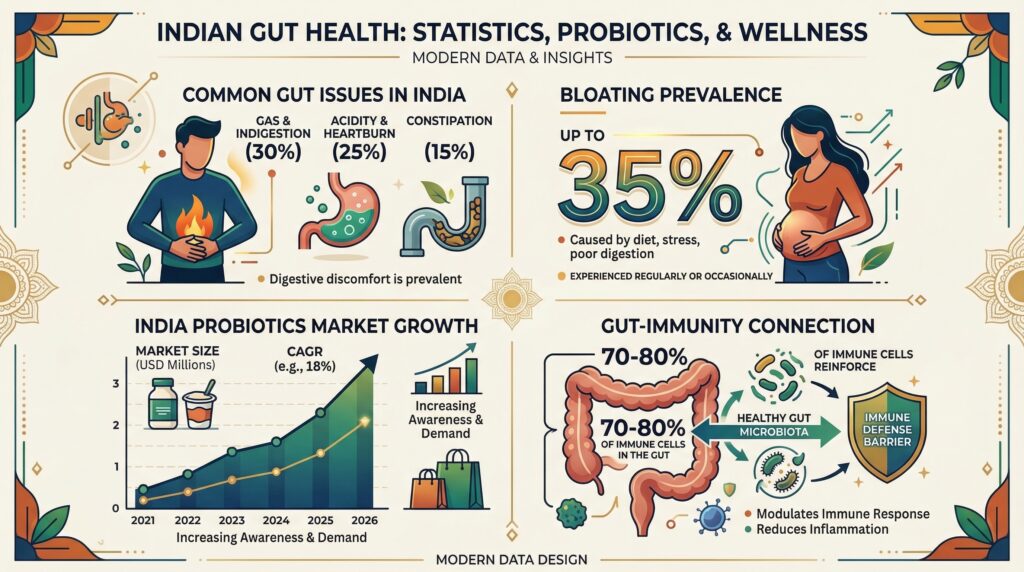
In 2026, the gut health conversation in India has moved decisively from niche wellness circles to mainstream awareness. The Indian probiotics market reached ₹2,070 crore in 2025 and is growing at 17.8% annually — one of the fastest growth rates in any health category in the country. A 2026 study published in Scientific Reports confirmed that gastrointestinal problems are among the most common diseases in India, and that probiotic foods play a critical role in their prevention.
But here’s the uncomfortable truth about the supplement boom: you don’t need most of it. The seven desi foods in this article contain live bacterial cultures — Lactobacillus, Bifidobacterium, and other beneficial strains — that are not only equal to many commercial probiotic supplements, but in some cases superior, because they arrive in a food matrix that helps the bacteria survive the journey through your stomach acid to reach your gut alive.
These are not obscure superfoods from a health store. They are available at your local kirana. They’re already on your mother’s dining table. You’ve been eating them your whole life — just perhaps not strategically enough.
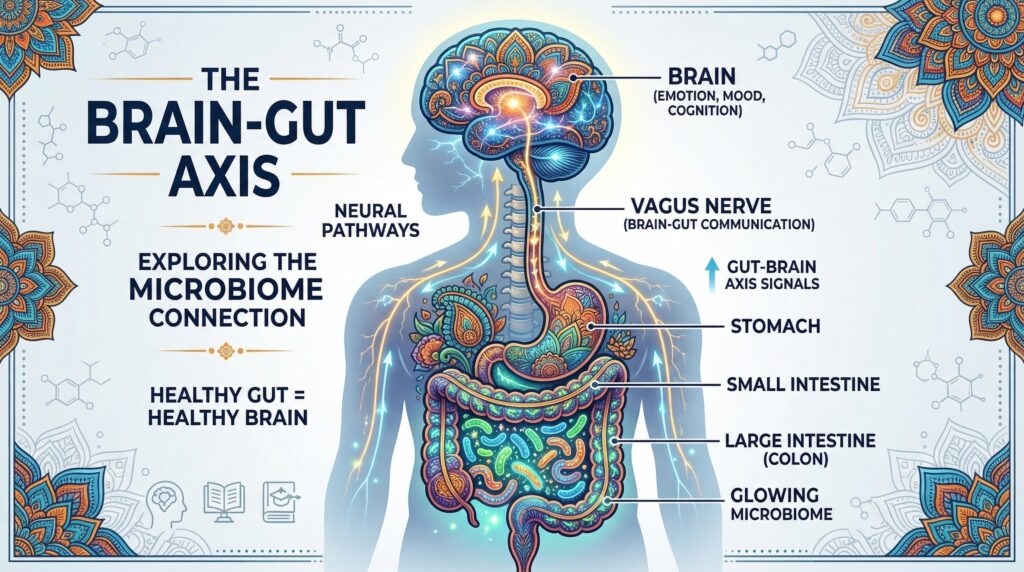
The gut-brain connection is one of the strongest health discoveries of the past decade. Your gut microbiome influences immunity, mental health, skin clarity, energy, hormonal balance, and metabolic function. In 2026, a healthy gut is not a wellness luxury — it’s a health necessity.
Why Gut Health Is India’s Most Important Health Conversation in 2026
Nearly 54% of Indian patients experience bloating — one of the primary symptoms of Irritable Bowel Syndrome — according to a 2024 study in the International Journal of Advances in Medicine. Urban India, particularly, is facing a quiet digestive health crisis driven by three forces: stress-disrupted eating patterns, over-reliance on antibiotics (India is a global hotspot for antibiotic resistance, per ICMR data), and the steady replacement of traditional fermented foods with ultra-processed alternatives.
The result? Millions of Indians with disrupted gut microbiomes — dysbiosis — experiencing not just digestive issues, but downstream effects including weakened immunity, poor sleep quality, low energy, skin problems, and mood disorders. The gut-brain axis — the biological communication highway between your digestive system and your brain — means that a disturbed gut is not just a stomach problem. It’s a whole-body problem.
₹2,070 Cr India’s probiotics market size in 2025, growing at 17.8% annually
54% of urban Indian adults experience regular bloating (IBS symptom) per 2024 study
70% of your body’s immune cells are located in your gut — gut health = immune health
3,000+ years of Ayurvedic fermented food tradition — science is confirming what India always knew
The good news: India’s food culture is inherently probiotic-friendly. The fermented foods in this article contain live cultures of Lactobacillus plantarum, Lactobacillus acidophilus, Leuconostoc mesenteroides, and other strains proven to restore gut flora balance, enhance immune response, reduce inflammation, and improve nutrient absorption. And unlike imported kombucha or kefir supplements, most of these foods cost less than ₹50 per serving and are available everywhere.
Important distinction: Not all fermented foods are probiotic. To qualify as a probiotic, a food must contain live, active cultures at a minimum count of 10⁶ CFU per gram and those cultures must survive passage through the GI tract. This article covers only foods that meet this standard.
The 7 Desi Probiotic Foods — Ranked by Bacterial Potency
01 Dahi (दही)
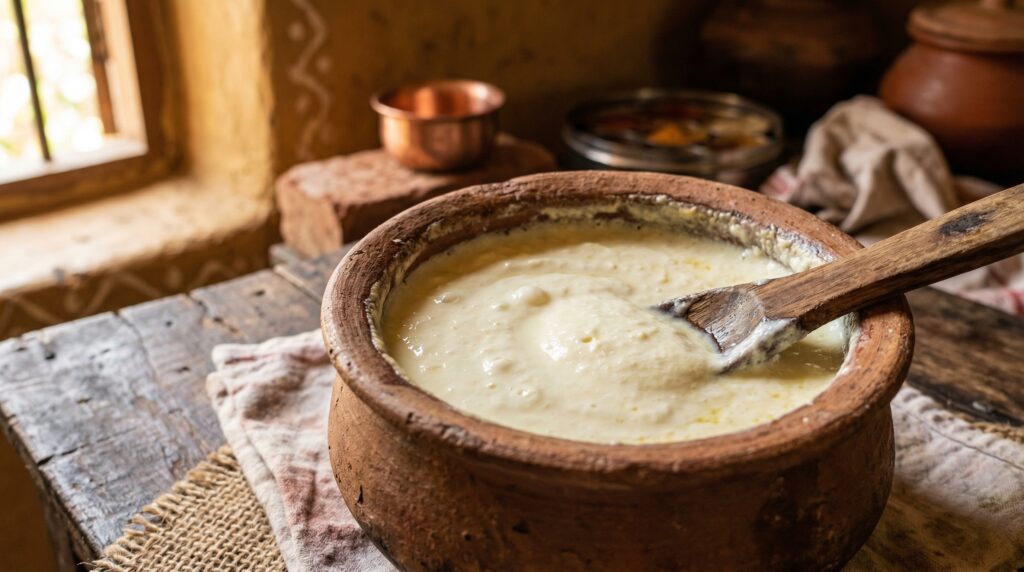
Let’s start with the obvious one — because its obviousness has made us underestimate it. Traditional homemade dahi is one of the richest probiotic foods available anywhere in the world. A single 100g serving of properly made dahi contains between 10⁸ and 10⁹ CFU (colony forming units) of Lactobacillus bulgaricus and Streptococcus thermophilus — concentrations that match or exceed many commercial probiotic supplements.
The critical word here is ‘homemade.’ The commercially sold curd found in sealed plastic cups at modern supermarkets often undergoes pasteurisation after fermentation, which kills the live cultures. The live culture count in branded, packaged curd is dramatically lower than in fresh, homemade dahi. If gut health is your goal, homemade dahi — set overnight with a spoonful of yesterday’s culture as starter — is irreplaceable.
What Science Says
A 2025 study on Indian probiotic food awareness published in Scientific Reports confirmed that yoghurt (dahi) and fermented milk remain the most clinically studied probiotic delivery systems for gut health in the Indian context. Lactobacillus strains in dahi are among the most well-researched bacterial species for gut flora restoration — particularly critical post-antibiotic use, when gut bacteria are devastated.
How to Maximise Its Probiotic Power
- Set dahi at room temperature using a clay pot (matka) — earthenware maintains ideal bacterial temperature
- Use a spoonful of the previous day’s dahi as starter — this preserves and concentrates the bacterial strain
- Consume within 24 hours of setting for highest live culture count
- Eat at room temperature — cold dahi from the fridge has reduced bacterial activity
- Add to meals at the end — don’t cook with it, as heat kills the live cultures
| Dahi at a Glance | Details |
| Primary bacteria | Lactobacillus bulgaricus, Streptococcus thermophilus |
| CFU count (homemade) | 10⁸–10⁹ per 100g |
| Best time to eat | Lunch — with rice or as raita |
| Avoid at | Dinner (Ayurveda recommends against night consumption) |
| Regional name | Dahi (Hindi), Perugu (Telugu), Mosaru (Kannada), Thayir (Tamil) |
| Cost | ₹5–₹15 per serving (homemade) |
| Best for | Gut restoration post-antibiotics, daily maintenance, immunity |
02 Kanji (कांजी)
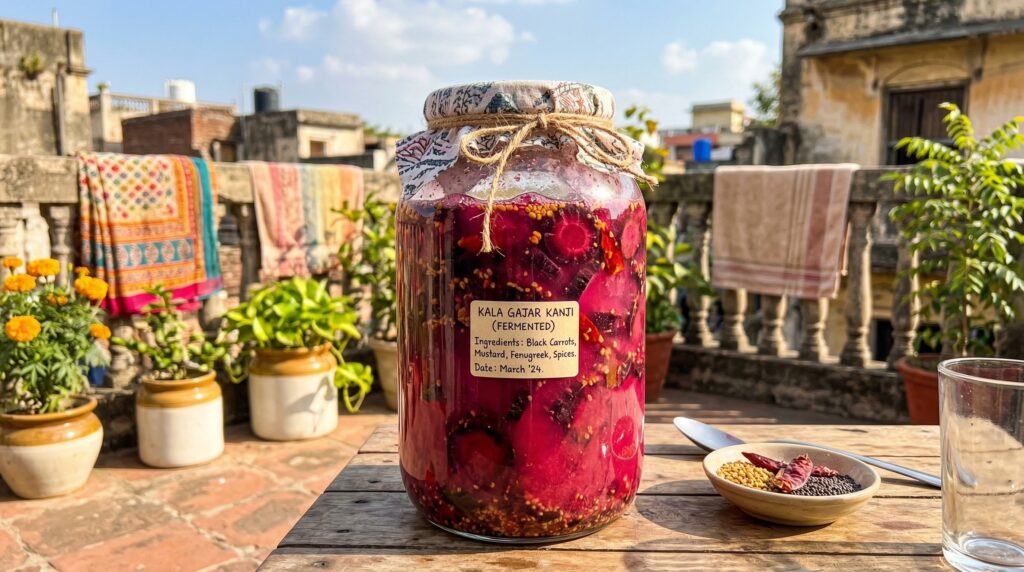
Kanji is arguably the most underrated probiotic on this entire list. Made by fermenting black carrots (or beets) in water with mustard seeds and spices, this tangy, pungent, magenta-coloured drink is a staple of North Indian winters and a mandatory offering at Holi celebrations — which, given that Holi falls this week, is exquisitely timed.
The fermentation in kanji happens through the action of naturally present lactic acid bacteria on the vegetable sugars — primarily Lactobacillus plantarum and Leuconostoc mesenteroides. These bacteria produce lactic acid (hence the sour taste), lower the pH of the drink, and in doing so create an environment where beneficial bacterial colonies thrive. The result is a naturally fermented, plant-based probiotic with no dairy — ideal for lactose-intolerant Indians.
The Science of Kanji
Research on kanji is emerging but consistent: the black carrot and beet pigments (anthocyanins) that give kanji its dramatic colour function as prebiotics — meaning they feed the very probiotic bacteria that fermentation creates. You’re essentially drinking a synbiotic (prebiotic + probiotic together), which research consistently shows is superior to probiotic alone.
The Holi connection worth knowing: Kanji was traditionally consumed at Holi not just for flavour but as a digestive reset — the spices (mustard, black pepper, rock salt) support bile production, the live cultures restore gut balance, and the hydration from the liquid drink compensates for the dehydrating effects of a day spent in coloured powder. It was functional food before ‘functional food’ was a marketing term.
How to Make Authentic Kanji at Home
- Slice 4–5 black carrots (or 2 medium beets) into thin batons
- Add to a clean glass jar with 1 litre of water
- Add 2 tbsp mustard seeds (coarsely ground), 1 tsp black salt, 1/2 tsp red chilli powder
- Cover with muslin cloth and leave in sunlight for 2–3 days
- Taste daily — it’s ready when pleasantly sour
- Strain, refrigerate, and drink 1 glass per day (morning, on an empty stomach)
Kanji is one of the few plant-based Indian probiotics — making it essential for vegetarians, vegans, and the 40% of Indians who are lactose intolerant and cannot tolerate dahi-based probiotics.
03 Idli & Dosa Batter (इडली / डोसा)
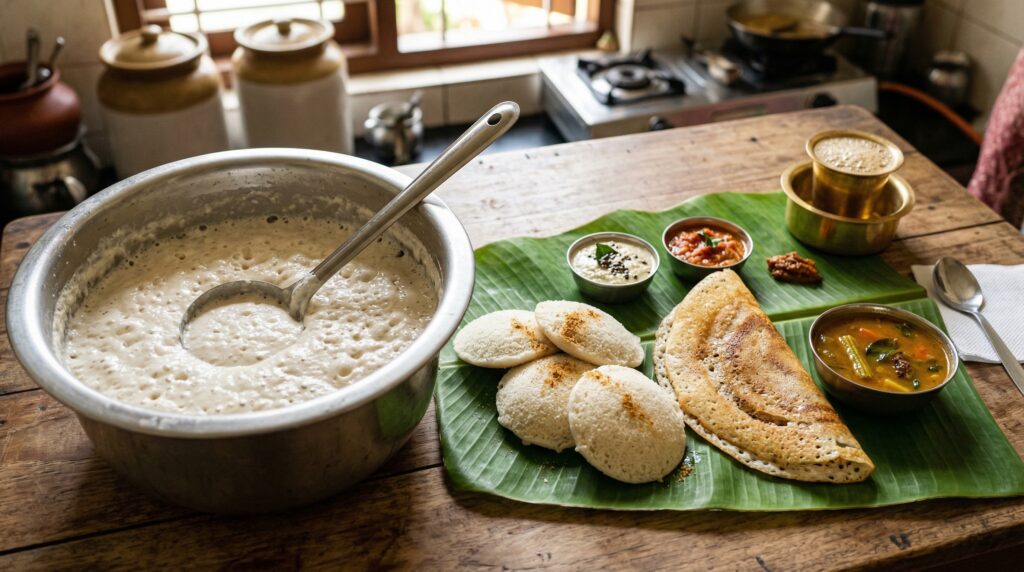
The humble idli is South India’s gift to global nutrition science. The batter — ground rice and urad dal left to ferment overnight — undergoes a remarkable bacterial transformation that makes it one of the most nutritionally complete breakfast foods in the world. Fermentation increases the bioavailability of protein, iron, and B vitamins by up to 40% compared to unfermented rice-lentil combinations — a fact confirmed across multiple nutritional studies.
The bacteria responsible are primarily Leuconostoc mesenteroides (which initiates fermentation), followed by Lactobacillus fermentum and Lactobacillus plantarum. These strains not only create the characteristic tangy flavour and airy texture — they actively produce GABA (gamma-aminobutyric acid), a neurotransmitter precursor that has a mild calming effect. Your idli is literally feeding your gut-brain axis.
The Fermentation Window Matters
Most South Indian households know this intuitively: batter fermented for too short a time (less than 8 hours) produces flat, dense idlis. Batter left too long becomes too sour. The 10–14 hour fermentation window is the sweet spot — and it’s also when the probiotic bacterial count is at its highest. The right fermentation also produces the ideal spongy texture because the bacteria produce CO₂ as a byproduct, which aerates the batter.
North Indian Tip
If you don’t have access to a South Indian household’s idli tradition, packaged idli batter from MTR, ID Fresh, or Maiyas that is still actively fermenting (visibly risen, slightly tangy) contains live cultures. The moment batter is cooked, live cultures are killed by heat — so the probiotic value is in the fermented raw batter and the fermentation process itself, not in the cooked idli. That said, the improved nutrient bioavailability (iron, B vitamins, protein) from the fermentation process remains even after cooking.
The idli has a lower glycaemic index than plain white rice because fermentation partially breaks down the starch. It digests more slowly, provides more sustained energy, and causes a gentler blood sugar rise — making it a smart breakfast for the 77 million Indians living with diabetes.
04 Chaas / Buttermilk (छाछ / मठा)
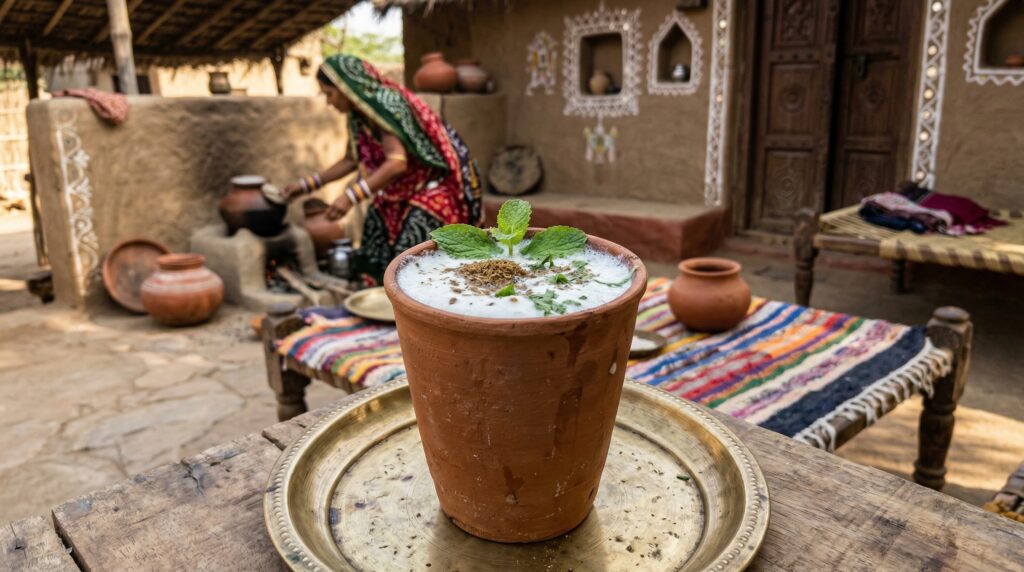
Chaas — thin, spiced buttermilk — is what remains after churning dahi for butter. And what remains is extraordinarily potent for gut health. Traditional chaas contains Lactobacillus acidophilus, Lactobacillus casei, and Bifidobacterium — the three strains most commonly found in commercial probiotic supplements, often sold for ₹800–₹1,200 per month’s supply. Your chaas gives you all three for ₹10.
The Ayurvedic tradition of drinking chaas after lunch is not arbitrary — it’s functionally precise. The live cultures in chaas activate immediately after a meal, when the digestive tract has food to process. The bacterial enzyme activity supports the breakdown of proteins and complex carbohydrates, reduces bloating and gas formation (particularly important after heavy North Indian meals), and lowers the post-meal pH of the stomach in a way that inhibits pathogenic bacteria.
Gujarat’s Chaas Culture — A Public Health Lesson
Epidemiological research on India’s dietary patterns has noted that Gujarat, where chaas consumption is culturally mandatory (often free with meals at restaurants), shows lower rates of digestive disorders compared to regions where buttermilk has been displaced by carbonated drinks. Correlation is not causation — but it’s a compelling dietary pattern worth noting.
How to Make Probiotic-Rich Chaas
- Start with homemade dahi — not commercial packaged curd
- Beat vigorously with a wooden whisk (traditional mathani) or blender for 2 minutes
- Dilute with water — 1 part dahi to 2 parts water for drinking consistency
- Add jeera (cumin), pudina (mint), sendha namak (rock salt), and a pinch of hing (asafoetida)
- The spices are functional: jeera stimulates bile, hing reduces gas, mint cools the gut lining
- Drink immediately after making — bacterial count drops after 2 hours
05 Dhokla (ढोकला)
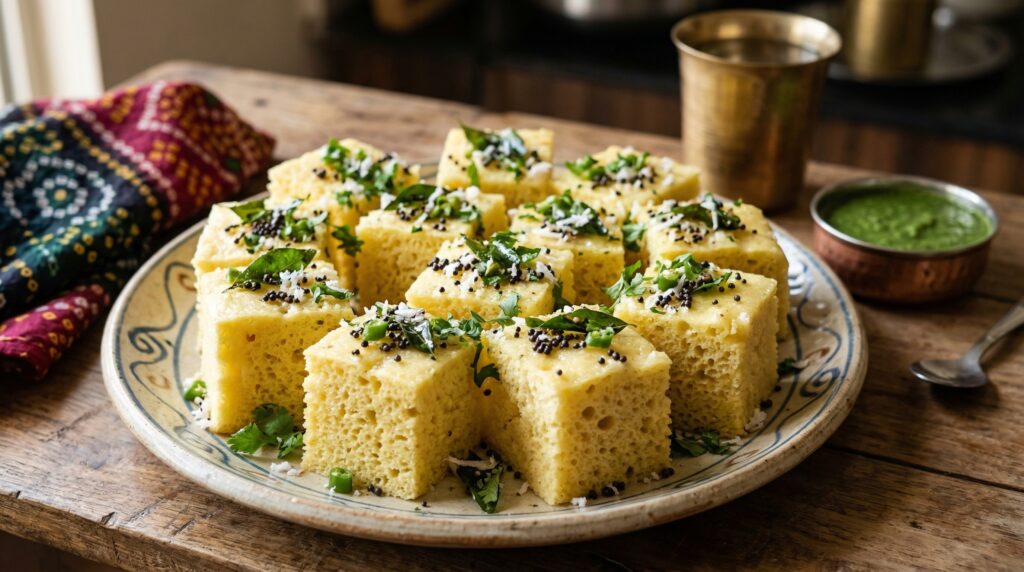
Dhokla — Gujarat’s famous steamed fermented chickpea cake — is a masterclass in functional food. The batter, made from soaked and ground chana dal (or besan) fermented for several hours, undergoes lactic acid fermentation before steaming. The result is a food that is simultaneously probiotic (live cultures in the fermented batter), prebiotic (the chickpea fibre feeds gut bacteria), and protein-rich (chickpeas are among the highest plant protein sources).
The primary bacteria in dhokla fermentation are Leuconostoc mesenteroides and Lactobacillus fermentum — similar to idli batter. The traditional, overnight-fermented version is significantly more probiotic-rich than the ‘instant dhokla’ made with ENO or baking soda (which produces CO₂ chemically rather than through bacterial fermentation, resulting in zero probiotic benefit).
Traditional vs Instant Dhokla: A Critical Distinction
| Traditional Fermented Dhokla | Instant Dhokla (ENO/baking soda) | |
| Fermentation time | 8–12 hours | None (0 hours) |
| Live probiotic cultures | Yes — Lactobacillus + Leuconostoc | No — chemical leavening only |
| Gut health benefit | High | Zero (probiotic benefit) |
| Taste | Tangier, more complex | Neutral, one-dimensional |
| Digestibility | Superior — proteins partially broken down | Standard |
| Our recommendation | Always choose this | For emergencies only |
Restaurant and store-bought dhokla almost universally uses instant batter for speed. If probiotic benefit is your goal, make it at home with an overnight ferment. The difference in taste is also remarkable.
06 Homemade Achaar (अचार)
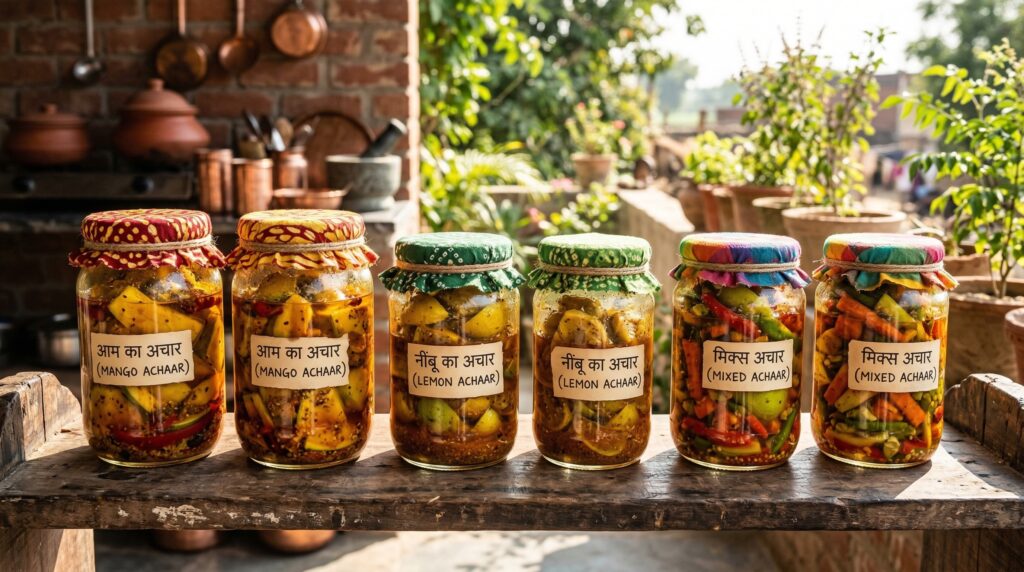
This one surprises people. Traditional Indian achaar — made at home with oil, salt, and time — is a naturally fermented probiotic food. The fermentation happens through naturally occurring lactobacillus bacteria present on the skin of the vegetables or fruits used. Over weeks and months, these bacteria colonise the pickle, producing lactic acid that both preserves the food and populates it with live probiotic cultures.
The critical caveat: commercial pickles — Patanjali, Mother’s Recipe, Priya, and most supermarket brands — are manufactured with chemical preservatives, pasteurisation, or synthetic acids. None of these are probiotic. The probiotic benefit exists exclusively in traditionally made, naturally fermented homemade achaar — the kind that sits in a sunlit window for a month before opening. The kind your nani makes.
The Most Probiotic-Rich Achaar Varieties
- Nimbu achaar (lemon pickle) — fastest to ferment, highest in Lactobacillus
- Aam achaar (raw mango pickle) — seasonal, complex bacterial culture, highest probiotic diversity
- Gajar-mooli achaar (carrot-radish) — prebiotic fibre + probiotic culture combination
- Gundruk (fermented leafy greens) — traditional in Eastern India and Northeast India, extraordinary probiotic density
A note on Gundruk specifically: this sun-dried, fermented leafy green (mustard greens, radish leaves, or cauliflower leaves) from the Northeast and Himalayan regions of India is India’s equivalent of Korean kimchi in terms of probiotic potency. Lactobacillus plantarum and Lactobacillus fermentum concentrations in traditional gundruk match or exceed commercially sold probiotic drinks. It remains India’s most underrated fermented food by a significant margin.
07 Ambali / Pakhala Bhat (अम्बाली / पखाल)
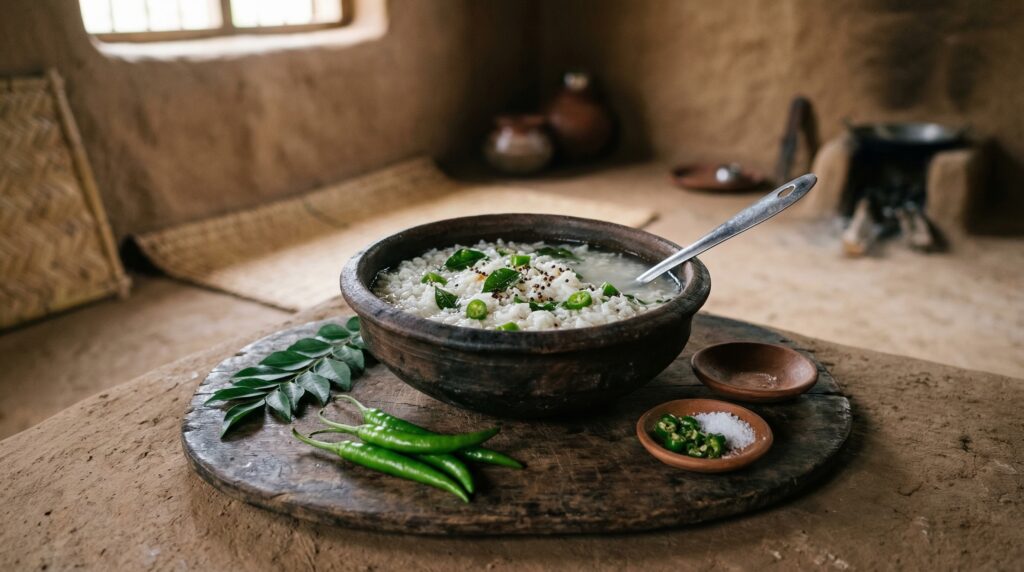
The seventh entry on this list is perhaps the least familiar to urban, Northern Indian readers — and that’s precisely why it deserves the spotlight. Pakhala bhat (Odisha) and Ambali (Karnataka) are fermented rice preparations — rice soaked in water and left to ferment overnight — that have been a staple of coastal and Eastern Indian cuisine for millennia. The fermented water in which the rice soaks, called ‘torani’ in Odisha, is where the probiotic gold lives.
Research published by the National Institute of Nutrition (NIN), Hyderabad, found that fermented rice water (ambali/pakhala) contains significant concentrations of Lactobacillus plantarum, Leuconostoc mesenteroides, and Pediococcus acidilactici — three strains with documented benefits for gut motility, anti-inflammatory effects, and immune modulation. The fermentation also produces B vitamins (particularly B12, which is difficult to source in a vegetarian Indian diet) and short-chain fatty acids that directly nourish the gut lining.
Why This Matters for Modern India
Pakhala bhat has historically been the poor man’s meal — consumed by farmers, labourers, and rural communities who couldn’t afford elaborate cooking. What science now tells us is that these communities were eating some of the most gut-protective food available. The shift away from these traditional preparations towards packaged, processed alternatives in urban India is directly correlated with the rise of digestive disorders.
Simple Pakhala / Ambali at Home
- Cook plain rice (any variety — no salt yet)
- Let it cool completely
- Submerge in clean water in a clay or steel vessel
- Add a spoonful of yesterday’s pakhala as starter (if available)
- Cover with muslin cloth and leave overnight at room temperature
- Morning: drain slightly, season with rock salt, chopped green chilli, curry leaves
- Eat as breakfast or lunch — particularly powerful on an empty stomach
Pakhala bhat is Odisha’s national dish for a reason. In a state with historically one of India’s highest rates of agricultural labour and one of the lowest rates of digestive disorders, fermented rice was not coincidental. It was functional.
The Complete Desi Probiotic Guide: All 7 at a Glance
| Food | Key Bacteria | Best For | Probiotic Potency | Cost / Serving |
| Dahi (homemade) | L. bulgaricus, S. thermophilus | Daily gut maintenance, post-antibiotics | ★★★★★ | ₹5–15 |
| Kanji | L. plantarum, Leuconostoc sp. | Digestive reset, plant-based option | ★★★★☆ | ₹8–20 (homemade) |
| Idli/Dosa batter | Leuconostoc, L. fermentum | Breakfast nutrition, gut-brain axis | ★★★☆☆ | ₹10–25 |
| Chaas | L. acidophilus, L. casei, Bifidobacterium | Post-meal digestion, bloating relief | ★★★★☆ | ₹10–20 (homemade) |
| Dhokla (traditional) | Leuconostoc, L. fermentum | Snacking, plant-protein + probiotic | ★★★☆☆ | ₹20–40 (homemade) |
| Homemade Achaar | L. plantarum, L. brevis | Diverse gut flora, immunity | ★★★★☆ | ₹2–5 per serving |
| Pakhala / Ambali | L. plantarum, Pediococcus sp. | Gut lining repair, B12 (veg source) | ★★★★☆ | ₹5–10 |
How to Build a Desi Probiotic Routine That Actually Works
The biggest mistake people make with probiotics — both food-based and supplement-based — is inconsistency. A daily, small, consistent dose of live cultures is far more effective than occasional large doses. Here’s how to incorporate these seven foods into a realistic Indian daily routine:
The 7-Day Desi Gut Reset Protocol
| Time of Day | What to Eat | Why |
| Morning (empty stomach) | 1 glass kanji OR 1 glass chaas with jeera | Live cultures enter an empty gut — maximum colonisation opportunity |
| Breakfast | 2 idlis / 1 dosa (fermented batter) with sambar | Fermented breakfast + prebiotic fibre in sambar |
| Mid-morning snack | 1–2 pieces traditional dhokla (homemade) | Plant-based probiotic + protein between meals |
| Lunch | 1 bowl rice + homemade dahi as raita / curd | Live cultures immediately post-meal for digestion support |
| Evening | 1 tsp homemade achaar with tea snack | Small dose of diverse bacterial cultures |
| Dinner | Pakhala bhat 2–3 times per week | Fermented rice for gut lining repair overnight |
Consistency rule: Aim for at least 2–3 of these foods daily. Research confirms that a diet consistently including fermented foods over 4+ weeks shows measurable improvements in gut microbiome diversity — the single best indicator of gut health.
What to Pair With Your Probiotics: Prebiotic Foods
Probiotics need prebiotics to thrive — think of prebiotics as fertiliser for the beneficial bacteria you’re introducing. India’s kitchen is full of prebiotic-rich foods that pair naturally with the fermented foods above:
- Sabut moong dal and masoor dal — high in galacto-oligosaccharides (GOS)
- Raw onion and garlic — inulin-rich prebiotics that feed Lactobacillus strains
- Raw banana and green banana flour — resistant starch, strongest prebiotic available
- Amla (Indian gooseberry) — prebiotic polyphenols + Vitamin C that enhance probiotic survival
- Whole wheat roti and jowar bhakri — fermentable fibres that feed gut bacteria
5 Gut Health Myths Indians Believe — Busted
Myth 1: Commercial probiotic supplements are better than food
Truth: Many commercial probiotic supplements use strains that don’t survive stomach acid in sufficient quantities to reach the colon alive. Food-based probiotics — particularly dahi and chaas — deliver bacteria in a food matrix (proteins, fats, complex carbohydrates) that buffers stomach acid and significantly improves bacterial survival. A 2025 study in the Journal of Functional Foods found that probiotic bacteria delivered in a dairy food matrix showed 4–8× better survival rates in the GI tract than equivalent strains in capsule form.
Myth 2: Dahi should not be eaten at night
Truth — partially: Ayurveda cautions against dahi after sunset because it is considered to have a ‘heavy’ quality (guru guna) that slows digestion when metabolic fire (agni) is naturally lower in the evening. Modern nutritional science doesn’t confirm or deny this specifically, but it does note that the gut’s circadian rhythm means fermentation and absorption efficiency peaks at midday. Eating dahi at lunch rather than dinner is supported by both traditional wisdom and chrono-nutrition research.
Myth 3: Cooking with dahi or chaas preserves the probiotic benefit
Truth: Heat above 46°C kills most probiotic bacteria. Cooking dahi into curry or using chaas in heated preparations destroys the live cultures. The nutritional and flavour benefits remain — the probiotic benefit does not. Consume fermented foods raw, or add dahi as a topping/raita after cooking is complete.
Myth 4: Store-bought pickles are as good as homemade achaar
Truth: Commercial pickles use sodium benzoate, potassium sorbate, or acetic acid (vinegar) as preservatives. These inhibit bacterial growth — which is the point from a shelf-life perspective. This means commercial pickles have zero probiotic value. Homemade sun-fermented achaar, made without chemical preservatives, is entirely different.
Myth 5: You need to eat large quantities to see gut benefits
Truth: Research consistently shows that small, consistent daily doses of probiotic foods are more effective for long-term gut microbiome improvement than occasional large doses. A tablespoon of homemade achaar daily, a cup of dahi at lunch, and a glass of chaas — maintained consistently over 4–6 weeks — produces measurable changes in microbiome diversity. You don’t need to overhauL your diet. You need to be consistent.
When Food Isn’t Enough: Signs You Need Professional Help
Fermented foods are powerful preventive and supportive tools — but they are not medicine. If you’re experiencing any of the following, consult a gastroenterologist before relying solely on dietary changes:
- Persistent bloating, cramping, or diarrhoea lasting more than 2 weeks
- Blood in stool — this is never normal and requires immediate evaluation
- Unexplained significant weight loss
- Severe GERD or acid reflux that doesn’t improve with dietary changes
- Symptoms that worsen after eating fermented foods — some people with SIBO (small intestinal bacterial overgrowth) experience worsening symptoms from probiotics
Note on SIBO: Small Intestinal Bacterial Overgrowth (SIBO) is a condition where bacteria colonise the small intestine rather than the large intestine. Probiotic foods can worsen symptoms in SIBO patients. If your gut symptoms are severe or you’re unsure, get a hydrogen breath test from a gastroenterologist before self-treating with probiotics.
The Bottom Line: India Didn’t Need a Gut Health Trend. It Already Had One.
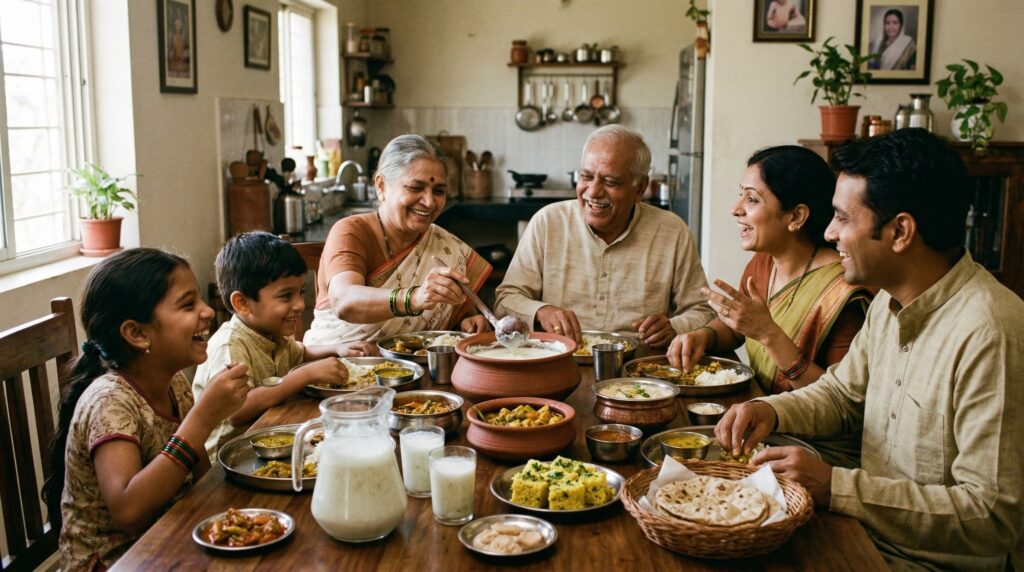
The 2026 global gut health movement — with its kombucha bars, imported kefir, and probiotic supplement subscriptions — has arrived in India and is being enthusiastically monetised. There’s nothing wrong with any of it. But before you spend ₹800 a month on a probiotic capsule, consider what’s already in your kitchen.
India’s traditional food system — dahi set in clay pots, kanji fermenting in the winter sun, idli batter rising overnight, achaar ageing in grandmother’s pickle jars — was a probiotic system. Not because anyone called it that. Because it worked. Because every civilisation that survives for 3,000 years figures out, through trial and error and accumulated wisdom, how to keep people healthy.
The science has caught up. The research confirms what Ayurveda intuited. The seven foods in this article are not health trends. They are health traditions. Start with one. Add it consistently to one meal every day for four weeks. Then notice what changes.
Your gut will tell you everything you need to know. Start listening to it — with a bowl of homemade dahi.
This article is for informational and educational purposes only. It does not constitute medical advice. If you have a diagnosed digestive condition, please consult a registered gastroenterologist or nutritionist before making significant dietary changes.
About the Author