

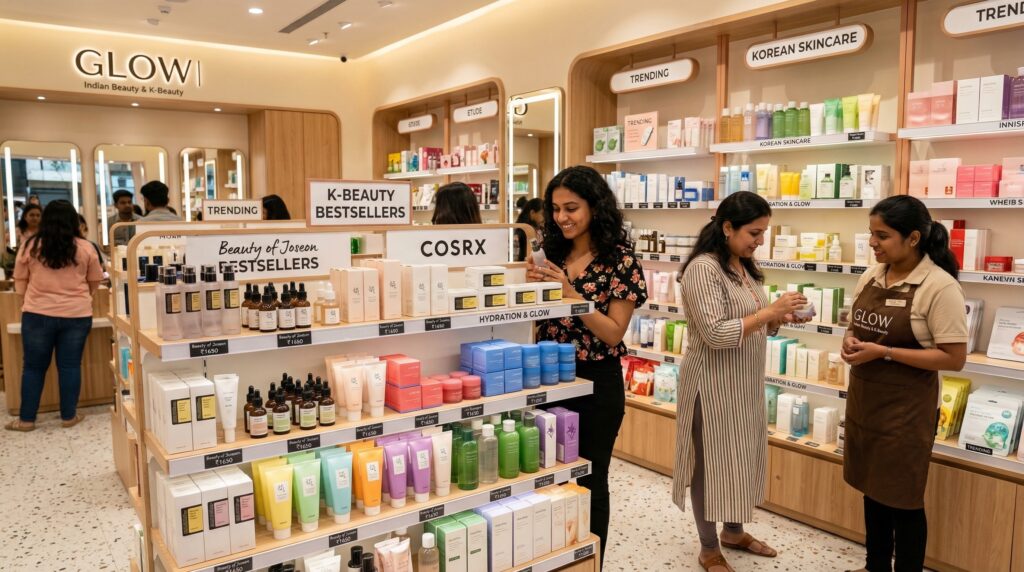
Something quietly extraordinary has happened to India’s beauty aisles. K-beauty — Korean skincare — has gone from niche import to mainstream obsession in under four years. Walk into any Nykaa store today and the shelves that once only carried Lakme and Pond’s now share space with COSRX, Beauty of Joseon, and Anua. Open Instagram in any Indian metro and the top skincare creators are reviewing snail mucin, debating double cleansing, and chasing the glass skin glow.
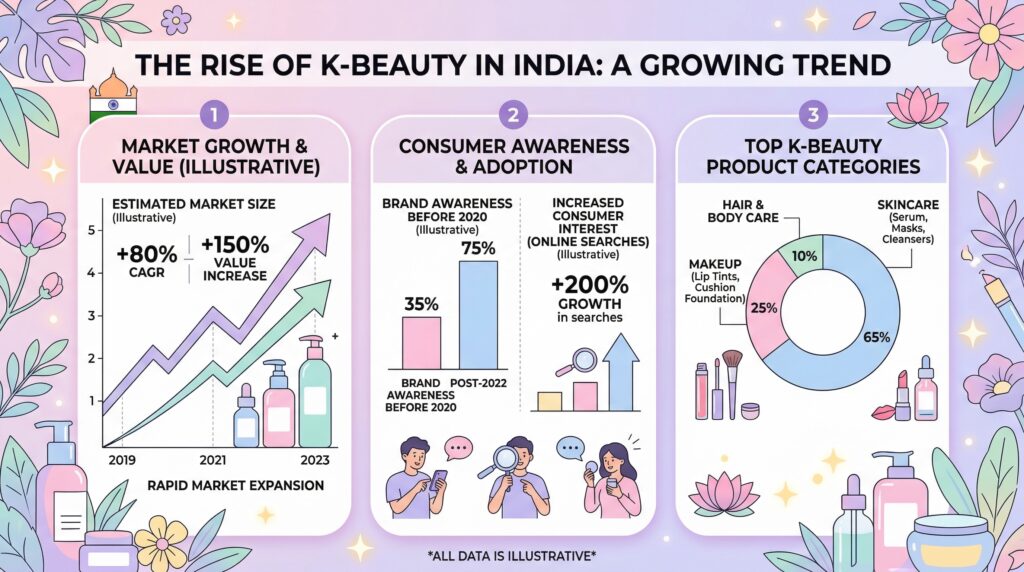
The 2026 numbers confirm the obsession. K-beauty revenue on platforms like Lookfantastic surged 174% year-on-year in 2025, carrying powerful momentum into 2026. Indian K-beauty platforms like kindlife report double-digit monthly user growth. 71% of Indian consumers favour natural beauty products per recent market research — and K-beauty’s ingredient-conscious, results-first philosophy aligns precisely with this shift. Laneige appointed Sara Tendulkar as India brand ambassador. Tira (Reliance) launched Mixsoon in India. The K-beauty takeover of India is no longer a trend — it’s a market reality.
But here’s the conversation most K-beauty content refuses to have: Korean skincare was designed for Korean skin, Korean climate, and Korean conditions. Indian skin — with its higher melanin, intense year-round UV, humidity, and pollution — is different. Not inferior, not worse. Just different.
The question isn’t whether K-beauty works. It does — spectacularly, for the right things. The question is: which K-beauty steps translate directly to Indian skin, which need adapting, and which products are genuinely worth your money? That’s exactly what this guide answers.
The 2026 K-beauty insight that changes everything: K-beauty has matured from a viral trend into proven science. As beauty analyst Lauren Starkey notes: ‘The products may go viral, but their performance is what sets them apart. It’s the results that keep us coming back.’ Indian consumers are discovering this for themselves.
Why K-Beauty Has India Completely Hooked in 2026
The cultural entry point was K-pop and K-dramas — but the retention driver is formulation science. K-beauty’s gentle, barrier-first philosophy directly addresses India’s biggest skincare crisis: millions of Indians unknowingly have compromised skin barriers from decades of harsh, high-pH face washes, aggressive scrubs, and alcohol-laden toners. A damaged barrier means skin that can’t retain moisture, can’t defend against pollution, and overproduces oil in an attempt to protect itself.
174% K-beauty revenue growth year-on-year in 2025 — momentum continuing through 2026
71% of Indian consumers favour natural, ingredient-conscious beauty products (market survey 2025)
67.8% share of K-beauty market held by skincare products — vs makeup and haircare
₹14,790 Cr projected Indian beauty market size by 2033, growing at 8.43% CAGR
What specifically resonates? Hydration layering. India’s combination and oily skin types are chronically dehydrated — and they’ve been treating that dehydration with oil-stripping products that make the problem worse. K-beauty’s water-based, multi-layer hydration system corrects this at the root. And 2026’s K-beauty evolution takes this further — away from harsh exfoliation and active overloading toward skin microbiome care, ceramide complexes, postbiotics, and barrier-safe formulas. As Professional Beauty India confirms: ‘After years of harsh exfoliation and active layering, 2026 is finally about healing and not stripping.’ For Indian skin battered by pollution and UV, this is the most timely shift possible.
KEY INDIA-SPECIFIC INSIGHT
The biggest K-beauty win for Indian skin is not the serums — it’s the sunscreen. Korean SPF formulations are the most elegant, wearable, zero-white-cast options available for Indian skin. Indian women who previously skipped sunscreen because of texture are now wearing it daily. This single habit change is transforming skin health across urban India.
Indian Skin vs Korean Skin: Know the Difference Before You Build Your Routine
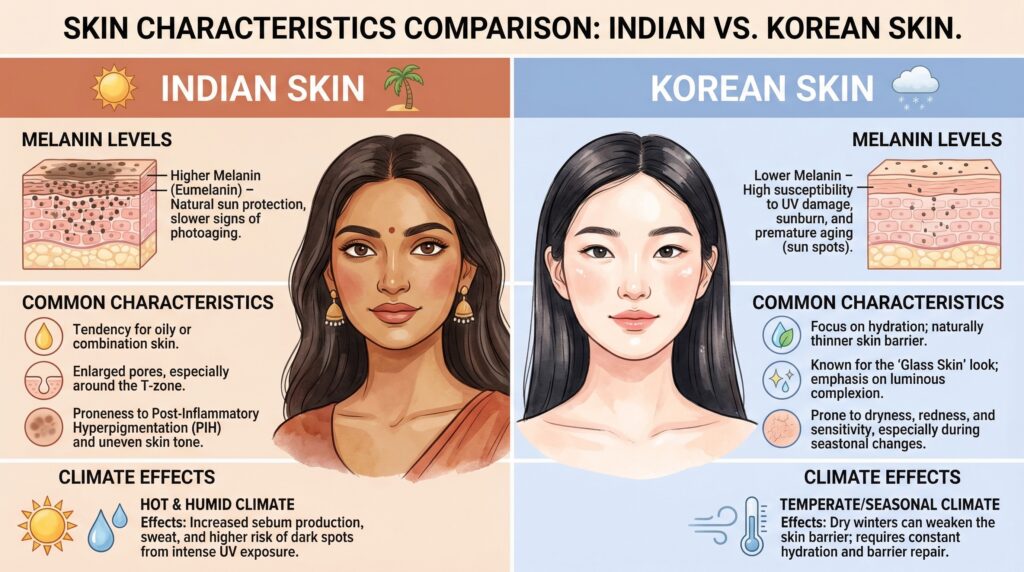
Before buying a single product, understand what you’re working with. Indian and Korean skin have meaningful physiological differences that determine which K-beauty techniques work directly — and which need modification.
| Factor | Indian Skin | Korean Skin | What This Means for Your Routine |
| Melanin | Higher (Fitzpatrick III–VI) | Lower (Fitzpatrick II–III) | Avoid kojic acid ‘whitening’ products — use niacinamide or tranexamic acid instead |
| Climate | Hot, humid, high-UV, high-pollution all year | Temperate, seasonal | Lightweight, non-occlusive formulas; heavy creams only in winter |
| UV exposure | Intense 12 months/year | Seasonal, less intense | SPF 50+ PA++++ is non-negotiable — not optional — every single day |
| Primary concerns | Hyperpigmentation, acne, oiliness, sun damage | Dryness, sensitivity, ageing | Target hydration + anti-pigmentation + SPF above everything else |
| Skin barrier | Often compromised (harsh products + pollution) | Culturally prioritised — barrier protection is ingrained | K-beauty barrier repair = exactly what Indian skin needs most |
| Sebum production | Higher, especially in summer and monsoon | Moderate | Water-based, oil-free K-beauty formulas are ideal year-round for India |
The most important India-specific adaptation: Indian hyperpigmentation is driven by UV-induced melanin overproduction and post-acne dark marks — a different mechanism from Korean skin’s post-inflammatory redness. Indian skin responds better to niacinamide, vitamin C, and daily SPF than to the arbutin and tranexamic acid-heavy products designed for Korean skin tone concerns. Both can work — but the sequence and priority differ. SPF is non-negotiable for Indian skin in a way it isn’t in Seoul’s winters.
The India-Adapted K-Beauty Routine: 5 Steps That Work
Forget the 10-step routine for Indian daily life. The research — and Indian consumer behaviour data — confirms that a practical 3–5 step routine done consistently beats a 10-step routine done sporadically. Here is the K-beauty-informed routine adapted specifically for Indian skin science, climate, and concerns.
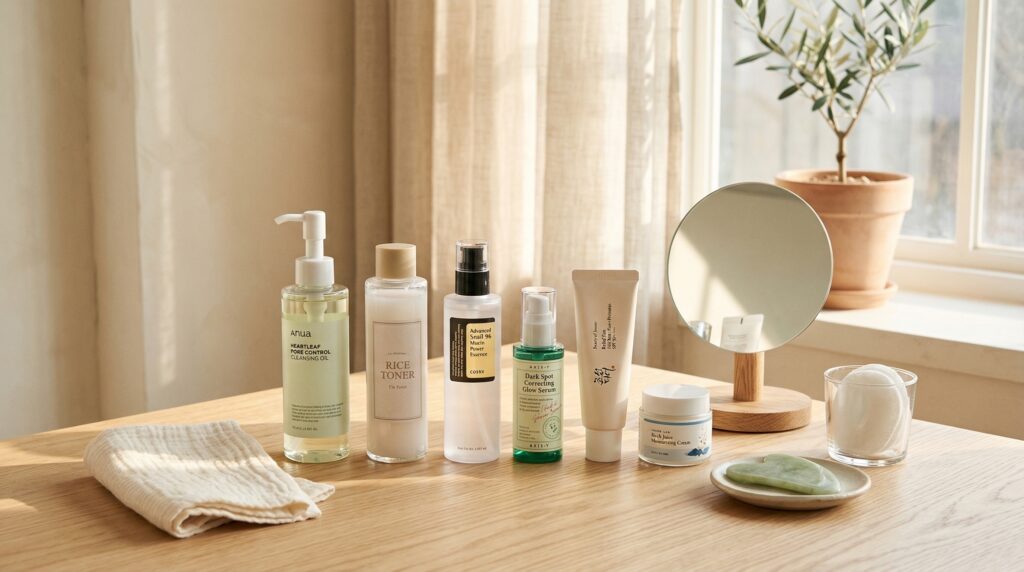
STEP 01 Double Cleanse — The K-beauty foundation that transforms Indian skin
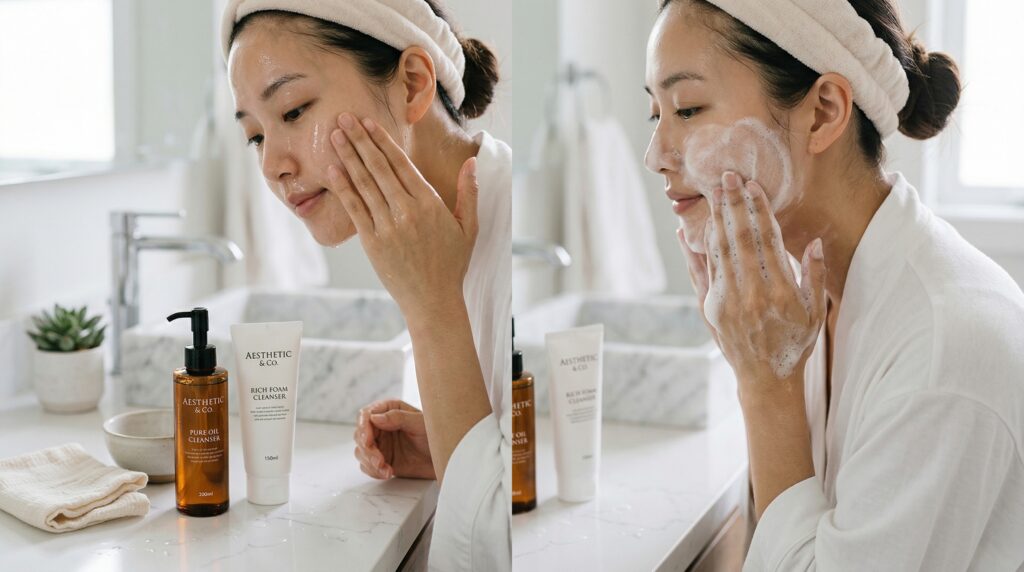
Why it matters: Indian urban skin carries a cocktail at end of day — SPF 50, pollution particles (PM2.5 is a genuine skin villain), sebum, and sweat. A single water-based cleanser cannot fully remove all of this. Double cleansing is not excessive — for Indian urban environments, it’s necessary.
Step 1A — Oil Cleanser (on dry skin): Massage a cleansing oil or balm onto dry skin for 60 seconds. The oil-dissolves-oil chemistry emulsifies sunscreen and sebum without stripping. Rinse with lukewarm water. This single step removes more SPF and pollution residue than micellar water and a face wash combined.
Step 1B — Low-pH Water-Based Cleanser: Follow with a gentle cleanser that maintains skin’s natural pH (around 5.5). Most Indian face washes sit at pH 8–9, which strips the acid mantle and triggers excess oil production. A low-pH cleanser is the single most impactful product switch most Indian women can make.
| Product | Type | Price | Why It Works for India |
| Banila Co Clean It Zero Balm | Oil/Balm Cleanser | ₹899–₹1,200 | Melts SPF + pollution; gentle on melanin-rich skin; iconic K-beauty first step |
| The Face Shop Rice Water Bright Cleansing Oil | Oil Cleanser | ₹699 | Rice brightening + cleansing; suits Indian skin tone |
| COSRX Low pH Good Morning Cleanser | Water-Based | ₹850–₹1,100 | Maintains acid mantle; no SLS; ideal for Indian oily skin |
| Cetaphil Gentle Cleanser | Water-Based (Indian alt.) | ₹249 | Accessible Indian alternative; same low-irritation, pH-friendly profile |
MORNING TIP
In the morning, Indian skin typically only needs the water-based cleanser — or even just a cool water rinse. Over-cleansing morning skin strips natural overnight oils and triggers more oil production through the day. Save double cleansing for evenings.
STEP 02 Hydrating Toner / Essence — The step most Indians skip — the one that changes everything
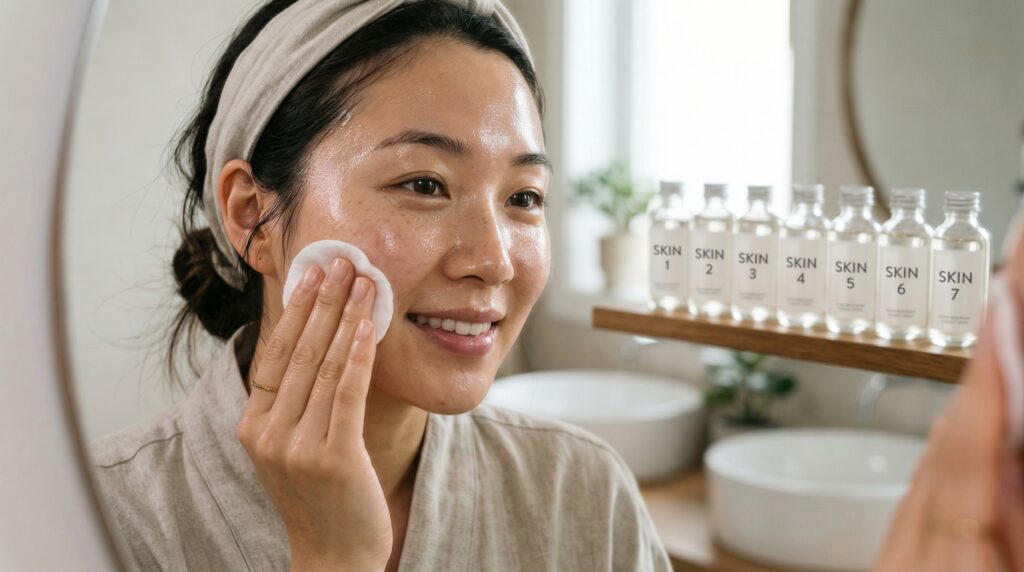
K-beauty essences and toners confuse Indian beginners the most — and produce the most immediately visible results when added to an Indian routine. Unlike Western astringent toners (alcohol, pore-tightening, skin-stripping), Korean essences are lightweight, watery, deeply hydrating, and often fermented. The mechanism: after cleansing, skin is temporarily dehydrated. Applying essence within 60 seconds — the Korean ’60-second rule’ — locks moisture in before it evaporates.
The 7-Skin Method: K-Beauty’s Most Powerful Indian Hack
For Indian skin dealing with dehydration masquerading as oiliness, the 7-skin method is transformative. Apply the same lightweight hydrating toner in 5–7 thin layers, patting each in gently, 30 seconds apart. The cumulative effect tells your sebaceous glands: ‘We have enough moisture — stop producing excess oil.’ Most Indian women who do this consistently for 2–3 weeks report significantly reduced oil production and fewer breakouts.
| Product | Price | Best for Indian Skin |
| Beauty of Joseon Glow Serum (Rice + Arbutin) | ₹1,199–₹1,499 | Uneven tone, hyperpigmentation — India’s #1 K-beauty product right now |
| COSRX Advanced Snail 96 Mucin Power Essence | ₹1,200–₹1,600 | Barrier repair, acne-prone skin, fading post-acne marks |
| Some By Mi AHA BHA PHA 30 Days Toner | ₹850–₹1,100 | Oily + acne-prone Indian skin; gentle chemical exfoliation |
| Minimalist 5% Niacinamide Toner (Indian brand) | ₹299–₹399 | Budget Indian alternative with full K-beauty philosophy |
STEP 03 Active Serum — Ingredient-first skincare India has been waiting for
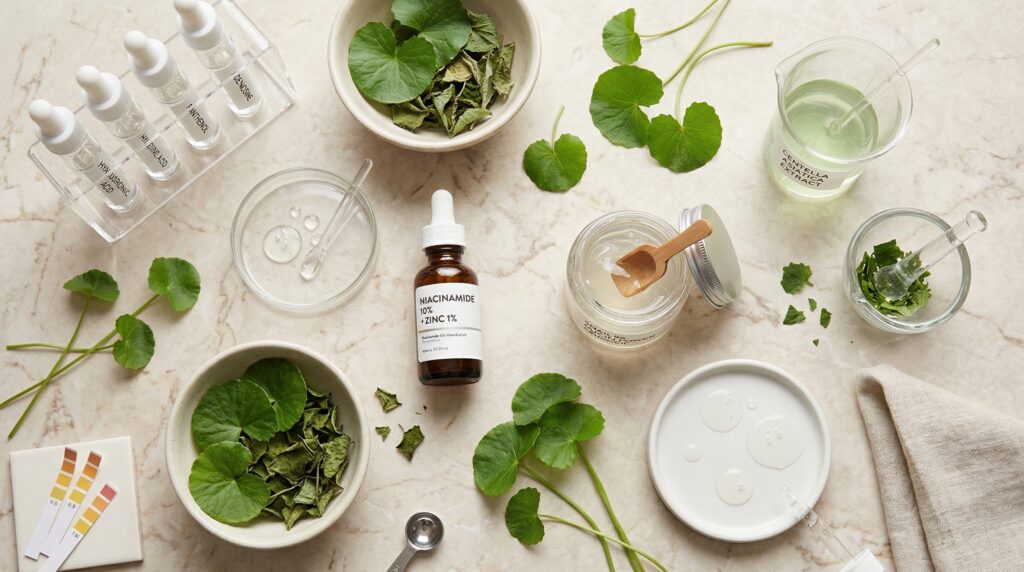
This is where K-beauty’s science-first philosophy pays the biggest dividends for Indian skin. Korean serums are ingredient-led, precisely formulated, and transparent about concentrations — the opposite of ‘proprietary blend’ opacity in many traditional Indian beauty brands. In 2026, K-beauty is pushing further into what BeautyMatter calls the ‘medicosmetic pivot’ — bioactive clinical ingredients like PDRN, exosomes, peptide complexes, and fermented ceramides moving from clinic to shelf. This is the direction Indian skincare needs to follow.
| Ingredient | What It Does | Indian Skin Benefit | Best Available Product |
| Niacinamide (5–10%) | Reduces melanin transfer, controls sebum, strengthens barrier | Anti-pigmentation + oil control — works for virtually every Indian skin type | COSRX Niacinamide 10% + Zinc (₹799) |
| Snail Mucin | Accelerates healing, deep hydration, barrier repair | Fades acne scars and post-inflammatory hyperpigmentation | COSRX Advanced Snail 96 Mucin (₹1,200) |
| Centella Asiatica / Cica | Calms inflammation, speeds skin repair | Soothes heat + pollution-aggravated Indian skin; post-sun repair | Dr. Jart+ Cicapair Serum (₹2,100) |
| Rice Water / Rice Bran | Brightens, evens tone, antioxidant | Addresses UV-induced uneven tanning and dark spots | Beauty of Joseon Glow Serum (₹1,299) |
| Hyaluronic Acid (multi-weight) | Draws moisture into all skin layers | Combats dehydration in Indian AC-heavy offices + homes | Axis-Y Biome Complete (₹1,499) |
| Galactomyces Ferment | Brightens, minimises pores, hydrates | Addresses large pores — a common Indian oily skin complaint | COSRX Galactomyces Essence (₹1,099) |
| Hanbang ingredients (Ginseng, Mugwort, Bamboo sap) | 2026’s rising K-beauty category; anti-ageing, barrier support | Ginseng pairs well with Indian skin; mugwort calms acne inflammation | Sulwhasoo Concentrated Ginseng Cream (₹4,500) |
The one serum that Indian dermatologists recommend as a K-beauty starting point: niacinamide at 5–10%. Controls sebum, reduces pigmentation, strengthens the barrier, and is virtually side-effect-free for Fitzpatrick III–VI skin. Start here before adding anything else.
STEP 04 Moisturise — Hydration over occlusion — the Indian climate rule
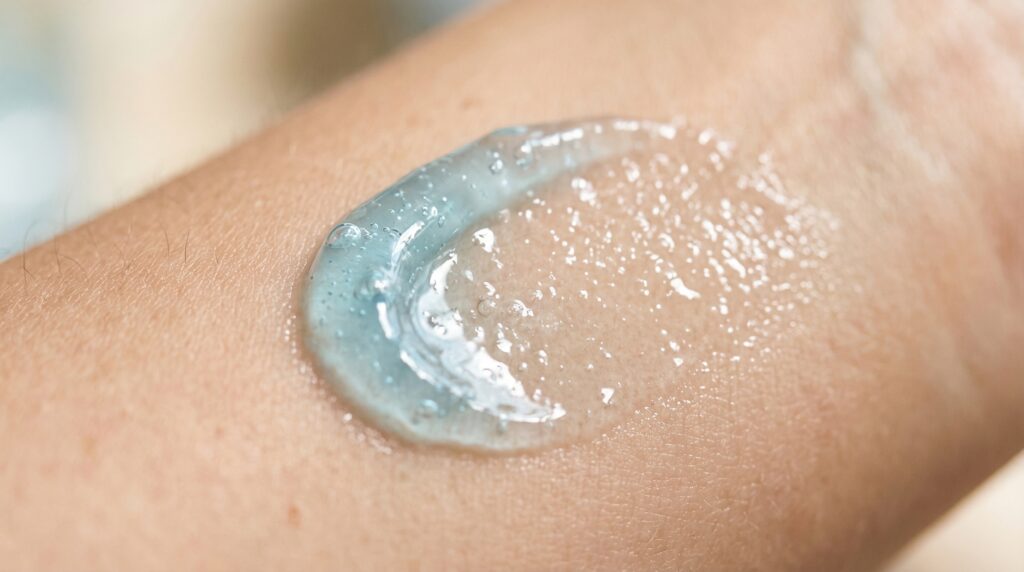
K-beauty separates hydration (water into skin) from occlusion (sealing water in) — a distinction Western skincare collapses into one heavy cream. For India’s warm, humid climate, this separation is essential. Layer a lightweight humectant first (draws water in), then a lighter emollient (seals without suffocating). The Korean sleeping mask — a gel or cream applied as the final step at night — is the most transferable K-beauty innovation for Indian skin, creating an overnight seal without the heaviness of traditional night creams that cause breakouts in India’s heat.
2026 texture evolution: As BeautyMatter’s 2026 K-beauty forecast confirms, sensory textures are dominating consumer demand — ‘after feel’ is now a key purchase decision factor. Indian consumers want moisturisers that feel luxurious, not medicinal. Korean brands are delivering this with water-drop serums, bouncy gel-creams, and whipped moisturisers that feel genuinely pleasant in India’s heat.
| Product | Type | Price | Best Indian Skin Type |
| Laneige Water Sleeping Mask (Bouncy & Firm, 2025) | Sleeping mask | ₹1,999–₹2,399 | Dry to combination; brightening; iconic K-beauty staple in India |
| COSRX Oil-Free Ultra Moisturizing Lotion | Lightweight lotion | ₹999–₹1,199 | Oily and acne-prone — won’t clog pores in Indian humidity |
| Anua Heartleaf Soothing Cream | Gel-cream | ₹1,299–₹1,499 | Combination, sensitive — cica + heartleaf for heat-stressed skin |
| Innisfree Green Tea Seed Serum | Gel moisturiser | ₹1,299 | Combination to oily — Korean green tea for Indian summer |
| Minimalist 10% Vitamin B5 (Indian alt.) | Serum-moisturiser | ₹399 | Budget pick; K-beauty formulation philosophy; Indian brand |
MONSOON ALERT
During India’s monsoon (June–September), skip heavy sleeping masks — 80–90% humidity makes occlusive formulas a recipe for milia and whiteheads. Switch to a lightweight gel essence or a hydrating mist as your final step. Reduce layers. Listen to your skin.
STEP 05 Sunscreen — The step that makes or breaks every other effort
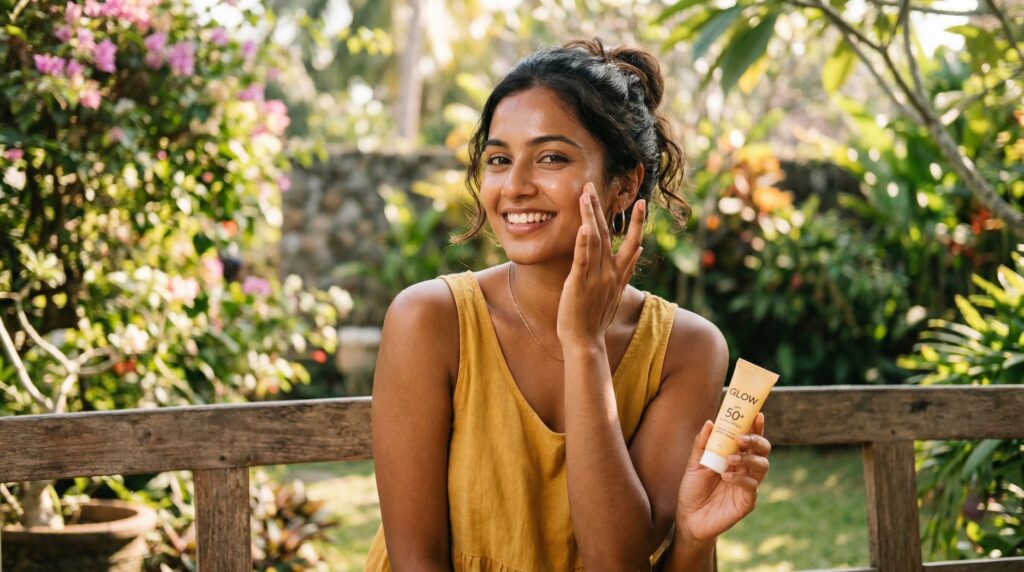
Korean sunscreen is the single most transformative K-beauty innovation for Indian skin. More than the serums, more than the essences, more than the sleeping masks. India has one of the highest UV indices in the world. Indian skin’s melanin overproduction in response to UV is the root cause of the hyperpigmentation, dark spots, and uneven tone that millions of Indian women spend money trying to treat — after the damage has been done. Korean sunscreen prevents it from happening in the first place.
Why Indian women are finally wearing sunscreen in 2026: texture. Traditional Indian sunscreens left white casts on deeper skin tones, felt greasy, and sat visibly under makeup. Korean sunscreen formulations are fluid, weightless, and completely transparent on NC35–NC50 Indian skin tones. This is not a minor improvement — it is the difference between women actually wearing sunscreen and not wearing it. And as data confirms, searches for sunscreen are up 66.6% year-on-year — Korean SPF is leading this growth.
| K-Beauty Sunscreen | SPF/PA Rating | Price | Why It’s Perfect for India |
| Beauty of Joseon Relief Sun: Rice + Probiotics | SPF50+ PA++++ | ₹1,099–₹1,399 | Zero white cast on NC35–NC50; probiotic barrier support; India’s bestselling K-sunscreen |
| Skin1004 Madagascar Centella Air-Fit Suncream | SPF50+ PA++++ | ₹1,099 | Ultra-lightweight for oily skin; invisible finish; great for daily office use |
| Anua Birch Juice Hydrating Sunscreen | SPF50+ PA++++ | ₹1,199–₹1,499 | Hydrating; for dry-combination skin; excellent under makeup base |
| COSRX Aloe Soothing Sun Cream | SPF50 PA+++ | ₹799–₹999 | Budget K-beauty SPF entry point; aloe soothes heat-stressed skin |
| Re’equil Ultra Matte (Indian, K-inspired) | SPF50 PA++++ | ₹595 | Indian brand with K-beauty texture philosophy; no white cast; budget champion |
The PA rating matters as much as SPF for Indian skin. SPF protects against UVB (burning). PA++++ protects against UVA (ageing and pigmentation). India has intense UVA exposure year-round. Never buy a sunscreen without PA+++ or PA++++ for Indian conditions. And re-apply every 2–3 hours if you’re outdoors — one morning application lasts approximately 2–3 hours of direct sun exposure, not all day.
The 2026 sunscreen evolution to know: hybrid SPF formats — tinted sunscreens, cushion SPF, and makeup bases with SPF — are the fastest-growing subcategory in K-beauty. These combine the SPF step with light coverage, eliminating an entire foundation layer. Perfect for India’s ‘I don’t have time for a full routine’ reality.
What’s New in 2026: K-Beauty Trends Indian Skin Will Love
K-beauty in 2026 isn’t what it was in 2022. The category has matured, and the 2026 evolution is particularly well-suited to Indian skin concerns.
1. Hanbang Renaissance — Traditional Korean Herbs Go Modern
Expert Melody Yuan predicts ‘a major surge in modernised hanbang formulas in 2026 — ginseng, mugwort, and bamboo sap paired with peptides and encapsulation technologies.’ This is K-beauty’s answer to India’s own love of Ayurvedic ingredients. Ginseng for anti-ageing, mugwort for calming acne inflammation, and bamboo sap for hydration — these resonate deeply with Indian consumers already familiar with herbal beauty traditions.
2. Barrier-First, Microbiome-Safe Formulas
Per Professional Beauty India’s 2026 trend report: ‘2026 is finally about healing and not stripping.’ Ceramide complexes, postbiotics, fermented barriers boosters, and microbiome-safe cleansers are the new essentials. For Indian skin chronically compromised by pollution and over-cleansing, this shift is transformative. Look for postbiotic-infused toners and ceramide night creams as the most impactful new additions.
3. Daily Skincare Devices
2026’s K-beauty is moving beyond products into tech-assisted routines. Devices like the Medicube AGE-R Booster Pro — designed for daily use, not just special occasions — are entering Indian markets. These ultrasound and microcurrent tools boost product absorption, enhance collagen production, and deliver clinical-grade results at home. Expect this category to explode in India’s top-tier metros in 2026.
4. Inner Beauty — Edible Skincare
‘Inner beauty, or what Koreans call edible skincare, is firmly established,’ says K-beauty consultant Lauren Lee. Skin supplements — collagen peptides, ceramide capsules, biotin + zinc combos, and adaptogen-based stress-skin supplements — are the fastest-growing adjacent category. Indian consumers already understand the skin-nutrition link via Ayurveda. K-beauty’s science-backed inner beauty supplements meet this existing belief with clinical evidence.
5. Personalised AI Skincare
AI skin scanners in retail, modular serums formulated for your specific concerns, and smart devices that adapt treatment intensity to your skin condition — this is K-beauty’s next frontier. Nykaa has already begun piloting AI skin diagnostic tools in flagship stores. By late 2026, personalised K-beauty consultations will be accessible to Indian consumers at major beauty retail touchpoints in Mumbai, Delhi, and Bengaluru.
Where to Buy K-Beauty Products in India (Authentic Only)
Trusted Online Platforms
- Nykaa — largest authentic K-beauty selection; rewards programme; frequent 20–40% sales
- kindlife.in — India’s dedicated K-beauty platform; curated, authentic, loyalty points
- Tira Beauty (Reliance) — official brand partnerships including Mixsoon (launched 2024)
- Sephora India (Reliance Retail) — Dr. Jart+, Laneige, Sulwhasoo
- Amazon India (select brands) — COSRX, Some By Mi officially available
Physical Retail
- Nykaa stores (100+ locations) — staff trained on K-beauty
- Sephora India — select malls in Mumbai, Delhi, Bengaluru, Hyderabad, Pune
- Health & Glow (South India) — growing K-beauty section
AUTHENTICITY WARNING
Counterfeit K-beauty is a serious problem on Meesho, Glowroad, and unlicensed Instagram shops. COSRX snail essence at ₹299, Beauty of Joseon serum at ₹199 — not real. For face actives (niacinamide, AHAs, retinol), fake products with wrong concentrations cause real skin damage. Buy only from authorised platforms. If the price seems impossible, it’s counterfeit.
K-Beauty Ingredients That Need India-Specific Caution
| K-Beauty Element | Issue for Indian Skin | Recommended Adaptation |
| Kojic Acid (brightening) | Irritation risk on melanin-rich skin; rebound pigmentation | Replace with niacinamide or tranexamic acid — safer for Fitzpatrick III–VI |
| ‘Whitening’ products | Formulated for Fitzpatrick II–III; framing and ingredients don’t suit Indian skin | Seek ‘brightening’ or ‘even skin tone’ — avoid hydroquinone above 2% |
| High-% AHA/BHA (above 10%) | Indian skin, stressed by pollution and heat, reacts strongly to high-dose acids | Start at 5% AHA / 0.5% BHA max; never combine with retinol on same night |
| Heavy sleeping packs in monsoon | Occlusive formulas in 80%+ humidity cause whiteheads and milia | Switch to gel essences in June–September; skip sleeping mask in peak monsoon |
| Full 10-step routine in summer | Over-layering in heat causes pilling and breakouts | Edit to 4–5 steps in summer; prioritise SPF above all other steps |
Your Complete India-Adapted K-Beauty Routine: Morning & Night
Morning (7 minutes)
- Cool water rinse OR gentle water-based cleanser
- Hydrating essence — pat in gently; 3–5 layers if dehydrated
- Vitamin C (5–10%) OR niacinamide serum — 2–3 drops, press into skin
- Lightweight gel moisturiser — 1 pea-size
- SPF 50+ PA++++ Korean sunscreen — THE non-negotiable step
Evening (10 minutes)
- Oil cleanser — 60-second massage to remove SPF + pollution + sebum
- Low-pH water-based cleanser — completes double cleanse
- Hydrating toner / essence — 5–7 layers for dehydrated skin
- Treatment serum — snail mucin OR niacinamide OR retinol (not all three together)
- Sleeping mask or gel moisturiser — the seal layer; less is more in Indian summer
Weekly Additions
- Sheet mask x2 per week (Wednesday + Saturday evening)
- Gentle exfoliant (5% AHA toner or enzyme cleanser) x1 per week — Sunday only
- Skin cycling: active → active → recovery → recovery → repeat
K-Beauty at Every Budget: From ₹1,500 to ₹8,000/Month
| Budget | Core Routine | Key Products | Monthly Investment |
| Starter (₹1,500) | Cleanse + SPF only | Cetaphil cleanser + Minimalist niacinamide + Re’equil SPF | ₹1,200–₹1,600 one-time; replace as needed |
| Mid-range (₹3,000) | Full 5-step adapted | COSRX cleanser + BoJ Rice essence + niacinamide + Neutrogena Hydro Boost + BoJ SPF | ~₹2,800–₹3,500 |
| Premium (₹5,000) | Layered routine | Banila Co + COSRX Snail essence + Vitamin C + Galactomyces + Laneige Sleeping Mask + Skin1004 SPF | ~₹4,800–₹6,000 |
| Full K-Beauty (₹8,000+) | Complete adapted + devices | Dr. Jart Cicapair + Axis-Y + hanbang serum + Anua SPF + weekly sheet mask + Medicube device | ₹7,000–₹9,000 |
STARTER KIT FOR K-BEAUTY BEGINNERS IN INDIA
Spend ₹2,500 on three products only: (1) COSRX Low pH Cleanser — ₹899, (2) COSRX Niacinamide 10% serum — ₹799, (3) Beauty of Joseon Relief Sun SPF50+ PA++++ — ₹1,199. Run these consistently for 6 weeks before adding anything else. This three-step routine will outperform most elaborate Indian skincare regimens.
The Bottom Line: K-Beauty Is a Philosophy, Not a Shopping List
K-beauty went viral in India because it works. But more importantly, it works because the core philosophy is correct: protect your skin barrier, hydrate consistently, let targeted actives do precise work, and wear sunscreen every single day. That’s not a Korean secret. It’s skin science.
The Indian adaptation is not about rejecting Korean products. It’s about understanding your skin — its melanin biology, its UV exposure, its tendency toward pigmentation and dehydration — and selecting the K-beauty tools that address those specific problems precisely.
In 2026, K-beauty is evolving in exactly the direction Indian skin needs: barrier healing over aggressive exfoliation, microbiome safety over stripping, and personalised routines over one-size-fits-all regimens. The trend and the science are finally aligned. Start with three products. Be consistent for six weeks. Then let your skin tell you what it needs next.
TrendingIndiaToday Starter Pick: Beauty of Joseon Relief Sun (₹1,199) + COSRX Niacinamide 10% (₹799) + COSRX Low pH Cleanser (₹899). Three products. Six weeks. Then tell us your skin hasn’t changed.
For informational purposes only. Skin responses vary significantly. If you have a diagnosed condition — rosacea, eczema, severe acne — consult a board-certified dermatologist before introducing new actives. Patch test all new products on your inner forearm for 48 hours before face application.
About the Author